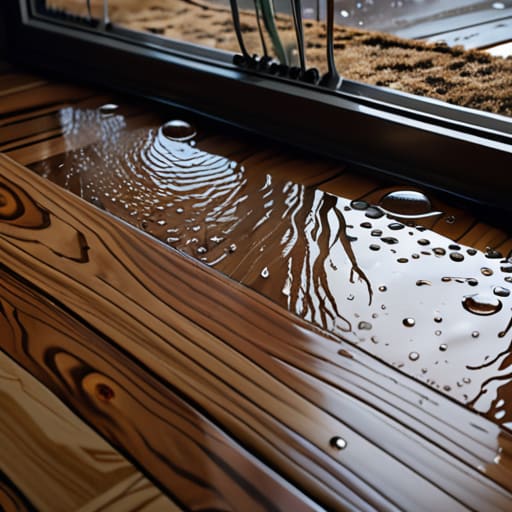

I remember the exact moment I realized my basement wasn’t just “damp,” but was actively decomposing. It was a Tuesday evening, and the air had taken on that heavy, metallic scent of wet concrete and old dust—the smell of a structural failure in progress. I stood there with my flashlight, watching a single bead of water track its way through a hairline fracture in the foundation, and I realized that most people approach how to deal with water damage by simply buying a fancy dehumidifier and hoping for the best. They treat the symptom, not the physics of the problem. They see a puddle; I see a capillary action that is currently pulling moisture into the very bones of the house.
I’m not here to sell you on expensive, proprietary cleaning kits or miracle sprays that do nothing but mask the odor. My approach is much more mechanical: we are going to look at the house as a system of barriers and pathways. I will show you how to identify exactly where the energy and moisture are moving so you can stop the decay at its source. We aren’t just cleaning up a mess; we are reclaiming the integrity of your home, one layer at a time.
The Sudden Chaos of Emergency Water Extraction Services
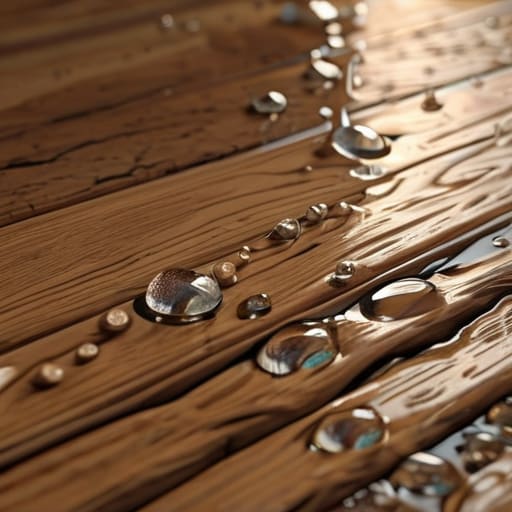
When the flood happens, the physics of the situation shifts from a simple leak to a frantic race against thermodynamics. You see, water doesn’t just sit there; it seeks out every microscopic fissure in your subflooring, driven by capillary action. This is why calling for emergency water extraction services isn’t just about making the puddles disappear; it’s about stopping the liquid from becoming a structural part of your house. I’ve spent enough hours with a magnifying loupe to know that once moisture migrates into the tight spaces between floorboards, it becomes a ghost you can’t easily chase out.
The chaos usually hits its peak when the professionals arrive with their heavy-duty vacuums and industrial-grade equipment. They aren’t just cleaning; they are managing a complex water damage restoration process that relies on aggressive evaporation. They’ll set up high-velocity fans and massive machines to pull moisture out of the very air. It feels intrusive, almost violent, to have your living room turned into a construction zone, but if you don’t strip that moisture out immediately, you aren’t just dealing with wet wood—you’re inviting a biological takeover.
A Structural Damage Assessment for the Unseen Cracks
Once the frantic rush of the extraction services settles, you’re left with a house that looks dry but feels fundamentally different. I’ve spent years peering into the guts of grandfather clocks, learning that a hairline fracture in a brass gear can ruin the entire mechanism; houses are no different. You cannot simply look at the surface. A proper structural damage assessment requires you to look past the damp carpet and into the very skeleton of the building. I’m talking about the floor joists, the subflooring, and the wall studs. When water migrates, it follows the path of least resistance, often wicking upward into the drywall or pooling in the dark, hollow spaces between your framing.
If you don’t investigate these hidden cavities, you’re essentially ignoring a slow-motion collapse. I always say that if you can’t see the movement, you haven’t found the source. Moisture trapped behind a baseboard acts like a silent wedge, softening the wood fibers and compromising the load-bearing integrity of your walls. This is where the real work of preventing mold growth after flooding begins—not by wiping down a counter, but by ensuring the internal structure is actually breathing again.
The Physics of Drying: Five Ways to Stop the Rot
- Open every window and door you can manage. You aren’t just letting in a breeze; you are trying to create a pressure differential to force the stagnant, moisture-laden air out of your rooms and replace it with something drier.
- Aim your fans directly at the wettest surfaces, but don’t just let them spin aimlessly. I want to see them moving the air right against the floorboards or the drywall, breaking that boundary layer of saturated air that clings to the material like a wet blanket.
- Get the moisture out of your fabrics immediately. A soaked rug isn’t just a heavy object; it’s a massive, high-surface-area sponge that will hold humidity in your room for days if you don’t lift it up and dry it completely.
- Use a dehumidifier, but don’t just set it and forget it. You need to monitor the hygrometer; if the relative humidity isn’t dropping steadily, your machine isn’t pulling enough liters out of the air to keep up with the evaporation from your walls.
- Check your electrical outlets with a flashlight and a healthy dose of caution. Water follows the path of least resistance, and in your walls, that path is often the copper wiring, which can turn a simple leak into a very dangerous circuit.
The Physics of the Aftermath: What You Can't Ignore
Water is a relentless kinetic force; even after the puddles vanish, the moisture is still migrating through your studs and subfloors via capillary action, turning structural integrity into a slow-motion collapse.
Mold isn’t just a stain; it’s a biological engine that thrives in the dark, damp microclimates created when your drywall becomes a saturated sponge.
You cannot treat the symptom without addressing the source, because until you stop the mechanism of infiltration, every repair you make is just a temporary patch on a failing system.
The Slow Work of Restoration
At the end of the day, managing water damage is less about the dramatic splash and more about the relentless physics of moisture migration. We have looked at the immediate necessity of extraction to stop the spread, the vital importance of checking the structural integrity of your joists and drywall, and the invisible battle against microbial growth. You cannot simply mop up a puddle and call it a day; you have to address the water that has already traveled into the very pores of your building materials. If you don’t treat the hidden reservoirs tucked behind your baseboards, the damage will simply continue its work in the dark, long after the floors look dry to the naked eye.
I know it feels overwhelming when your home—the one place that should be stable—suddenly feels like it is shifting beneath your feet. But remember that even the most complex mechanical failure can be rectified with patience and a systematic approach. Dealing with water is much like repairing an old pendulum clock; you have to find the source of the friction, clear the debris, and ensure every component is back in its proper alignment. Don’t let the chaos discourage you. Once you understand the mechanisms of the decay, you gain the power to stop it and rebuild something even more resilient than before.
Frequently Asked Questions
If the walls feel dry to the touch, how can I be sure the moisture hasn't already settled into the insulation behind them?
Don’t trust your fingertips; they’re far too insensitive for this. Just because the drywall feels bone-dry doesn’t mean the cavity behind it isn’t holding onto a reservoir of moisture. I always look for the thermal signature. If you have an infrared thermometer, check the temperature gradient. A damp patch of insulation will hold heat differently than dry fiberglass. If the reading dips or spikes unexpectedly, the water is already hiding in the dark.
Once the standing water is gone, what is the actual mechanical process for pulling the deep-seated humidity out of the floor joists?
It’s not enough to just mop the surface; you have to address the moisture trapped in the cellular structure of the wood. I had to pull apart a faulty dehumidifier once to see how they actually fight this. They work by chilling coils below the dew point, forcing the humid air to surrender its water vapor. This creates a vapor pressure deficit, essentially “sucking” the moisture out of those heavy floor joists through evaporation.
How do I know if the mold growing in the dark corners is just a surface nuisance or if it's already compromising the structural integrity of the wood?
I had to pull up the corner paneling in my pantry last Tuesday to see if I was right. If the mold is just a velvety dusting on the surface, it’s a nuisance. But if you press a screwdriver against the wood and it feels spongy, or if the grain gives way like wet cardboard, the fungus has moved from eating the surface to consuming the cellulose. Once the structural integrity is compromised, the wood isn’t wood anymore; it’s just mulch.