

Last Tuesday, I was hunched over my workbench, squinting through a jeweler’s loupe at the guts of a vintage chronometer, when I realized how much the marketing departments of today have lied to us. We’ve become obsessed with these glossy, numbered lists that promise perfection, but they never mention the friction. When you’re reading a product manual, you’re looking at a sanitized version of reality, completely ignoring what a tech specification sheet leaves out—like how a component behaves when the humidity climbs, or why a certain circuit board starts to hum like a disgruntled hornet after three hours of continuous use. A spec sheet tells you the theoretical limit of a machine, but it won’t tell you how it actually struggles when the real world gets messy.
I’m not here to recite data points or repeat the polished jargon found in a brochure. My goal is to pull back the casing and show you the mechanical truth of these devices. I want to talk about the heat dissipation you can’t see, the plastic tolerances that fail after a month, and the way a device actually lives in your hands. If I haven’t taken it apart to see its true character, I won’t bother telling you about it.
Marketing Fluff in Tech Specs and the Illusion of Power

When I was teaching my tenth graders about thermodynamics, I always told them that a perfect system doesn’t exist in a vacuum. The same applies to the glossy brochures for your latest gadgets. You’ll see these massive numbers for processor speeds or battery capacities, but that’s often just marketing fluff in tech specs designed to dazzle you. I spent yesterday afternoon with a precision screwdriver and a multimeter, deconstructing a new “ultra-efficient” tablet, and the reality was far less impressive than the box suggested.
The manufacturer loves to brag about peak output, but they rarely mention the thermal throttling that kicks in after ten minutes of actual use. It’s a classic case of real world performance vs specs; the machine is capable of greatness for a fleeting second, but it can’t sustain it without melting its own internal components. When I look at the heat sinks inside, I see the truth: they are too small to handle the power the marketing team promised. They give you the peak, but they hide the hidden product constraints that dictate how the device actually behaves when you’re actually trying to get work done.
Unreported Hardware Benchmarks That Die in the Cold
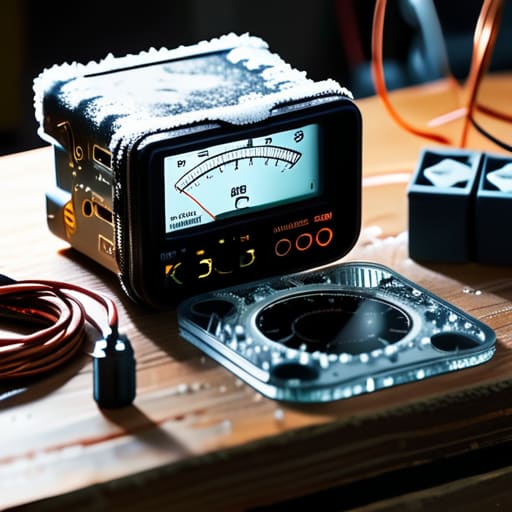
Last Tuesday, I finally got the casing off my old digital multimeter to see why the display was lagging in my unheated garage. It’s the same story with most consumer electronics: the documentation will boast about peak processing speeds or maximum voltage, but it says nothing about how the components behave when the ambient temperature drops ten degrees. Most unreported hardware benchmarks are conducted in climate-controlled laboratories, under perfect conditions that no one actually lives in.
When I look at a circuit board, I don’t see “potential”; I see thermal management challenges. A spec sheet might tell you a processor can hit a certain frequency, but it won’t mention the throttling mechanism that kicks in the moment the silicon gets too warm. This is where the gap between real world performance vs specs becomes a physical reality. If the heat dissipation isn’t handled by more than just a thin layer of thermal paste and a prayer, that impressive number on the box is nothing more than a fleeting ghost that vanishes the moment you actually try to work.
The Hidden Friction: Five Things No Manual Will Tell You
- Look for the thermal throttling. A spec sheet will brag about a processor’s peak clock speed, but it won’t tell you that the tiny, poorly placed heat sink will turn that performance into a slow crawl the moment the casing gets warm to the touch.
- Check the build material, not just the weight. A manufacturer might call a chassis “lightweight aerospace-grade polymer,” but once I’ve unscrewed the casing, I’m looking to see if those plastic screw bosses are thin enough to crack the first time you tighten them.
- Question the “seamless” connectivity. They’ll list the wireless protocols, but they won’t mention the electromagnetic interference caused by the poorly shielded power supply sitting right next to the antenna inside the housing.
- Demand to know about the repairability of the internals. A spec sheet tells you the battery capacity in milliampere-hours, but it remains silent on whether that battery is glued into the frame with industrial adhesive or held in place by a simple, accessible clip.
- Observe the idle state. Engineers love to show you how much power a device uses under a heavy load, but I want to know what the current draw looks like when the device is sitting on a shelf in a dark room; that’s where you see the true efficiency of the circuitry.
What I Learned from the Screws and the Solder
A spec sheet tells you how much energy a component can handle, but it won’t tell you how that component behaves when it’s buried under a layer of dust and thermal paste three years into its life.
Don’t trust the peak numbers; I’ve seen plenty of devices that hit a magnificent benchmark for three seconds before the heat soak forces the system to throttle itself into submission.
True reliability isn’t found in the list of features, but in the physical architecture—the way the parts are actually laid out to handle the stress of being used, not just the stress of being tested in a lab.
Beyond the Printed Page

At the end of the day, a spec sheet is just a collection of promises made by people who want your money. It tells you the peak voltage, the maximum clock speed, and the theoretical throughput, but it stays silent about the friction of reality. It won’t tell you how the plastic casing feels after an hour of heat soak, or how the software begins to stutter once the cache is full and the room has gone quiet. We’ve seen how marketing fluff hides the true limitations and how those shiny benchmarks evaporate the moment the environment stops being a controlled laboratory. To truly know a machine, you have to look past the mathematical ideal and account for the messy, physical ways it actually lives in your hands.
I’ve spent my life looking at the world through the lens of mechanics and motion, and if there is one thing I’ve learned from my workbench, it is that understanding requires contact. You cannot grasp the soul of a device by reading a PDF; you grasp it by unscrewing the housing and seeing where the heat settles or where the gears bind. Don’t let the numbers intimidate you or lull you into a false sense of certainty. Instead, stay curious, keep asking what happens when the power is cut, and never stop trying to see the mechanism beneath the gloss.
Frequently Asked Questions
If the benchmarks don't tell the whole story, how am I supposed to know if a device is actually built to last?
You look for the things that don’t move. A spec sheet will brag about a processor’s speed, but it won’t tell you if the heat sink is a flimsy piece of aluminum or a solid block of copper. When I opened up my old radio, I didn’t look at the wattage; I looked at the solder joints. If the components are crowded and the connections look like bird nests, that device isn’t built to last; it’s built to be replaced.
Are there specific physical signs of wear, like heat dissipation or mechanical friction, that I should look for since the manual won't mention them?
The manual treats a device like a mathematical ideal, but physics is much messier. Once I unscrewed the casing on my old espresso machine, I saw what the manual ignores: the thermal fatigue on the solder joints and the microscopic scoring on the pump’s piston. Look for “hot spots” near the housing that feel uneven, or a high-pitched whine that signals a bearing is losing its lubrication. If it’s making a new sound, something is fighting friction.
When you're taking something apart, what is the most common "hidden" component that completely contradicts the marketing claims?
It’s almost always the power management system. Marketing loves to shout about “peak performance” or “lightning-fast speeds,” but they never mention the thermal throttling or the tiny, cheap voltage regulators tucked behind the main board. I’ve opened dozens of devices where the processor is a Ferrari, but the power delivery is a bicycle chain. It can’t sustain that promised speed for more than thirty seconds before it has to choke itself down just to stay alive.