
I spent thirty-four years watching teenagers stare blankly at physics equations, and if there is one thing I’ve learned, it’s that people love to hide a lack of substance behind expensive jargon. Lately, I see the same thing happening in camera shops, where sales clerks try to sell you on “megapixels” as if they were the holy grail of photography. It’s a distraction. If you want to actually understand the physics of your image, you have to stop looking at the numbers on the box and start looking at the surface area of the silicon inside. Realizing what sensor size means in cameras isn’t about counting dots; it’s about understanding how much actual light you can harvest before the sun goes down.
I’m not here to give you a marketing brochure or a lecture on technical specifications that won’t change how you shoot. Instead, I’m going to treat this like one of my old clockwork projects: we are going to open the casing and look at the mechanics. I promise to explain this by looking at the physical reality of light hitting a surface, stripped of all the glossy hype. By the time we’re done, you won’t just know the terms; you’ll understand exactly how the hardware dictates your results when the shutter clicks.
Low Light Performance When the Photons Must Find a Home

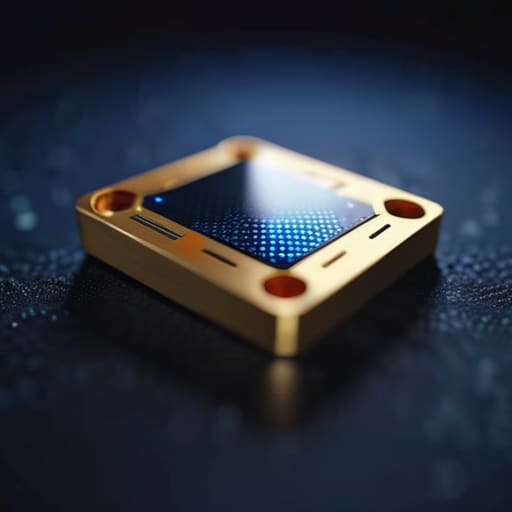
When I opened up my old Nikon to inspect the silicon wafer, I realized that a sensor isn’t just a piece of tech; it’s a collection of tiny, hungry traps waiting for light. In the dim glow of a candlelit room, those “traps” are working overtime. This is where the debate of full frame vs crop sensor actually matters for your eyes. A larger sensor provides a much bigger surface area, meaning each individual light-capturing well can be physically larger. If you have a tiny sensor with high digital sensor pixel density, you’re essentially asking a thousand microscopic buckets to catch a heavy rainstorm; they overflow quickly, and that’s exactly where that ugly, dancing electronic noise—what we call grain—comes from.
Think of it this way: when the sun goes down, the photons become scarce. A larger sensor doesn’t just catch more light; it catches it more efficiently. Because the physical architecture allows for larger individual pixels, the sensor can distinguish between a true signal and random electrical interference. When I’m working on a clock in my workshop under a single lamp, I don’t need a floodlight; I just need enough light to see the gears. A larger sensor does the same for your photos, pulling clarity out of the shadows before the darkness swallows the detail.
Digital Sensor Pixel Density and the Illusion of Detail
Digital Sensor Pixel Density and the Illusion of Detail
When I opened up my old Nikon to inspect the silicon slab, I realized that megapixels are often a bit of a sleight of hand. We tend to think more pixels equals more “truth,” but that’s not how the physics works. Think of digital sensor pixel density like trying to paint a masterpiece on a postage stamp versus a canvas. If you cram a million tiny dots onto a tiny surface, each dot has to be microscopic. When I look at the architecture of a sensor, I see that those tiny pixels have very little room to breathe, which makes them struggle to capture the nuance of a shadow or the subtle gradient of a sunset.
This is where the debate of full frame vs crop sensor actually becomes a conversation about real estate. On a larger sensor, those same megapixels are spread out over a much wider area. Each individual pixel becomes a larger, more capable collector of information. It isn’t just about how many points of data you have; it’s about the quality of the space each point occupies. If the pixels are too crowded, you aren’t actually seeing more detail—you’re just seeing more noise masquerading as texture.
My Workbench Rules for Choosing Your Next Sensor
- Don’t let the megapixel count fool you; a massive number of tiny pixels on a small sensor is just a recipe for noisy, grainy images once the sun goes down.
- If you find yourself shooting weddings or evening street scenes, prioritize the physical surface area of the sensor over any fancy software processing.
- Remember that the sensor dictates your field of view, so a smaller sensor acts like a built-in crop factor, making your wide-angle lens feel suddenly much more narrow.
- Think about the depth of field you want; a larger sensor makes it much easier to isolate your subject with that creamy, blurred background we all love.
- Before you buy, ask yourself if you’re willing to carry the heavier, more expensive glass required to actually cover a full-frame sensor properly.
The Physics of the Frame: Three Things to Remember
A sensor isn’t just a list of numbers; it is a physical surface area. When I look at a camera, I don’t see “megapixels” first—I see how much room those photons have to land, because a larger surface area is the only way to truly capture light when the room goes dim.
Don’t let high pixel counts fool you into thinking you have more detail. If you cram too many tiny pixels onto a small sensor, you’re just creating a crowded room where no one can move; you need a balance between the number of pixels and the physical size of the “buckets” they live in.
The “best” sensor is entirely dependent on your habits. If you are chasing the high-speed, high-resolution perfection of a bright midday sun, small sensors suffice; but if you want to capture the quiet, grainy magic of a candlelit room, you need the physical real estate that only a larger sensor provides.
The Sum of the Parts
When I sit at my workbench with a disassembled camera, I am reminded that there are no shortcuts in physics. We have seen how a larger sensor isn’t just a bigger piece of silicon; it is a larger surface area for photons to strike, providing a deeper well for light to gather when the sun goes down. We have also dissected the delicate tension between pixel count and sensor size, learning that more megapixels don’t actually mean more detail if you are cramming them into a tiny, cramped space. It is a constant balancing act of signal-to-noise ratios and light-gathering capacity. If you understand these mechanical realities, you stop being a victim of marketing jargon and start being a master of your own equipment.
Ultimately, whether you are holding a massive full-frame DSLR or a pocket-sized compact, the goal remains the same: capturing a moment before it vanishes. Don’t let the technical specifications intimidate you into thinking you need the most expensive kit to see the world clearly. Once you understand how the light actually hits the silicon, you realize that the best camera is simply the one that allows you to translate the physics of the universe into a memory. Go out, find something beautiful, and stop worrying about the numbers—just focus on how the light behaves.
Frequently Asked Questions
If I have a massive sensor but very few pixels, am I actually losing the sharpness I think I'm paying for?
It’s a bit of a trick, isn’t it? You aren’t losing sharpness; you’re trading resolution for “cleanliness.” When I opened up my old Nikon, I saw those massive individual silicon wells. If you have fewer pixels on a huge sensor, each one is a giant bucket. They capture light beautifully without the electronic “noise” that looks like static. You won’t see every tiny eyelash, but you’ll see them clearly, even in the shadows.
Why does my tiny smartphone camera struggle so much more with grain than my old DSLR when the sun goes down?
I opened up my old Nikon last month just to see if the sensor had shifted, but the answer isn’t in the wiring—it’s in the surface area. Your smartphone sensor is a postage stamp; my DSLR’s is a postcard. When the sun dips, those precious photons are scrambling to find a home. On a tiny sensor, they’re crowded into microscopic buckets, overflowing and creating that digital “grain” or noise. It’s simply a matter of available real estate.
Does a larger sensor actually change how the lens sees the world, or is it just about how much light we catch?
It’s both, though the physics tells a more nuanced story. Think of the sensor as the canvas and the lens as the brush. While the lens dictates the “angle of view”—how much of the scene is projected onto that canvas—the sensor size determines how much of that projection we actually capture. A larger sensor doesn’t change the glass, but it allows the lens to reveal more of its field, making the world feel wider and more immersive.