

I spent thirty-four years in a physics classroom watching teenagers stare blankly at equations, but nothing quite matches the particular, hollow silence of a laptop screen frozen mid-progress bar. You’ve been there: the little spinning wheel of death, the sudden heat radiating from the chassis, and that rising knot of panic in your chest. Most tech forums will tell you to just “reboot and hope,” or worse, they’ll try to sell you a subscription to a “repair utility” that is nothing more than digital snake oil. They treat a broken OS like a magic trick gone wrong, but I refuse to believe in magic. If you are looking for how to fix a failed software update, you have to stop treating your device like a black box and start looking at the logic of the failure.
I’m not going to give you a list of vague, scripted steps that work only half the time. Instead, I want to show you what is actually happening to your data when that installation sequence snaps. We are going to look at the mechanics of the break—from corrupted cache files to the way a sudden power drop interrupts a write command—so you can actually understand the fix. My promise to you is simple: no jargon-heavy fluff, just the honest, structural reality of getting your machine back online.
Decoding Operating System Error Codes in the Dark

When I sit at my workbench with an old pendulum clock, I don’t just look at the hands; I look at the escapement to see where the energy is getting stuck. Software is no different, though you can’t see the gears with your eyes. When an update hangs, the computer usually spits out a string of alphanumeric nonsense—those operating system error codes that feel like a personal insult. To me, they aren’t insults; they are the machine’s way of pointing to a specific broken tooth in the gear train. A code isn’t just a random failure; it is a precise coordinate telling you whether the problem is a permission conflict or a corrupted file fragment.
If the error suggests a write failure, I suspect the “storage bin” is full or jammed. Often, what looks like a catastrophic crash is just a lack of breathing room, requiring some quick insufficient disk space solutions before the installation can even breathe. I’ve learned that you shouldn’t just keep hitting ‘retry’ like a child banging on a locked door. You have to find where the friction is. If the error persists, we might have to look at reinstalling system software entirely, but only once we know exactly which part of the mechanism refused to turn.
Clearing Update Cache to Find the Hidden Friction
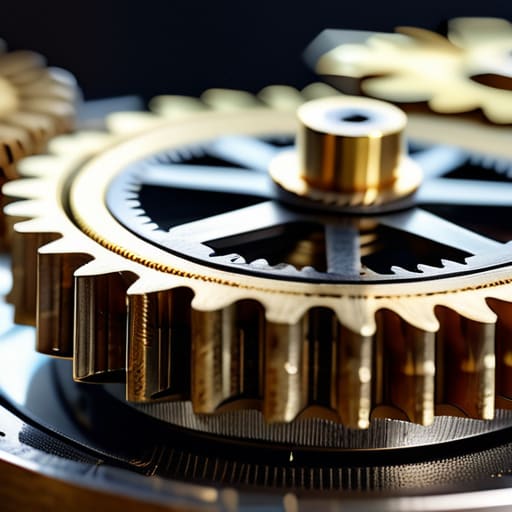
When an update stalls, I like to think of it like a clock with a speck of grit stuck in the escapement. The gears are trying to turn, but there is something tiny and stubborn lodged in the teeth, preventing the whole mechanism from advancing. In a computer, that “grit” is often a corrupted temporary file sitting in your update folder. If you don’t start clearing update cache files, the system keeps trying to build a new structure on top of a broken foundation, which is a recipe for disaster.
I spent my afternoon yesterday digging through my old laptop’s directory, and it’s much the same as cleaning a movement. You have to sweep out the old debris before you can let the new parts settle. If you simply ignore these leftover fragments, you might find yourself stuck in a frustrating boot loop troubleshooting cycle where the machine keeps trying to finish a task that was doomed from the start. You aren’t just deleting files; you are clearing the path so the logic can actually flow without hitting a snag.
Five Ways to Find the Friction in the Machine
- Check your storage capacity, because an update is just a massive pile of new instructions looking for a place to sit; if the drive is too crowded, the data has nowhere to land and the whole process just stalls.
- Verify your network stability by looking at the signal, not just the icon, because a micro-interruption in the stream can corrupt the incoming packet, leaving you with a half-finished, useless set of files.
- Disable third-party security software temporarily, as these programs often mistake a legitimate system overhaul for an invasive intrusion and slam the door shut right when the update needs to walk through.
- Inspect your power source to ensure a constant flow, because even a momentary dip in voltage can cause the write-cycle to fail, and a software update is much harder to fix once the electrical heartbeat skips.
- Reset your system clock and time zones, because if the internal timestamp doesn’t align with the server’s handshake, the security certificates will reject the connection as a forgery.
The Mechanics of a Failed Update
An error code isn’t just a nuisance; it’s a diagnostic symptom of a specific mechanical failure in your file system, much like a clicking gear in a clock tells you exactly where the tension is wrong.
Clearing the cache is essentially cleaning the grit out of the teeth of your drive so the new software files can seat themselves without slipping.
If you haven’t identified whether the break is in the downloaded data or the installation environment itself, you aren’t fixing the problem—you’re just waiting for it to happen again.
The View from the Workbench

At the end of the day, fixing a failed update isn’t about magic; it’s about clearing the debris. We’ve looked at how those cryptic error codes are just the system’s way of pointing to a specific mechanical jam, and how flushing the update cache is much like cleaning the grit out of a delicate clock escapement. Whether you are hunting down a corrupted file or forcing a handshake between your hardware and the server, you are simply removing the friction that prevents the gears from turning. Once you stop treating the “Update Failed” message as a brick wall and start seeing it as a diagnostic signal, the machine becomes much less intimidating.
I spent thirty years teaching students that you cannot master a concept until you understand its failure points. Software is no different. It feels ephemeral, floating in some digital ether, but it relies on the same logical sequences and physical storage as any brass pendulum or copper wire. Don’t let a spinning loading icon frustrate you into submission; instead, let it spark your curiosity. The next time your device stalls, don’t just click ‘retry’ and hope for the best. Take it apart mentally, find the blockage, and reclaim your role as the one who understands how the world actually works.
Frequently Asked Questions
If I clear the update cache and the error persists, does that mean the corruption is deeper in the actual system files rather than just the temporary download?
Precisely. Think of the cache like a tray of loose parts on my workbench; clearing it just ensures you aren’t trying to rebuild a clock using a bent spring you accidentally set aside earlier. If the error persists, the “bent spring” isn’t in the temporary pile—it’s part of the main gear train itself. The corruption has migrated from the delivery files into the system’s core architecture, requiring a much more invasive repair.
Is there a way to tell if the failure is caused by a physical hardware bottleneck, like a dying drive, rather than just a software glitch?
To know if the hardware is actually gasping for air, you have to listen to the machine’s physical tells. If your drive is clicking like a faulty escapement in one of my clocks, or if the system hangs entirely during heavy read/write cycles, that’s not a glitch—it’s a mechanical struggle. I always check the S.M.A.R.T. data; if those sectors are failing, no amount of software scrubbing will fix a dying platter.
Once the update finally clears, how can I be sure the system hasn't left behind any "ghost" files that might slow everything down later?
I usually think of these “ghost” files like the tiny metal shavings left on a workbench after you’ve filed down a gear. They aren’t part of the mechanism, but they’ll gum up the works eventually. To be sure, I run a disk cleanup utility—not just the standard one, but a deep scan for residual installer fragments. If I can’t see the drive’s capacity returning to its baseline, I know the debris is still hiding in the partitions.



