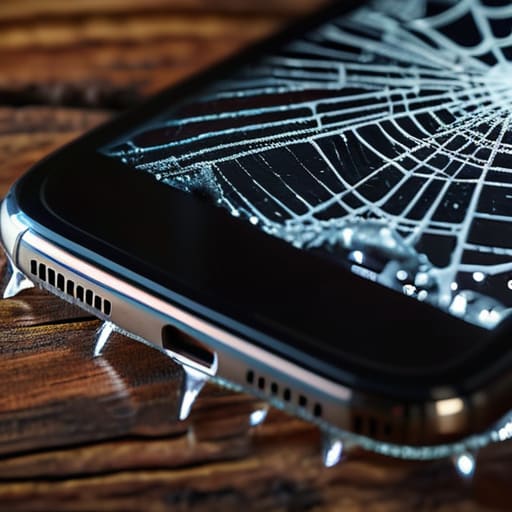

I was sitting at my workbench last Tuesday, squinting through my jeweler’s loupe at a delicate escapement wheel, when I heard that dreaded, sickening crunch of glass meeting granite. It’s a sound I know all too well—the sound of a perfectly good device suddenly becoming a jagged puzzle of silica and regret. Most people will tell you that you need to shell out hundreds at a boutique repair shop or just “live with it,” but I’ve never been one for expensive illusions. If you are looking for how to fix a cracked screen situation, you don’t need a miracle or a massive bank loan; you just need to understand that a screen isn’t a single solid object, but a layered sandwich of glass, digitizers, and liquid crystals that have simply lost their structural integrity.
I’m not going to give you a glossy, step-by-step manual written by someone who has never actually held a spudger. Instead, I promise to show you what is actually happening beneath that fractured surface. We are going to look at the components, understand why the touch sensitivity is failing, and figure out if you are actually replacing a window or the entire engine. My goal is to move you past the panic and into the mechanics of the repair, ensuring you know exactly what you’re holding before you ever turn a single screw.
Emergency Data Backup Steps Before the Darkness Sets in
Before you even think about reaching for a screwdriver or calling a shop, you have to treat this like a failing capacitor in an old radio—you need to capture the signal before the power cuts out entirely. I’ve seen too many people wait until the cracked screen touch sensitivity issues make the device completely unresponsive, only to realize their precious photos are trapped behind a wall of dead pixels. Don’t be that person. Plug the device into a computer immediately and see if it still recognizes the file system. If the digitizer is still playing nice, move your most vital files to a cloud service or an external drive right this second.
Think of this as preventing further glass damage to your digital life, not just the hardware. If the screen starts flickering or turning black, you’re losing your window of opportunity. I always tell my students that once the connection is lost, the data is just static. Whether you eventually decide on a DIY vs professional screen repair, your priority isn’t the glass; it’s ensuring that when the screen finally goes dark, your memories don’t go with it.
Cracked Screen Touch Sensitivity Issues and the Ghostly Input

When I opened up my old Seiko clock last spring, I saw how a tiny speck of grit could jam a gear; a smartphone is much more sensitive. Once you have those cracked screen touch sensitivity issues, it’s usually because the capacitive layer—that thin, invisible mesh of electrodes—is being interrupted by the physical fractures. The glass isn’t just a window; it’s a conductor. When a crack splits that layer, the electrical field gets confused. The phone starts seeing “ghost touches” because the electricity is jumping across the gaps in ways it wasn’t designed to, making the device think you’re tapping wildly when you’re actually just holding it still.
It’s a frustrating mechanical failure that often leads people to wonder about the DIY vs professional screen repair route. If you try to press harder to make it work, you aren’t fixing the connection; you’re likely just driving those microscopic glass shards deeper into the digitizer. I’ve found that once the electrical pathways are compromised, the only real way to restore order is to replace the entire assembly. Until then, you’re essentially trying to play a piano with broken keys.
Getting Your Hands Dirty: A Few Realities Before You Reach for the Screwdriver
- Don’t go hunting for a generic “screen repair kit” on a whim; if you haven’t opened the casing to see if your specific model uses adhesive or clips, you’re just gambling with your hardware.
- Clear off a workspace that has actual light—I learned the hard way that trying to seat a tiny ribbon cable in a dim room is a recipe for a permanent blackout.
- Treat the digitizer like a delicate specimen, because once those microscopic conductive traces are severed, no amount of software updates will make that ghost-touching stop.
- Keep a steady hand and a heat gun ready; most modern phones are held together by stubborn industrial adhesives that require a very specific, gentle thermal dance to release without warping the frame.
- Before you even think about replacing the glass, use a magnifying loupe to check the LCD underneath, because if the liquid crystal has bled into the cracks, a new piece of glass won’t fix the underlying void.
What You’re Really Facing Under the Glass
A cracked screen isn’t just a cosmetic nuisance; it’s a structural failure where the glass shards are actively interfering with the capacitive layer that senses your touch.
Don’t wait for the “ghost touches” to take over; once the digitizer starts misinterpreting electrical signals from your skin, the device becomes a runaway train of accidental inputs.
If the display starts flickering or bleeding ink, the liquid crystals are leaking out of their microscopic cells, meaning the hardware damage is moving from the surface into the very heart of the panel.
Beyond the Shards
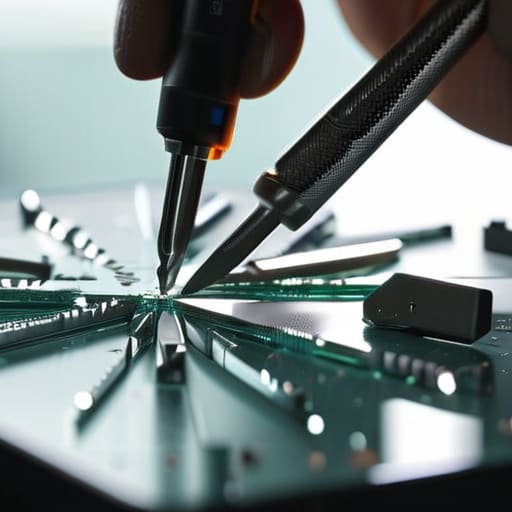
At this point, you have likely realized that a cracked screen is more than just an aesthetic nuisance; it is a structural failure that threatens the very integrity of the device. We have walked through the necessity of securing your data before the digitizer fails completely, and we have looked at why those “ghost touches” happen when the electrical field of your finger can no longer find a stable path through the fractured glass. Whether you decide to attempt a DIY replacement—which requires a steady hand and a very specific set of precision drivers—or you hand it off to a professional, remember that the goal is to restore the continuity of the circuit. You aren’t just replacing a piece of glass; you are rebuilding the interface between your intent and the machine’s response.
I spent decades watching students stare at a broken circuit as if it were a lost cause, but I always told them that nothing is truly broken if you can identify the point of failure. A shattered screen can feel like a permanent end to a device’s life, but it is really just a mechanical hurdle waiting to be cleared. Once you get that new panel seated and the adhesive set, you’ll find that the device breathes again, working exactly as it was designed to. Don’t let a little bit of broken silica intimidate you; get under the hood, find the fault, and bring the machine back to life.
Frequently Asked Questions
If I can still see the pixels but the glass is spiderwebbed, is the digitizer actually still intact or am I just on borrowed time?
It’s a bit like a clock face with a shattered crystal; the gears are still turning, but the barrier is compromised. If your pixels are clear, the LCD or OLED panel is holding steady, but that spiderwebbing means the digitizer—the invisible layer sensing your touch—is under immense mechanical stress. You’re likely on borrowed time. One wrong squeeze or a tiny bit of moisture seeping through those cracks, and the whole sensory layer will fail.
Does applying a piece of clear tape over the cracks actually stop the glass from shedding shards, or is it just a temporary bandage that hides the real damage?
I’ve sat at my workbench with a magnifying loupe, looking at how tension distributes through fractured glass, and I’ll tell you plainly: the tape is just a bandage. It won’t stop the structural failure. It does, however, act as a temporary containment field. It keeps those microscopic, razor-sharp shards from migrating into your skin or your pocket, but underneath that adhesive, the stress fractures are still spreading every time you apply pressure.
Can I actually replace just the top glass layer myself, or is the whole display assembly fused together into one single, stubborn unit?
I spent three hours hunched over my workbench with a heat gun and a suction cup trying to find the seam, and the answer is a bit of a heartbreak. In these modern sandwiches, the digitizer, the LCD, and the glass aren’t just neighbors; they’re glued together with industrial-strength adhesive. Unless you’re prepared to perform surgery with a precision heating element to peel them apart, you’re looking at replacing the entire fused assembly.



