
I spent thirty-four years watching teenagers try to convince me that gravity was merely a suggestion, so I have a very low tolerance for people claiming a piece of plastic on their wrist can perfectly map the complexities of human biology. We’ve been sold this grand illusion that these little sensors are tiny doctors, but if you actually look at the light-emitting diodes underneath the casing, you realize they are just guessing based on how much your blood pulses through your skin. Everyone wants to know how accurate fitness tracking is, but they usually ask the marketing department instead of the physics department. If your device tells you that you burned five hundred calories while you were actually just fidgeting in a chair during a long phone call, then the math is fundamentally broken.
I’m not here to give you a sales pitch or a list of shiny features that sound good in a commercial. I want to talk about what happens when the screen is dark and the sensors are struggling against the reality of your movement. I promise to strip away the jargon and look at the actual mechanics of these gadgets to show you where they succeed and where they fail. By the time we’re done, you’ll understand exactly what these machines are doing when you aren’t even looking at them.
The Fragile Truth of Optical Heart Rate Sensor Reliability
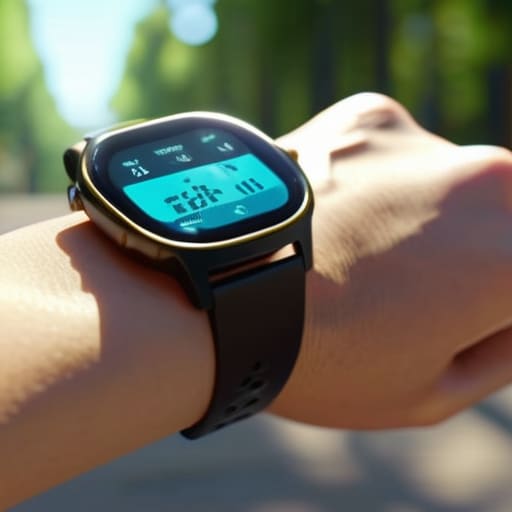
I finally got my hands on one of these sleek smartwatches last week, and I did what any sensible person would do: I popped the casing to see how it actually “sees” my pulse. Underneath that polished glass, there isn’t a doctor; there is just a tiny array of green LEDs and a light-sensitive photodiode. It works through photoplethysmography, which is a fancy way of saying it shines light into your skin to watch your blood vessels expand and contract. But here is the rub—if you move too quickly or if the strap is even a millimeter too loose, that light starts bouncing around like a pinball. When the light escapes, the optical heart rate sensor reliability plummets because the device can no longer distinguish between a heartbeat and a random flicker of ambient light.
This is why you see such wild discrepancies when comparing a smartwatch vs medical grade devices. A medical monitor uses electrical signals from your actual heart, but your watch is essentially just guessing based on shadows and light. If you are sprinting or even just shaking your arm while reaching for a tea biscuit, the sensor loses its grip on reality.
Caloric Burn Estimation Accuracy a Mathematical Mirage
I spent three hours last Tuesday with a precision scale and a heating element, trying to reconcile the physics of energy transfer with the digital readout on my wrist. It’s a frustrating exercise because, fundamentally, your watch isn’t actually measuring calories; it’s performing a series of educated guesses. When I opened up my old digital scale to see how it handled mass, I saw the load cells—physical components reacting to force. But inside a smartwatch, there is no mechanism to measure the actual metabolic combustion occurring in your mitochondria. Instead, the software takes your heart rate, your weight, and a pre-programmed algorithm to spit out a number.
This is where caloric burn estimation accuracy falls apart. The device is essentially running a mathematical model that assumes you are a standardized human being, rather than a complex biological system. It sees a spike in pulse and assumes a specific level of metabolic demand, but it cannot account for whether you are sprinting up a hill or simply experiencing a sudden bout of anxiety. Because it relies on these proxy variables, the gap between a smartwatch vs medical grade devices becomes a canyon; one is a sophisticated calculator, while the other is a diagnostic tool.
How to Stop Trusting the Numbers and Start Trusting the Physics
- Treat your wristband as a trend-spotter, not a lab instrument. If the device shows your resting heart rate went up by five beats over a week, that’s a useful signal; if it claims you burned exactly 412 calories during a stroll, it’s just guessing based on a spreadsheet.
- Tighten the strap before you sweat. When I opened up a few of these sensors, I saw how much they rely on a steady contact point; if the light can leak out between your skin and the glass, the data is nothing more than optical noise.
- Don’t let the “Steps” count fool you during housework. Most accelerometers are programmed to look for a very specific rhythmic swing; if you’re scrubbing the floor or reaching for a high shelf, the machine thinks you’re standing still because you aren’t mimicking the mechanical signature of a stride.
- Cross-reference with a chest strap if you actually care about the math. The electrical signals from your heart (ECG) are far more honest than the light-based sensors (PPG) in your watch, which get easily confused by the movement of your blood vessels during heavy lifting.
- Ignore the “Sleep Stages” if you want the truth. These devices use motion and heart rate variability to make an educated guess, but since they can’t actually peek inside your brain to see your waves, they often mistake a quiet, awake moment for deep sleep.
What I’ve Learned Under the Casing
Your tracker isn’t a laboratory instrument; it’s a collection of guesses based on light and math, so take the numbers with a grain of salt.
The most important data isn’t the specific calorie count or the exact heart rate, but the trends—the way the numbers move when you’re actually living your life.
If the sensor can’t maintain a steady reading while you’re just sitting there reading a book, it certainly isn’t going to be magic when you’re halfway through a sprint.
The Verdict Under the Glass
When I finally laid the components of my tracker out on my workbench, I realized that these devices aren’t measuring your soul; they are merely performing a series of educated guesses. We have seen that the optical sensors struggle with the messy reality of blood flow, and that the calorie algorithms are essentially just mathematical approximations dressed up in sleek silicon. If you treat these numbers as absolute gospel, you are falling for a beautiful illusion. The truth is that your fitness tracker is a collection of sensors attempting to translate the chaotic, beautiful complexity of human biology into a tidy little spreadsheet, and it will always lose some of the nuance in translation.
However, I don’t think that should discourage you from wearing one. Even a clock that loses five minutes a day can still teach you the rhythm of the afternoon if you know how to read it. Don’t look at your watch to find your truth; use it to find your patterns. Use the data to see if you are moving more this week than last, or if your resting heart rate is trending downward over a month. Technology is at its best when it serves as a mirror for our habits, not a replacement for our intuition. Just remember to keep your eyes on the horizon, not just on your wrist.
Frequently Asked Questions
If the light sensors are so easily fooled by my skin or a bit of sweat, why do they bother putting them there at all?
Because they’re much better at guessing than doing nothing at all. When I opened up my old Garmin, I saw those tiny green LEDs and photodetectors; they are essentially just trying to perform a very fast, very noisy game of “shadow puppets” against your skin. They aren’t perfect, but they provide a trend line. If the sensor tells me my heart rate is climbing while I’m sitting still, I know the math is failing, not my body.
Does the device actually know I'm walking, or is it just guessing based on how much my wrist is swinging?
The short answer? It’s guessing, but it’s a very educated guess. I opened up my old Fitbit last week to see the accelerometer—that tiny, weighted silicon chip. It doesn’t “see” you walking; it just feels the rhythmic thud of your arm swinging through space. It looks for specific patterns of acceleration and gravity. If you’re vigorously gesturing while telling a story, that chip thinks you’re halfway to the grocery store.
When I'm sleeping, is the tracker actually measuring my heart, or is it just making an educated guess based on how still I am?
I took my old tracker apart last Tuesday, and it’s a humbling reminder: there is no magic. When you’re asleep, those green LEDs are still pulsing against your skin, trying to catch the rhythmic change in light absorption from your blood flow. It isn’t guessing your stillness; it’s fighting through the friction of your movement and the dimming of your pulse. It’s a real measurement, just one struggling against a very messy, moving target.