
I spent thirty-four years in a classroom watching students stare blankly at physics equations, and if there is one thing I’ve learned, it’s that people are far too easily dazzled by shiny packaging. You’ll walk into a shop and see a salesperson waving a spec sheet in your face, shouting about frequency responses and decibel levels as if those numbers actually mean anything when you’re just trying to listen to a podcast on the bus. It’s all quite exhausting. Most people approach the question of how to choose headphones by looking at what the marketing department wants them to see, rather than looking at the actual mechanics of how the sound is being driven into their ear canal.
I don’t care much for the hype, and I certainly won’t give you a list of technical jargon that you can’t use in your daily life. Instead, I want to talk about what happens when the music is playing and you’ve forgotten the device is even there. I’m going to show you how to look past the glossy finish and understand the physical reality of the drivers and the seal, so you can find a pair that actually fits your habits.
The Ghost in the Machine Understanding Audio Driver Types
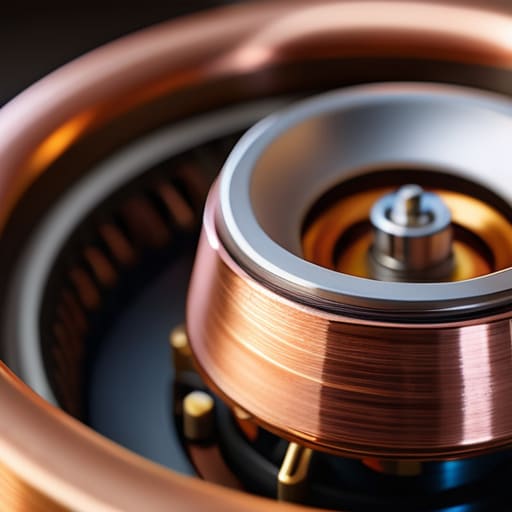
I remember the first time I pried open a pair of high-end monitors just to see what was actually pushing the air. Most people think of sound as magic, but once you see the diaphragm, it’s just physics. When you’re looking at different audio driver types, you’re really just deciding how much mechanical movement you can tolerate. Dynamic drivers are the old reliable—think of them like a piston in a car engine. They use a coil and a magnet to move a cone, and they’re wonderful at that deep, physical thump you feel in your chest. They are robust, which is why they remain the standard for most casual listening.
Then you have the planar magnetic drivers, which are a different beast entirely. I once disassembled a pair to see why they sounded so “airy,” and the difference was immediate: instead of a cone, there’s a thin, flat film suspended between magnets. Because that film is so light, it reacts to electrical signals with almost zero lag. It doesn’t “struggle” to keep up with the music. If you’re looking for precision, that’s where the secret lies, though they often require more juice to drive properly.
Frequency Response Hearing the Soul When No One Listens

When I sat at my workbench last Tuesday, I had a pair of high-end studio monitors spread out before me, their diaphragms resting like delicate lungs on the velvet mat. We often get distracted by the flashy marketing of noise cancelling technology, but if you want to know if a pair is actually worth your money, you have to look at the frequency response. It isn’t just a line on a graph; it’s the range of breath a device can take. A narrow response is like a person who can only whisper or scream, never finding that sweet, middle ground where the nuance of a cello or the grit of a vocal lives.
I’ve learned that a “flat” response isn’t always the gold standard for living your life. If you are looking for the best headphones for commuting, you might actually want a slight bump in the lower frequencies—a little extra warmth to cushion the roar of the subway. I don’t care what the spec sheet says about decibels; I want to know how the sound settles in the room when the music is just playing in the background, filling the silence without demanding your undivided attention.
The Real-World Test: Five Ways to Know They’re Truly Yours
- Forget the laboratory isolation; I want to know how they behave when you’re actually living. Put them on and walk through your house, go into the kitchen to make tea, or sit in your favorite armchair. If the headband pinches your temples after ten minutes of mundane movement, they aren’t the right pair, no matter how impressive the frequency graph looks on paper.
- Look past the glossy finish and examine the contact points. I’ve spent enough time with my jeweler’s loupe to know that a device is only as good as its weakest joint. Check the hinges and the tension of the headband; if they feel flimsy or overly plastic-y, they won’t survive the daily habit of being tossed into a bag or picked up off a nightstand.
- Test the “seal” without looking at a spec sheet. If you’re choosing in-ear monitors, they need to create a physical vacuum in your ear canal to move the air correctly. If you can feel the air leaking or hear the world rushing in around the edges, the driver won’t be able to do its job of moving that low-end energy you’re looking for.
- Don’t trust the “noise cancelling” marketing—test the silence. Most people think they want total isolation, but I want to know what happens when the machine is idle. Does the electronic hiss of the circuitry announce itself when no music is playing? A good pair should disappear into the background, leaving you with nothing but the music and your own thoughts.
- Check the cable’s “memory.” I have a particular disdain for wires that coil themselves into tight, stubborn knots the moment you move. If you are using wired headphones, run your fingers along the jacket; you want something supple that obeys your movements rather than fighting you every time you reach for a book.
What Remains When the Music Stops
Stop obsessing over the numbers on the box; a flat frequency response is useless if the driver’s physical housing makes the sound feel like it’s trapped in a tin can.
Look for how the headphones behave when they are just sitting on your desk—if the clamping force is too high, they aren’t tools for listening, they’re tools for headaches.
Remember that the best pair isn’t the one with the most features, but the one whose mechanics disappear so completely that you forget you’re wearing them at all.
The Final Assembly

We have spent a lot of time looking at the guts of these things—the way a diaphragm dances to move air and how a frequency curve dictates whether a song feels like a punch to the chest or a gentle breeze. Choosing the right pair isn’t about memorizing a list of technical specs to impress a salesperson; it is about matching the mechanical reality of the driver to the way you actually live. Whether you need the isolation of closed-back shells for a noisy bus ride or the wide, airy soundstage of an open-back design for a quiet afternoon in your armchair, remember that the best headphones are the ones that disappear. You aren’t buying a gadget; you are selecting a precise tool for your ears.
At the end of the day, once you’ve tightened the screws and matched the impedance to your player, the physics fades into the background. I spent years teaching students that equations are just descriptions of what is happening, but the real magic is in the result. When you find that perfect pair, you won’t be thinking about decibels or driver diameters anymore. You will simply be sitting there, lost in a melody, realizing that the technology has done its job so well that it has become invisible. That is when you know you’ve found the right one.
Frequently Asked Questions
If I’m mostly listening to podcasts while I’m doing my gardening, do I actually need those expensive high-fidelity drivers, or am I just paying for physics I won't use?
If you’re out in the dirt, you’re fighting wind, rustling leaves, and the hum of the neighborhood. High-fidelity drivers are designed for a silent room where you can hear the microscopic decay of a piano string. In a garden, that precision is lost to the environment. You don’t need expensive physics; you need something with a high noise floor and a rugged build. Save your money—buy a pair that can survive a splash of water instead.
I've heard people talk about "open-back" versus "closed-back" designs—if I can't see the internal air movement, how do I know which one won't leak sound all over my living room?
Think of it like a window versus a door. When I opened up my old Sennheisers, I saw the driver sitting there, exposed to the air like a speaker in a room; that’s an open-back. The air—and the sound—just flows right through the mesh. If you want privacy, you need a closed-back. Those have a solid physical seal around the driver to trap the pressure inside, keeping your music from drifting into the kitchen.
When a box says "impedance" in Ohms, is that just a fancy way of telling me whether I need a bulky amplifier to make the thing actually work?
You’ve hit the nail on the head. Think of impedance like the friction in a gear train; it’s the resistance the headphones offer to the electrical current. If you have high-impedance drivers, they require more “push” to move those diaphragms properly. If you plug them straight into a phone, they’ll sound thin and lifeless. So yes, a high Ohm rating is usually a polite way of saying, “Please buy an amplifier for me.”