
I spent thirty-four years in a high school physics classroom, and if there is one thing I learned, it is that people love to wrap simple truths in layers of expensive, intimidating jargon. You’ll see marketing brochures claiming these headphones use “advanced psychoacoustic algorithms” to create a “sanctuary of silence,” but that is just nonsense designed to pad the price tag. I didn’t feel like I truly understood how noise cancelling works until I sat at my workbench last Tuesday, stripped the casing off my old pair, and actually looked at the tiny microphones and the driver assembly. It isn’t magic, and it isn’t a digital miracle; it is just a very clever bit of wave interference.
I am not here to sell you on a lifestyle or recite a textbook definition that leaves you more confused than when you started. My goal is to show you exactly what is happening inside that plastic shell once the power is turned on. I want to explain the mechanical reality of how those tiny components fight against the roar of a bus engine or the hum of an air conditioner. By the time we are done, you won’t just be using the device—you will actually understand the physics of your own silence.
Microphone Sensor Technology Catching the Chaos Before It Strikes
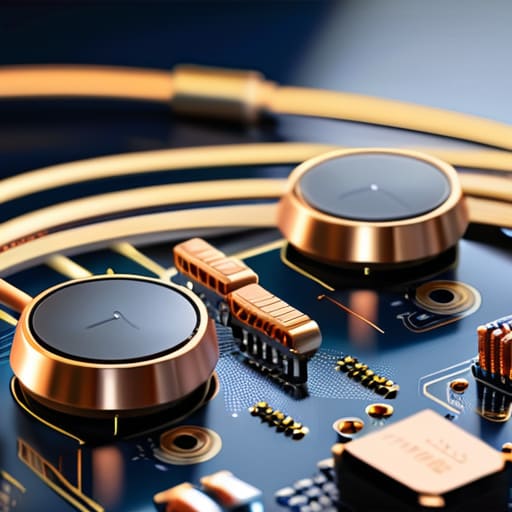
Once I unscrewed the casing on my old pair of studio monitors, I realized that silence isn’t just the absence of sound; it’s a very active process of listening. To make this work, your headphones aren’t just sitting there passively. They are equipped with tiny, incredibly sensitive microphones tucked right against the ear cups. When I opened my current pair, I found these little components acting like the nervous system of the device. Their only job is to catch the chaos—the low hum of the refrigerator or the roar of a bus engine—before those vibrations even reach your eardrum.
This microphone sensor technology has to be lightning-fast. It isn’t enough to just hear the noise; the sensor has to map the incoming pressure waves in real-time. If there is even a millisecond of lag, the whole illusion falls apart. I think of it like a lookout on a ship, constantly scanning the horizon for incoming waves. The sensor picks up the ambient sound reduction targets, feeding that data into the processor so the system knows exactly what kind of “anti-noise” it needs to prepare.
The Ghost in the Machine Mastering Destructive Interference Physics

Once I had the microphones mapped out, the real magic—the part that feels like a parlor trick until you see the math—happens in the tiny processor. This is where we encounter destructive interference physics in its purest, most practical form. Think of a sound wave like a physical ripple on the surface of a pond. If two ripples meet, they usually just make a bigger splash. But if you can time a second ripple to hit the exact peak of the first one at the precise moment it’s rising, they don’t combine; they cancel each other out.
Inside the headset, the chip takes that “chaos” the microphones caught and calculates a mirror image of it. It generates anti-noise sound waves—essentially the mathematical opposites of the incoming noise. When these two waves collide inside your ear canal, they effectively flatten one another. It isn’t just about muffling the world; it is a constant, high-speed battle of peaks and valleys. If the timing is off by even a fraction of a millisecond, you don’t get silence; you just get more noise. It is a delicate, beautiful dance of equilibrium.
A Few Things to Keep in Mind Before You Tune Out the World
- Don’t expect silence from a jet engine; these headphones are much better at fighting predictable, low-frequency hums than they are at stopping a sudden, sharp scream or a car horn.
- If you feel a strange sense of pressure in your ears, don’t panic—it’s just your brain reacting to the lack of low-end sound waves it’s used to hearing, even if those waves were just background noise.
- Battery life isn’t just for your music; remember that the “anti-noise” processing is a constant mathematical calculation that drains power much faster than simply playing an MP3.
- If you’re walking near traffic, please use the “transparency mode” if your pair has it; you need those microphones to let the important sounds back in so you don’t get stepped in front of.
- Keep the little mesh grilles clean; if dust builds up over those external microphones, the system can’t “hear” the ambient chaos properly, and your noise cancellation will start to feel sluggish and weak.
The Physics of Quiet: What I’ve Learned from the Circuitry
It isn’t magic or “silence” in the literal sense; it is a constant, high-speed mathematical battle where the headphones are essentially playing a game of tug-of-war with the sound waves in the air.
For the system to work, the microphones have to be incredibly sensitive—they are essentially the “ears” of the device, catching the vibration of the room before your own eardrum can react to it.
True noise cancellation relies on the perfect timing of that “anti-noise” wave; if the phase is even slightly off, you don’t get quiet, you just get more noise.
The Quiet Victory of a Tiny Wave

When I sat at my workbench with these headphones spread out in a dozen tiny pieces, I realized that noise cancellation isn’t about magic; it is about a very disciplined sort of math. We have the microphones acting as the scouts, constantly scanning the air for incoming pressure waves, and a digital processor that acts as the brain, calculating the exact inverse of that chaos. By the time the sound reaches your eardrum, the hardware has already deployed a counter-wave to meet the noise head-on. It is a delicate, high-speed dance of destructive interference where the peaks and valleys of sound are perfectly aligned to cancel one another out. If the timing is off by even a fraction of a millisecond, the illusion breaks, and you’re back to hearing the hum of the refrigerator.
Looking at the circuit boards and the tiny drivers, I am reminded that even the most complex silence is actually quite busy. We often think of technology as something that adds to our world—more screens, more noise, more distractions—but these devices are designed to subtract. There is a profound beauty in a machine that uses physics not to shout, but to create a pocket of stillness. It makes me wonder what else we might find if we keep looking beneath the surface; perhaps the most important things a machine can do are the things you cannot see happening while you simply enjoy the quiet.
Frequently Asked Questions
If the headphones are constantly creating "anti-noise," doesn't that extra electrical activity eventually drain the battery faster?
You’ve hit on the exact trade-off I always look for when I open a circuit board. Yes, it absolutely does. Those tiny processors are working overtime, constantly running math problems to flip those waves in real-time. It’s not just passive plastic and wire; it’s an active, hungry little computer sitting against your ear. If you turn the cancellation off, you’ll notice the battery life stretches out significantly. It’s the price we pay for silence.
Why does it struggle so much with sudden, sharp sounds like a plate dropping, even though it handles the low hum of an engine perfectly?
It comes down to a race against time. When I opened my old headphones, I saw how much processing has to happen between the mic and the driver. A low engine hum is a predictable, rhythmic wave; the chip can “see” it coming and prep the anti-noise. But a dropping plate? That’s a chaotic spike. By the time the sensor catches the sound and the processor calculates the inverse wave, the actual noise has already hit your eardrum.
Is there a physical limit to how much sound can be cancelled before the internal processor simply can't keep up with the math?
That’s the million-dollar question, isn’t it? I sat there with my multimeter wondering the same thing. Yes, there is a wall. It’s a race between the incoming wave and the chip’s ability to crunch the trigonometry. If the sound changes too fast—like a sudden, sharp clap—the processor is still calculating the “anti-noise” for the sound that already happened. You can’t cancel what has already passed through your eardrum.