
I spent thirty-four years in a classroom watching students stare blankly at physics equations, but nothing quite compares to the glazed look I see in people’s eyes when they walk into a mobile shop. They get swept up in the marketing gloss—the “ultra-dynamic displays” and “AI-enhanced neural engines”—as if those words actually mean something when the device is sitting idle in your pocket. Most people think they need to spend a fortune to get quality, but they’re being sold a fantasy. If you want to learn how to choose a mid range phone without being swindled, you have to stop looking at the shiny advertisements and start looking at the actual utility of the components inside.
I’m not going to give you a list of speculative benchmarks or jargon that sounds impressive but lacks substance. Instead, I’m going to approach this like I approach one of my old grandfather clocks: by looking at the gears that actually turn. We are going to strip away the fluff and focus on the hardware that dictates how a phone behaves when you aren’t actively staring at it. My promise to you is simple: I will show you how to identify the reliable workhorses that offer real value, ensuring you don’t pay for a single feature that doesn’t serve your daily habits.
Balancing Features and Price When No One Is Watching
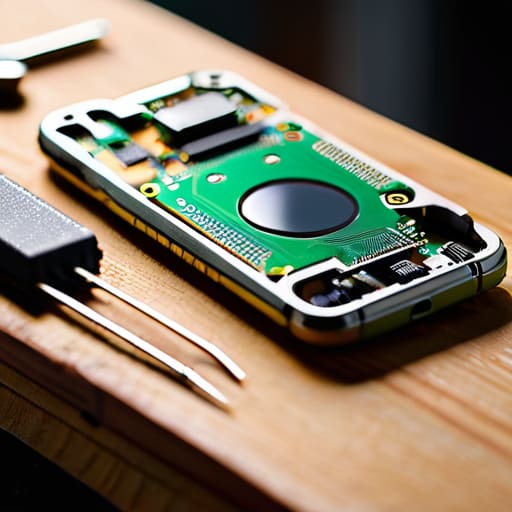
When I sat at my workbench last Tuesday, I realized that most people shop for phones the same way they shop for fancy kitchen gadgets: they look at the shiny exterior and the list of promises printed on the box. But a phone isn’t a decorative vase; it’s a collection of energy transfers and logic gates. When you are balancing features and price, you have to stop looking at the marketing adjectives and start looking at the silicon. I spent the afternoon stripping down a popular mid-range model, and it reminded me that a high-end camera sensor is useless if the processor performance vs price ratio is skewed by a chip that throttles the moment the casing gets warm.
You shouldn’t pay a premium for a “pro” label if the hardware underneath is just recycled parts from three years ago. I want to know what happens when the screen is dim and you’re just scrolling through a text thread in a dark room. If the mid-range battery life expectations aren’t met because the software is constantly fighting the hardware for power, that “extra” storage you paid for is just wasted space. Don’t buy the hype; buy the efficiency.
Best Budget Smartphone Specs That Hold Their Ground
When I sat at my workbench last Tuesday, I had a budget handset disassembled in front of me, and it reminded me that a spec sheet is often just a list of promises. To find the best budget smartphone specs that actually matter, you have to look past the sheer number of megapixels. I look for the silicon—the processor. In these lower-priced models, you aren’t looking for raw speed for heavy gaming; you’re looking for efficiency. If the chip is too weak, the phone will struggle just to manage its own background processes, turning a “bargain” into a frustrating paperweight within six months.
Then there is the matter of the screen and the juice. I’ve seen too many manufacturers cut corners on the panel to save a few cents, resulting in a display that washes out the moment you step near a window. You want a decent smartphone display quality comparison to be your guide here; if the colors look muddy when the phone is just sitting idle on a table, they’ll be worse when you’re actually using it. Pair that with realistic mid-range battery life expectations, and you have a device that survives a full day of mundane tasks without needing to be tethered to a wall.
Five Things to Look For Before You Open the Box
- Look past the megapixels. A camera sensor is just a piece of silicon catching photons; if the processor isn’t fast enough to handle the math required to clean up that image, you’re just left with a very expensive, blurry memory.
- Check the thermal management. I’ve spent enough time with a screwdriver to know that heat is the enemy of efficiency; if the phone doesn’t have a decent way to dissipate warmth, that “fast” processor will throttle itself into a crawl within ten minutes of use.
- Don’t fall for “fast charging” numbers alone. It’s easy to claim a phone charges in thirty minutes, but you need to see if the battery chemistry and the voltage regulation can actually handle those cycles without degrading the cell by next summer.
- Inspect the build materials, not just the glass. A mid-range phone needs to survive being shoved into a pocket or dropped on a kitchen tile; if the internal mounting of the components feels flimsy or uses cheap plastics, the vibrations from a simple drop will shake the connections loose.
- Demand software longevity. A device is a tool, and a tool is useless if its internal logic becomes obsolete in two years; make sure the manufacturer actually commits to security patches, otherwise you’re buying a paperweight that’s vulnerable to every new bit of malicious code.
My Final Checklist Before You Open Your Wallet
Stop chasing the highest megapixel count on the box; look instead at the sensor size and the aperture, because a fancy number is useless if the glass can’t actually pull in enough light when you’re just walking home at dusk.
Don’t let a slim profile fool you into thinking a phone is high-quality; if the battery capacity is too small to sustain the processor’s idle draw, you’ll spend more time tethered to a wall than actually using the device.
Prioritize the efficiency of the chipset over the raw speed of its clock rate, because a phone that runs hot and throttles its performance after ten minutes of use is a piece of poorly engineered machinery, no matter how much it cost.
The Final Inspection
At the end of the day, choosing a mid-range phone isn’t about finding the one with the most impressive list of numbers on the box; it’s about finding the machine that won’t fail you when you actually need it. I’ve spent enough time with a screwdriver in my hand to know that a shiny casing means nothing if the internal architecture can’t handle your daily habits. You need to ensure that the processor isn’t just fast on a benchmark test, but efficient enough to keep the device from heating up in your pocket, and that the battery isn’t just a large capacity, but a reliable source of power that survives your longest days. Don’t let the marketing teams distract you from the mechanical reality of what you are actually buying.
I often tell my former students that physics doesn’t care about your intentions, only your actions. The same is true for your technology. A phone is just a collection of circuits and silicon waiting to serve a purpose, and its true value is revealed not in the showroom, but in the quiet moments of your routine. When you finally settle on a device, don’t just celebrate the purchase; celebrate the fact that you actually understand what is happening inside that little glass slab. Once you know how the gears turn, you stop being a mere consumer and start being a master of your tools.
Frequently Asked Questions
If I’m not a heavy gamer, is it actually worth paying more for a high-end processor, or am I just paying for silicon I’ll never use?
Think of a processor like a clockwork movement. You don’t need a complex tourbillon just to tell the time, but a cheap, sluggish motor will eventually make the whole mechanism struggle to keep pace. Even if you aren’t gaming, a better chip handles background tasks—like syncing your mail or refreshing a webpage—with much less friction. You aren’t paying for raw power; you’re paying for the efficiency that keeps the device from stuttering when you’re just living your life.
How can I tell if a "good camera" is actually a quality lens and sensor, rather than just some clever software trickery that disappears in low light?
Look at the sensor size, not the megapixel count. Marketing loves big numbers, but a massive sensor is what actually catches light when the sun goes down. I once opened up a mid-range unit to see the silicon myself; if that sensor is tiny, no amount of “AI enhancement” can fix the physical lack of photons. If the software is doing all the heavy lifting to brighten a dark scene, it’s just painting over shadows.
When I look at the battery capacity on the box, how much of that is real-world endurance and how much is just a number meant to look impressive?
That number on the box—the milliampere-hours (mAh)—is just a measure of the tank’s size, not how much fuel you actually get. It’s like looking at a clock escapement; the size of the gear doesn’t tell you the rhythm. A massive battery in a phone with a poorly optimized processor is like a heavy pendulum that drains itself just by existing. I don’t trust the capacity; I look at the efficiency of the chipset.