
I spent thirty-four years in a physics classroom watching teenagers stare blankly at diagrams of wave interference, and frankly, I see that same glazed look when people try to figure out how to choose a soundbar or speakers. They get buried in a mountain of marketing jargon—”Dolby Atmos,” “spatial audio,” “high-fidelity”—as if these shiny buzzwords are magic spells that will suddenly make their living room feel like a cinema. But if you can’t explain how a driver actually moves air to create a sense of depth, you’re just buying an expensive plastic box. Most of these sales pitches are designed to hide the mechanical reality of the device behind a veil of digital promises.
I’m not here to sell you on a brand or a spec sheet that looks good on paper but fails in practice. Instead, I want to talk about what is actually happening inside those enclosures. My promise to you is simple: I will help you look past the glossy packaging and understand the physics of the sound you are actually paying for. We are going to strip away the hype and focus on how these components interact with your space, so you can make a decision based on what you actually hear, not what the manual claims.
Surround Sound vs Soundbar Finding the Unseen Resonance
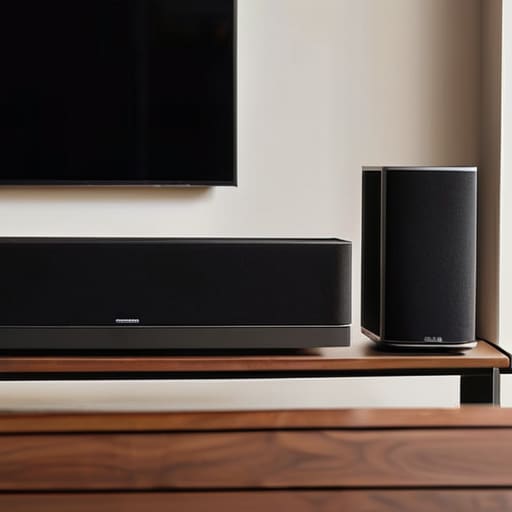
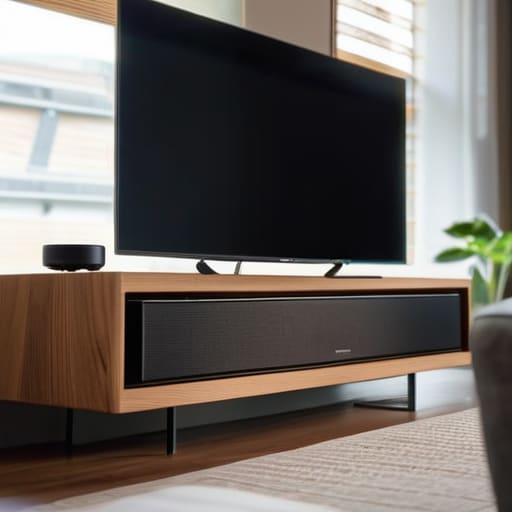
I spent last Tuesday with a screwdriver and a pair of tweezers, dissecting an old wireless subwoofer just to see how the signal actually jumps from the main unit to the driver. It’s a bit like a conversation; the soundbar is the person speaking, but the surround speakers are the echoes that tell you where the walls are. When people ask me about surround sound vs soundbar, they usually want to know which one is “better,” but that’s a nonsense question. It’s about the physics of the room. A soundbar is a single, clever unit that uses timing to trick your ears, whereas a true multi-speaker setup creates a physical field of pressure.
If you are looking at a home theater setup guide, you’ll see plenty of diagrams, but I want you to think about the air. A soundbar is efficient, especially if you’re hunting for the best speakers for small rooms where you can’t afford to trip over wires. However, if you want to feel the ceiling drop during a thunderstorm, you need components that can actually move the air behind and above you. If you can’t visualize the path the sound waves take to hit your ears, you aren’t ready to buy the hardware yet.
Best Speakers for Small Rooms Truth Beyond the Decibels

I spent last Tuesday hunched over my workbench, dismantling an old bookshelf speaker just to see how the crossover network managed the hand-off between the woofer and the tweeter. It’s a delicate dance, and when you’re working with limited square footage, that dance becomes a crowded tango. Most people assume they need massive cabinets to get “big” sound, but that’s a misunderstanding of physics. In a cramped space, large drivers often just create muddy standing waves that bounce off your walls like a pinball. When searching for the best speakers for small rooms, I look for high-quality near-field monitors or compact satellite systems. You want something that moves air efficiently without needing to physically displace half your living room.
The real trick isn’t just about volume; it’s about controlling the reflections. If you’re following a home theater setup guide for a small apartment, you’ll realize that a single, well-placed soundbar with decent upward-firing drivers might actually outperform a messy tangle of wires. You have to consider how the sound interacts with your furniture. If the cabinet is too large, it becomes a resonator for the wrong frequencies, turning your bass into a dull, indistinct thud rather than a precise note.
Five Things to Check Before You Let the Sound Take Over
- Stop obsessing over the wattage on the box. A high number doesn’t mean a better sound; it just means the amplifier is capable of pushing more current. I want you to listen for the transient response—how quickly that speaker can start and stop a sound. If a speaker can’t stop a drum beat cleanly, it’s just going to turn your living room into a muddy mess of lingering vibrations.
- Look at the driver placement, not just the grill. I took a modular soundbar apart last Tuesday, and I could see exactly why the mid-range felt hollow: the drivers were squeezed too close to the edge of the housing, causing diffraction. If you can’t see where the air is actually being pushed, you’re just buying a decorative plastic bar.
- Test the “idle” behavior. A good system shouldn’t hiss or hum when the movie is paused and the room is silent. If there is a constant electrical floor noise leaking from the components, it means the shielding inside the chassis is cheap. If it can’t stay quiet when it’s doing nothing, it won’t be truly silent when it’s supposed to be.
- Don’t ignore the physics of your furniture. If you’re placing a soundbar directly against a wall, you’re essentially turning that wall into a giant, uncontrolled secondary radiator. You need to know if the unit has dedicated upward-firing drivers for reflection, or if it’s just relying on the bounce of a generic wave to trick your ears.
- Check the connectivity logic. I don’t care how many “smart” features it has if the handshake between your TV and the speaker is clunky. If the signal path requires three different proprietary dongles to work, you’ve introduced three more points of failure. I prefer a system where the signal moves through a clean, direct path—simple physics, fewer headaches.
The Mechanics of Listening: What Matters When the Lights Go Down
Stop chasing the “surround sound” label on the box; what you actually need to understand is how the sound waves interact with your specific walls and corners once the device is tucked away.
Don’t let a high decibel rating fool you into thinking a speaker is “powerful”—true quality is found in how the driver maintains its precision when it’s working hard to move air in a cramped space.
Before you wire anything up, ask yourself if you can trace the path of the sound from the driver to your ear; if you can’t visualize how the placement changes the physics of the room, you’re just buying expensive furniture.
The Mechanics of Listening
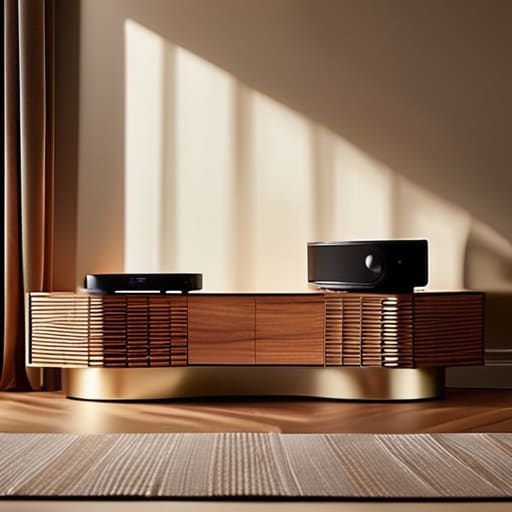
At the end of the day, choosing between a sleek soundbar and a dedicated speaker setup isn’t about reading a spec sheet or chasing the highest wattage on a box. It’s about understanding how sound waves actually interact with your specific walls and furniture. Whether you opt for the convenience of a single unit or the complexity of a multi-driver system, you have to account for how the physical placement dictates the clarity of the dialogue and the depth of the low end. Don’t get distracted by marketing jargon; focus on whether the hardware actually solves the acoustic problems of your living room. If you can’t visualize how the sound is bouncing off your bookshelf to reach your ears, you haven’t truly selected the right tool for your space yet.
I spent years teaching students that physics isn’t just a collection of equations in a textbook; it is the invisible force that governs everything from the swing of a pendulum to the vibration of a cello string. Sound is no different. When you finally settle on your setup, don’t just turn it on and let it play. Sit in the center of the room, close your eyes, and listen to the way the air moves. Once you stop hearing “noise” and start hearing the intentionality of the vibrations, you’ll know you’ve finally mastered your environment.
Frequently Asked Questions
If I add a wireless subwoofer to a soundbar, am I actually changing the physics of the room, or just adding more noise?
It’s certainly not just noise, though it can feel like a headache if the placement is wrong. When I opened up my old receiver, I saw how those low-frequency drivers are built to move massive amounts of air. By adding a subwoofer, you aren’t just “adding sound”; you are introducing a dedicated pressure wave that handles the heavy lifting. You’re physically changing how the room breathes, shifting the acoustic load away from your tiny soundbar drivers.
How much of the "cinematic experience" is actually the speaker hardware versus the software processing the signal?
It’s a bit like a clock: the software is the pendulum’s rhythm, but the hardware is the actual weight of the brass. You can have the most sophisticated algorithms in the world trying to simulate a concert hall, but if your drivers lack the physical excursion to move enough air, that “cinematic” feeling is just a digital ghost. Software creates the illusion of space, but the hardware provides the actual impact you feel in your bones.
When I look at a spec sheet, how can I tell if a speaker is designed to move air or if it's just being marketed for its aesthetic?
Stop squinting at the glossy finish and look at the excursion. When I opened up my old studio monitors, I wasn’t looking at the wood veneer; I was looking at the magnet size and the compliance of the surround. If the driver looks tiny compared to its housing, or if the spec sheet omits the displacement volume, they’re selling you furniture. A real speaker needs room to breathe—literally—to push air without choking.