
I spent thirty-four years in a physics classroom watching teenagers try to negotiate with the laws of thermodynamics, but I’ve never seen a more futile negotiation than the one we hold with our smartphones. We set these digital boundaries, these little colorful charts and timers, and then we immediately find the loophole—the “ignore for fifteen minutes” button that turns into an hour of mindless scrolling. Most advice on how to use screen time tools honestly treats these apps like magical solutions, but they aren’t; they are just clunky mechanisms that we often bypass the moment the notification becomes inconvenient.
I’m not here to sell you on a new productivity app or a subscription-based lifestyle hack. Instead, I want to look at the internal gears of our habits and figure out why we keep breaking our own rules. I’ll show you how to treat these digital limits not as external punishments, but as structural constraints that actually work when you aren’t looking. We aren’t going to talk about “digital wellness” in the abstract; we are going to look at the mechanical reality of your behavior and find a way to make your intentions match your actions.
Overcoming Screen Time Loopholes When the Dashboard Lies

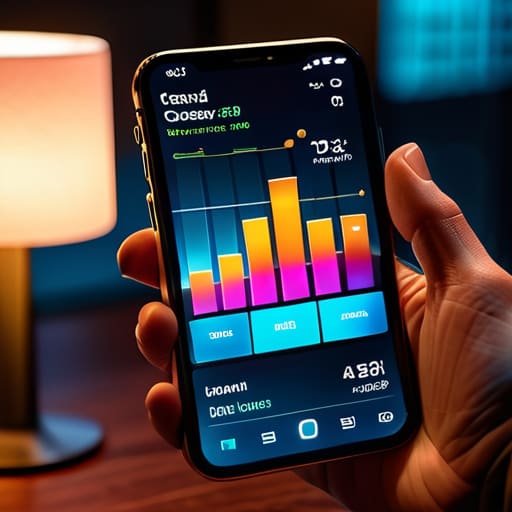
The problem with most monitoring software is that it’s designed to track categories, not intentions. Last week, I sat with my daughter’s phone and realized that while the “Social Media” bucket looked perfectly reasonable, her “Productivity” bucket was bloated. I realized she had been using a browser-based note-taking app to essentially scroll through news feeds. It’s a clever bit of mechanical sleight-of-hand; the device thinks it’s helping you work, but the human behind it is just seeking a dopamine hit. When the dashboard lies to you like that, you aren’t actually overcoming screen time loopholes—you’re just finding more efficient ways to bypass your own boundaries.
To fix this, we have to stop treating these tools like infallible judges and start using them as mere sensors. If a tool tells you that you’ve only spent twenty minutes on your phone, but your eyes feel heavy and your neck is stiff, the sensor is failing to capture the reality of your engagement. True intentional technology use requires you to look past the colorful pie charts and ask what the device was actually doing while you thought you were being productive.
The Psychology of Digital Distractions and Our Hidden Escapism
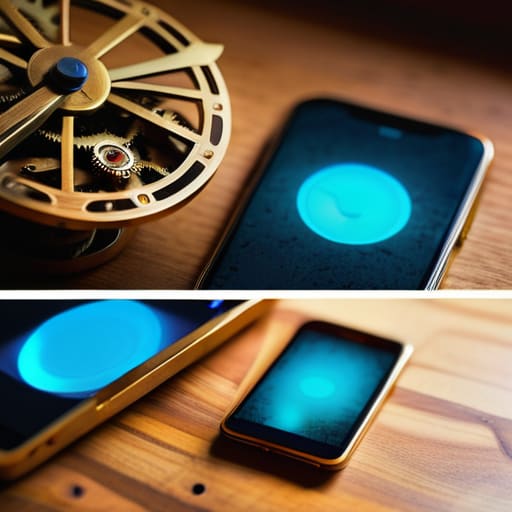
When I sat at my workbench last Tuesday, working on a 19th-century pendulum clock, I realized why we struggle so much with these devices. A clock is honest; if a gear is stripped, the mechanism stops. But our phones are designed to be slippery. The psychology of digital distractions isn’t about a lack of willpower; it’s about how these machines are engineered to exploit our dopamine loops. We aren’t just checking a notification; we are seeking a micro-dose of stimulation to mask a moment of boredom or anxiety. It is a form of subconscious escapism that happens long before we even realize we’ve picked the device up.
I’ve noticed that we often use these tools as a way to avoid the “quiet” parts of our own minds. We tell ourselves we are being productive, but we are really just avoiding the friction of deep thought. To move toward intentional technology use, we have to stop treating the screen as a solution to discomfort. If you want to actually change your relationship with your phone, you have to acknowledge that the distraction isn’t the app—it’s the emotional itch you’re trying to scratch.
Setting the Gears to True: Five Ways to Stop Cheating Your Own System
- Stop the “Other Device” Shuffle. I’ve seen how it works—you hit the limit on your phone, so you pick up the tablet. It’s like trying to fix a clock by moving the hands forward instead of adjusting the escapement. If you set a limit, it has to apply to your entire digital ecosystem, or you’re just moving the problem to a different casing.
- Audit Your “Productivity” Apps. Be careful with those tools that claim to help you work but actually just eat up your time. If an app is on your “allowance” list but you find yourself staring at its interface for twenty minutes, it’s not a tool; it’s a distraction in a fancy suit. If it doesn’t have a clear, mechanical purpose, it shouldn’t be exempt.
- Treat the Notification as a Signal, Not a Command. When I work on a timepiece, I don’t react to every tiny tick; I look for the pattern. Your phone does the same. If you find yourself reflexively unlocking the screen every time a light flashes, you aren’t using the tool—the tool is using you. Turn off the non-essential pings so you can actually see the mechanism of your own attention.
- Use the “Manual Override” Test. Ask yourself: “If this screen went black right now, would I be doing something meaningful, or would I just be twitching?” If you can’t answer that, your screen time settings are just a decorative layer. Real discipline is knowing what you’re doing when the dashboard isn’t even turned on.
- Schedule Your Downtime Like a Precision Instrument. Don’t just react to the “Time’s Up” warning. Set specific windows where the devices are physically put away—in a drawer, out of sight. A machine works best when it has a controlled environment; your brain works best when it isn’t constantly being bombarded by invisible frequencies.
The Mechanics of Self-Regulation

Treat your screen time data like a faulty clock mechanism; if you find yourself bypassing a limit, the tool isn’t broken, but your intention is, and you need to recalibrate your habits rather than just resetting the timer.
True digital discipline isn’t about the numbers on a dashboard, but about the invisible friction you create for yourself—like putting your phone in another room—so that your “autopilot” mode doesn’t take over when you’re tired.
Stop looking for a software patch to fix a behavioral leak; use the data to identify the specific “gears” of your distraction, whether it’s a specific app or a certain time of day, and address the underlying habit instead of the symptom.
The Mechanics of Self-Regulation
At the end of the day, these digital dashboards are just another set of gears in a much larger machine. We’ve looked at how easy it is to bypass the locks, how our brains seek out the dopamine hit of a mindless scroll, and why the data often fails to tell the whole story. If you keep treating screen time tools as a way to outsmart the system rather than a way to understand your own friction points, you’ll always find a loophole. You can’t fix a clock by simply painting over the cracks in the casing; you have to look at the tension in the spring and the alignment of the escapement. Honesty with these tools means acknowledging that the real struggle isn’t with the software, but with the impulse that makes you want to bypass it in the first place.
I spent years teaching my students that a formula is useless if you don’t understand the physical reality it represents. Technology is no different. These apps are merely sensors; they are not the master of your attention. True digital wellness isn’t found in a perfectly green progress bar or a minimized usage report, but in the quiet moments when you choose to put the device down because you actually want to be elsewhere. Don’t aim for a perfect score on an app. Aim for a life where you are the one winding the clock, rather than letting the notifications dictate the rhythm of your day.
Frequently Asked Questions
If I'm using a separate device to bypass the limits on my phone, am I actually solving the problem or just moving the gears around?
You’re just moving the gears around, dear. When I fix a grandfather clock, if the pendulum is swinging but the escapement is jammed, the time remains wrong. Using a second device to bypass a limit is exactly that: you’ve bypassed the governor, but the mechanism of your habit is still broken. You haven’t addressed the impulse; you’ve just found a way to hide the friction from your own dashboard.
How can I tell if I'm using these tools to actually change my habits versus just using them as a way to "punish" myself after a long scroll session?
Look at the mechanism, not just the readout. If you’re setting limits just to feel that sharp sting of a “Time Limit Reached” notification, you’re treating your phone like a disciplinary officer, not a tool. A real adjustment feels like a gear being filed down to run smoother—it’s about reducing friction in your day. If your goal is just to punish yourself for failing, you aren’t fixing the machine; you’re just breaking the spring.
Is there a way to set these boundaries that doesn't feel like I'm constantly fighting against my own brain's mechanics?
You have to stop treating your willpower like a mechanical lever; you can’t just pull it harder to get a different result. Instead, change the environment. If I’m fixing a delicate escapement, I don’t work in a room full of distractions. Do the same. Move the charger to another room or use grayscale mode. If you change the physical friction of the habit, you aren’t fighting your brain—you’re just rerouting the current.