

Stop letting those glossy marketing brochures bully you into buying a router with more antennas than a satellite array. I’ve spent thirty-four years watching people get mesmerized by “gigabit speeds” and “next-gen” labels, only to find that the signal dies the moment they step into the kitchen to make tea. Most people approach the question of how to choose a router by reading a list of technical specs they can’t even visualize, treating it like a magic black box. But if you can’t explain how that signal actually traverses your hallway through a plaster-and-lath wall, you’re just buying expensive plastic and hoping for the best.
I’m not here to sell you on the latest hype or help you decode a spec sheet that reads like a foreign language. My promise to you is much simpler: I will help you understand the actual physics of your home’s connectivity. We are going to strip away the jargon and look at the functional reality of how these devices manage data when you aren’t even looking at them. By the time we’re done, you won’t just have a device; you’ll have a system that actually works while you’re busy living your life.
The Invisible Speed a Wifi 6 vs Wifi 5 Comparison

I spent last Tuesday with a screwdriver and a magnifying glass, peering into the guts of my old router to see why it was choking during my grandson’s video calls. When you look at a wifi 6 vs wifi 5 comparison, the difference isn’t just about raw speed; it’s about how the device manages the chaos of a crowded airwave. WiFi 5 is like a single instructor trying to hand out worksheets to thirty students at once—everyone is waiting their turn. WiFi 6, however, uses something called OFDMA, which essentially allows the router to slice its signal into smaller, more efficient packets. It’s like giving every student their own small desk instead of making them all crowd around one table.
This efficiency becomes vital when you consider your home’s actual habits. If your household is a constant stream of tablets, smart fridges, and consoles, you aren’t just looking for a faster lane; you need a better traffic controller. This is where the distinction between dual band vs tri band routers becomes practical. A tri-band setup adds an extra lane of frequency, ensuring that your heavy lifting—like a high-definition stream in the living room—doesn’t get stuck behind a software update happening in a bedroom upstairs.
The Ghost in the Machine Wireless Security Protocols Explained
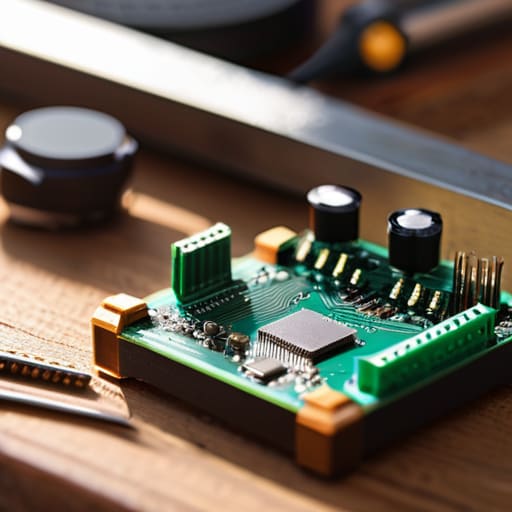
I spent my Tuesday afternoon with a precision screwdriver and a set of tweezers, peering into the guts of my old router to see where the data actually “lives.” Most people think of security as a digital wall, but once you strip away the plastic casing, you realize it’s really just a series of mathematical handshakes. When we talk about wireless security protocols explained, we aren’t just talking about a password; we are talking about the specific way the hardware encrypts your private life before it ever hits the airwaves.
If you are still seeing WPA2 listed on your settings page, you’re essentially using an old padlock that everyone has already figured out how to shimmy open. I always look for WPA3. It’s a more robust way of handling those handshakes, ensuring that even if someone is sitting on your curb with a high-gain antenna, they can’t easily guess the key. It’s the difference between a simple latch and a complex deadbolt. If the device doesn’t support the latest encryption standards, it doesn’t matter how fast your connection is; you’re just inviting the wrong kind of attention into your home.
Five Things to Check Before You Let It Into Your House
- Don’t get blinded by the “Gigabit” sticker on the box. I want you to look at the processor inside. If the router doesn’t have enough computational muscle to manage your data packets while you’re sleeping, it’s just going to choke the moment you try to stream a movie in the next room.
- Map your dead zones before you buy. I spent three hours with a signal meter last week just to see how the drywall in my hallway eats frequencies. If you can’t visualize how the signal bounces off your specific walls, you’re just buying a very expensive paperweight.
- Check the antenna configuration, but don’t be fooled by how many there are. It’s not about the number of plastic sticks sticking out the back; it’s about the beamforming capability. You need to know if the router is smart enough to actually aim that energy toward your laptop instead of just shouting it blindly at the ceiling.
- Look for “Dual-Band” or “Tri-Band” capabilities, and I mean actually understand why. You need separate lanes—one for your heavy lifters like the TV, and one for the little things like your smart thermostat—so they aren’t all tripping over each other in the same narrow hallway.
- Make sure it has a way to update itself without you having to babysit it. A router is a living thing that needs to patch its own holes. If the manufacturer doesn’t promise regular firmware updates, you’re essentially leaving your front door unlocked and hoping for the best.
The Anatomy of a Good Connection
Don’t get blinded by the megabits on the box; if you can’t visualize how the signal bounces off your kitchen cabinets to reach your bedroom, the speed rating is just a number.
Check the physical ports on the back, not just the wireless signal; a router is only as useful as the hardwired backbone that keeps the data moving when the airwaves get crowded.
Look for a device that manages itself; the best router is the one that’s quietly reallocating bandwidth to your tablet in the background without you ever having to log into a dashboard.
Finding Your Signal

At the end of the day, choosing a router isn’t about chasing the highest number on a marketing brochure; it’s about understanding the invisible dance of data happening in your hallways. You need to weigh the raw throughput of WiFi 6 against the actual number of devices trying to grab a slice of that bandwidth simultaneously. Don’t forget that security isn’t just a setting you toggle on and leave alone; it is the digital perimeter that keeps your private life from leaking into the street. If you can’t visualize how the signal penetrates your specific walls or how the encryption protocols guard your data while you sleep, you aren’t ready to hit “buy.”
I spent my career teaching students that physics isn’t something that happens in a textbook—it is something that happens in the air around them. Technology is no different. Once you stop seeing a router as a magic plastic box and start seeing it as a coordinated system of waves and logic, the intimidation fades. Don’t be afraid to look under the hood, metaphorically speaking, until you feel a sense of ownership over your connection. After all, the best technology is the kind that works so seamlessly in the background that you completely forget it’s even there.
Frequently Asked Questions
If I buy a high-end WiFi 6 router, will my old laptop and tablet actually benefit from it, or am I just paying for parts that will sit idle?
It’s a bit like buying a high-precision Swiss movement for a wooden clock case. If your laptop only speaks the old language of Wi-Fi 5, it won’t suddenly “learn” the efficiency of Wi-Fi 6. Those extra lanes of traffic will sit empty, unused. However, the router still manages the chaos. It’ll handle your old devices just fine, but you aren’t paying for speed—you’re paying for the capacity to handle more things at once.
How much of my signal is actually being lost to the physical materials in my walls, and can a router really push through something like brick or plaster?
I spent last Tuesday with a screwdriver and a multimeter, staring at the signal attenuation of my own hallway. Here’s the truth: your walls are essentially tiny, unintentional sponges for radio waves. Plaster is forgiving, but brick? Brick is a wall in every sense of the word. It absorbs the energy, turning your signal into heat. A router can’t “push through” physics; it can only work harder to overcome the resistance.
Is a "mesh system" actually a better way to cover a house, or is it just adding more complicated electronic layers that I'll have to troubleshoot later?
I spent last Tuesday with a screwdriver and a magnifying glass, looking at the backplane of my old single-router setup. The problem isn’t the signal; it’s the physical struggle of a single radio trying to shout through two inches of plaster and lath. A mesh system isn’t just “more layers”—it’s a relay race. Instead of one exhausted runner, you have several stations passing the baton. If they communicate properly, the handoff is seamless.



