
I spent forty years teaching my students that you can’t trust a black box just because it has a shiny casing and a high number printed on the label. Last Tuesday, I sat at my workbench with a “high-capacity” portable charger that had promised me three full phone charges, only to find that once I unscrewed the housing, the actual lithium-polymer cells were laughably small. It’s the same old story: marketing departments love to hide the truth behind impressive-looking decimals. If you are trying to figure out how to choose a power bank based solely on the mAh rating printed on the cardboard box, you are being sold a fantasy.
I am not here to recite a spec sheet or tell you which brand has the prettiest LED lights. Instead, I want to show you what is actually happening inside those plastic shells. My goal is to strip away the marketing fluff and look at the energy density and conversion efficiency that actually matters when your phone hits 1% in the middle of a hike. I will teach you how to look past the hype so you can find a device that actually does its job when you aren’t even looking at it.
Demystifying Mah vs Wh Explained for Real World Survival
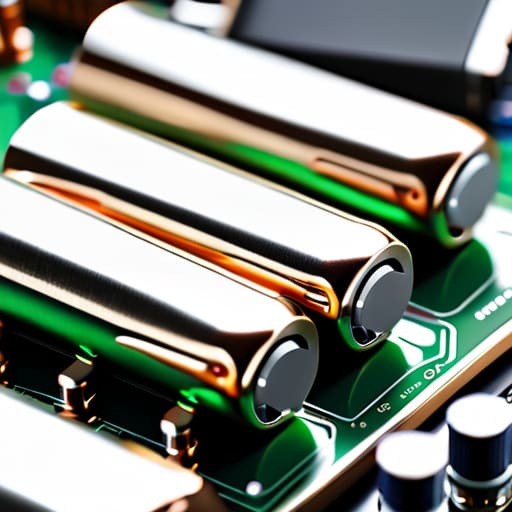
I remember the first time I opened up a generic portable charger. I expected to see a single, massive cell, but instead, I found a cluster of smaller lithium-ion pouches, each with its own tiny circuit board. This is why the numbers on the box are so deceptive. Most manufacturers shout about mAh vs Wh explained in the simplest terms possible—usually just the milliampere-hours—but that’s like telling me a clock has sixty seconds without mentioning how long the minute is.
The problem is that mAh only tells you the capacity of the internal cells, not the actual energy delivered to your phone. If you want to know if this little brick can actually keep your GPS running during a weekend trek, you have to look at the Watt-hours (Wh). Since voltage varies between devices, the Wh is the only honest measurement of total work the battery can perform. I always check the Wh rating first; it’s the only way to ensure the energy density matches the weight in my palm. If they don’t list the Wh, they’re likely hiding how inefficient the conversion process actually is.
Why Usb C Pd Charging Speed Actually Matters When Isolated
I remember taking apart an old, bulky power bank last winter, and it was a mess of wires and inefficient voltage regulators. Most people think a charger is just a pipe for electricity, but it’s actually a conversation. When we talk about USB-C PD charging speed, we aren’t just talking about “fast”; we are talking about the handshake between the device and the brick. Power Delivery (PD) allows the power bank to negotiate exactly how much voltage the phone needs. If the protocol is weak, your phone will trickle-charge like a leaky faucet, taking hours to gain even a few percentage points.
This matters most when you are isolated from a wall outlet. If you are relying on a single source of juice to keep your GPS or emergency radio alive, you need fast charging compatibility that matches your specific hardware. A “dumb” charger might work, but it won’t utilize the efficiency required to top off a device before you head out into the field. I look for banks that don’t just dump raw current, but actually “talk” to my gear to ensure the most efficient transfer possible.
Five Things I Look For Before I Trust a Battery With My Gear
- Check the casing for real weight. When I opened up my last “slim” power bank, the internal cells were so lightweight they felt more like air than energy; if a unit feels hollow or suspiciously light for its capacity, it’s likely using low-grade cells that will lose their ability to hold a charge after only a few months of use.
- Look for physical pass-through charging. I want to see a device that can act as a bridge—taking power from the wall and passing it through to my phone simultaneously—because a power bank that can only do one thing at a time is just a heavy brick when you’re stuck in a hotel room with only one outlet.
- Inspect the port selection for mechanical durability. Don’t just count them; I want to see ports that aren’t seated loosely in the plastic housing, because if the USB-C port wobbles when I plug my cable in, the internal solder joints will eventually snap, leaving you with a very expensive paperweight.
- Verify the “Input” speed, not just the “Output.” Most people forget that if the power bank takes six hours to refill itself, it’s useless for a quick top-up before heading out; I always check if the input wattage is high enough to actually replenish the cells in a reasonable timeframe.
- Prioritize integrated protection circuits over flashy LED displays. A screen that tells you exactly 42% is nice, but I care more about the thermal cutoff switch inside; if the device doesn’t have a dedicated chip to stop the flow when it gets too hot, it’s a safety hazard waiting to happen in your backpack.
What to Keep in Mind Before You Buy
Don’t get blinded by the big numbers on the box; check the Watt-hours (Wh) to see if the energy actually matches your device’s appetite, or you’ll just be carrying around a heavy brick that runs out too soon.
Look for a power bank that supports Power Delivery (PD) through its USB-C port, because if it can’t push enough current to charge your phone while you’re actually using it, it’s not much of a lifesaver.
Pick something with a port layout that makes sense for your gear, because there is nothing more frustrating than a high-capacity battery that lacks the specific cable connection you need when you’re stuck in the dark.
The Final Inspection
At the end of the day, choosing a power bank isn’t about hunting for the highest number printed on a glossy cardboard box. It’s about understanding the energy density and the handshake between the cells and your cables. You need to know if those mAh ratings are honest or just marketing fluff, and whether the PD protocol actually has the teeth to charge your laptop when you’re miles from a wall socket. I’ve spent enough time with a screwdriver in my hand to know that the real value lies in the efficiency of the conversion, not just the raw capacity. If the device can’t maintain a steady voltage when the load gets heavy, it’s nothing more than a very expensive paperweight.
I often think about the little circuits inside these bricks while I’m working on my old pendulum clocks; they both exist to manage the flow of energy through time. A good power bank is like a well-oiled escapement—it should be predictable, reliable, and quiet in its service. Don’t just buy a gadget; buy a piece of hardware that you understand well enough to trust when the sun goes down and your phone hits five percent. Once you stop seeing these things as magic black boxes and start seeing them as simple collections of chemical and electrical reactions, you’ll never make a bad purchase again.
Frequently Asked Questions
If I open one up and see those little soft pouches instead of hard metal cylinders, is that a sign of a cheap battery or just a different design?
Don’t let those silver pouches fool you into thinking they’re flimsy. When I cracked open a recent portable charger, I found Lithium-Polymer cells—those soft pouches—instead of the rigid 18650 cylinders you see in flashlights. It isn’t necessarily a sign of cheapness; it’s just a different way of packaging the chemistry. The pouches allow manufacturers to shape the battery into thinner, flatter profiles, which is how we get those slim power banks that actually fit in a pocket.
Why does my phone charge at a snail's pace even when I'm using the "fast" power bank I just bought?
It’s the classic “broken circuit” frustration, isn’t it? I once opened up a cheap portable charger only to find the internal traces were too thin to handle high current. But before you blame the battery, check your cable. Most people forget that the cable is just a physical conduit; if it’s thin or frayed, the resistance spikes and the power throttles down to a trickle. If the handshake between the bank and your phone isn’t perfect, they’ll both play it safe and slow.
Is there a physical limit to how much energy I can carry on a plane, or does the capacity number actually change the rules?
I actually had to open up my old travel charger last month to see why the casing felt so heavy. Here’s the thing: the airline doesn’t care about the mAh number—that’s just a measure of charge capacity. They care about Watt-hours (Wh), which is the actual energy content. It’s a physics limit to prevent thermal runaway. If your power bank exceeds 100Wh, you’re moving from “hand luggage” to “special permission” territory.