

I was sitting at my workbench last Tuesday, squinting through my loupe at the delicate escapement of a 1920s pocket watch, when my phone let out that aggressive, high-pitched chirp to signal it was full. It struck me how much we’ve been sold a bill of goods regarding modern power. Marketing departments love to throw around massive wattage numbers like they’re magic spells, but if you ask me, most people have no clue how fast charging actually works. They think it’s just a bigger pipe for electricity, but that’s a dangerous oversimplification that ignores the actual physics happening inside that little lithium-ion brick in your pocket.
I’m not interested in the glossy brochures or the technical jargon meant to confuse you into buying the most expensive brick on the shelf. My goal here is to strip away the marketing veneer and look at the components themselves. I want to show you the handshake between the charger and the battery, and why that process has to slow down just when you want it to speed up. By the time I’m done, you’ll understand the invisible dance of electrons well enough to know exactly what’s happening when you plug in.
The Digital Handshake Charging Protocols and Handshake Secrets
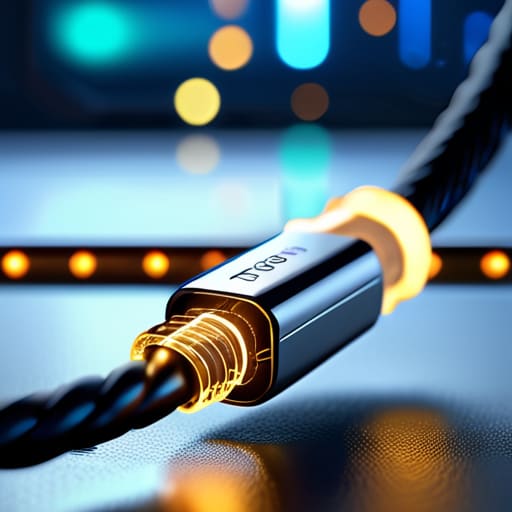
When I cracked open my old multimeter last week, I was reminded that electricity isn’t just a mindless flow; it’s a conversation. You see, when you plug that cable into your phone, nothing happens immediately. There is a split-second pause where the charger and the device are essentially whispering to one another. This is the charging protocols and handshake phase. The phone isn’t just a passive bucket waiting to be filled; it’s a very picky customer. It tells the brick, “I can handle 9 volts, but don’t you dare send me 20,” and the charger has to agree before a single electron moves at high speed.
If they didn’t have this little digital negotiation, you’d be looking at a very expensive, very melted piece of silicon. It’s all about managing the delicate balance of voltage and amperage in fast charging to ensure the energy arrives in a way the internal circuitry can actually digest. Without this handshake, the charger would just dump raw power into the device, ignoring the specific needs of the battery chemistry. It’s a constant, invisible negotiation happening in the dark.
Voltage and Amperage in Fast Charging the Invisible Push

To understand why your phone doesn’t just explode when you plug it in, you have to stop thinking of electricity as a single “stream” and start seeing it as a combination of pressure and flow. I like to think of it like a water pipe. Voltage is the pressure pushing the water through, while amperage is the actual volume of water moving. When we talk about voltage and amperage in fast charging, we are really talking about how we can crank up that pressure or widen that pipe to shove more energy into the cell in less time.
But there is a catch, and it’s one I see every time I open up a device to inspect the battery. If you push too much pressure (voltage) or too much volume (amperage) without control, you create friction at a molecular level. That friction is heat. I’ve spent many afternoons with a multimeter seeing how thermal management in smartphones is actually a desperate battle against physics; the device has to constantly throttle that flow to keep the temperature from climbing into the danger zone. If it gets too hot, the chemistry inside those lithium-ion cells starts to degrade, and that’s when your battery life begins its inevitable slide toward the grave.
A Few Rules of Thumb Before You Fry Your Circuitry
- Don’t go hunting for the highest wattage charger just because the box says so; if the phone and the brick aren’t speaking the same language during that initial handshake I mentioned, you’re just wasting electricity.
- If your phone feels like a hot potato, it’s because those lithium ions are being shoved into their slots with a bit too much enthusiasm, so I usually suggest stripping back the heavy apps if you’re in a rush.
- Avoid using cheap, unbranded cables that feel like they were made of recycled garden hoses; if the copper gauge inside is too thin, it creates resistance, and resistance is just another word for wasted heat.
- Try not to let your battery live its entire life at 100% or 0%; I’ve seen enough internal degradation to know that keeping it in that middle “sweet spot” helps the chemical reactions stay stable.
- If you’re charging in a thick, padded case, you’re essentially putting a sweater on a radiator; take the case off if you want the heat to dissipate so the charging controller doesn’t throttle your speed to protect itself.
The Lessons Left on My Workbench
Fast charging isn’t just “more power”; it’s a constant, frantic negotiation between the wall plug and your battery to ensure the energy arrives without melting the internal circuitry.
Think of it like filling a glass of water—it’s easy to blast it full when it’s empty, but you have to slow to a trickle as it nears the brim to avoid a mess, which is why your phone slows down once it hits 80%.
If you want your devices to last, remember that heat is the enemy of every chemical reaction inside that battery; the “smart” part of fast charging is mostly just the device trying to keep itself from cooking.
Bringing the Gears to a Halt

When I sit at my workbench with a screwdriver in hand, I’m reminded that nothing happens by magic; it’s all just a carefully choreographed sequence of events. We’ve seen how that initial “handshake” between the brick and the phone establishes the rules of engagement, and how the charger modulates that invisible push of voltage and amperage to keep things moving. It isn’t just about shoving more power into the cell; it is a constant, microscopic negotiation to ensure the energy flows fast enough to be useful, but controlled enough so the battery doesn’t cook itself from the inside out.
I know it’s tempting to just look at the percentage climbing on your screen and call it a day, but there is a certain quiet beauty in the complexity happening beneath the plastic casing. Once you realize that your charger is actually a sophisticated little computer managing a high-stakes energy transfer, the world feels a bit less like a black box. My advice? Don’t just use your gadgets; respect the physics that makes them dance. If you keep asking how the gears turn, you’ll find that the world is never actually as simple as it looks on the surface.
Frequently Asked Questions
If the charger is shoving energy in so quickly, why doesn't the battery just overheat and melt right in my hand?
It’s a fair question—it sounds like a recipe for a meltdown. I actually opened up an old lithium-ion cell last month to see the layers, and the secret isn’t just one thing; it’s a constant, frantic negotiation. Inside, there’s a Battery Management System, or BMS. It’s a tiny brain that monitors temperature and resistance every millisecond. If things get too hot, it tells the charger to back off immediately. It’s not a flood; it’s a controlled pour.
Does this constant high-speed pulsing actually wear out the chemical components inside the battery cells faster than a slow trickle charge would?
I took a look at a few lithium-ion cells last summer, and it’s a bit like forcing water through a narrow pipe. When you shove energy in quickly, it creates heat and physical stress on the internal layers. That heat is the real culprit; it degrades the electrolyte and causes tiny cracks in the electrodes. It isn’t the speed itself that kills it, but the thermal agitation that comes with it.
I see all these different cables in my drawer—does it actually matter which one I use, or is the "handshake" smart enough to fix a cheap wire?
I pulled a tangled mess of cables from my drawer last night, and it reminded me of a faulty escapement in a clock. Here is the truth: the “handshake” is smart, but it isn’t magic. A cheap wire is like a narrow pipe trying to carry a fire hose’s worth of water. If the copper inside is too thin, it creates resistance, generates heat, and the phone will throttle the speed to keep things from melting. Use the good ones.