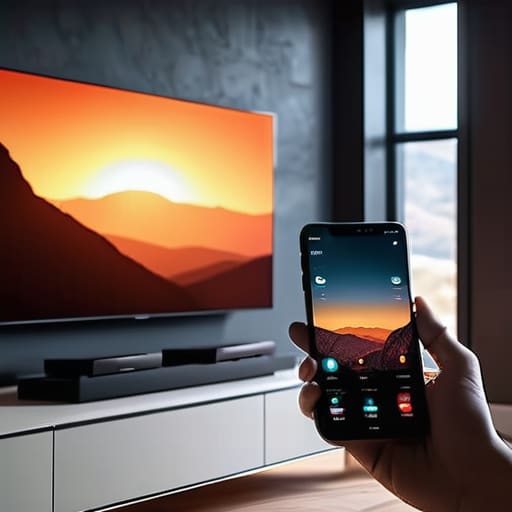

I spent thirty-four years in a physics classroom, and if there is one thing I learned, it is that people love to sell you a “magic” solution that is really just a series of hidden, poorly documented handshakes. Most tech companies want you to believe that learning how to cast to a TV requires a specialized hub, a subscription service, or a prayer to the wireless gods. They treat the connection like some mystical phenomenon, but I refuse to believe in magic. When I look at a device, I don’t see “magic”; I see a protocol—a specific, predictable exchange of data packets between two pieces of silicon. If the industry can’t explain the actual mechanism of that handshake, they haven’t truly mastered it.
I’m not here to give you a glossy marketing brochure or a list of expensive gadgets you don’t need. Instead, I want to pull back the curtain on the digital wiring so you can actually control your living room. I promise to show you exactly how these signals travel through the air and how to troubleshoot them when the connection inevitably stutters. We are going to strip away the jargon and focus on the functional reality of the hardware, ensuring you understand the process from the inside out.
The Silent Dialogue of Wireless Display Connection
When I sat at my workbench last Tuesday, I had my old smartphone disassembled next to a half-repaired pendulum clock. It got me thinking about what actually happens when we initiate a wireless display connection. We see a video suddenly appear on a much larger screen, but we don’t see the frantic, invisible negotiation happening in the air. It isn’t magic; it’s a series of digital handshakes. Your phone isn’t just “sending” a picture; it is essentially shouting a set of instructions to the television, asking it to fetch specific data packets from the cloud or the local network.
Depending on the hardware, this dialogue takes different forms. Some methods use DLNA media sharing, which is a bit like sending a specialized courier to deliver a specific file, while mirroring your mobile screen to a TV is more like holding up a mirror so the television can see exactly what your eyes see. I’ve found that the trickiest part isn’t the software, but the casting device compatibility. If the two devices aren’t speaking the exact same dialect of the same protocol, the conversation simply falls apart into silence.
Unveiling the Magic of Smart Tv Streaming Methods
When I sat at my workbench last Tuesday, I had my old tablet open, trying to trace why certain apps refused to play nice with my television. It turns out that not all smart TV streaming methods are built from the same blueprint. Some rely on a protocol called DLNA media sharing, which is essentially like sending a digital postcard; the phone tells the TV, “I have this file, please go grab it from this address.” It’s efficient because the phone doesn’t have to do the heavy lifting once the handoff is complete.
Other methods, like mirroring your mobile screen to the TV, are much more demanding. This isn’t just sending a file; it’s a continuous, high-speed stream of every single pixel your phone generates. It’s like trying to pass a long ribbon through a narrow tube—if the connection jitters, the whole image stutters. I’ve learned that casting device compatibility often comes down to whether your hardware is designed to just send a command or if it’s trying to replicate its entire visual soul across the room.
Keeping the Gears Turning Smoothly
- Check your Wi-Fi frequency; if your phone is on the 5GHz band and your TV is stuck on the 2.4GHz, they’ll be shouting in different languages and won’t find each other.
- Keep your router in the open, not tucked inside a wooden cabinet, because every extra layer of material is just another obstacle for those invisible radio waves to fight through.
- If the connection starts stuttering like a worn-out escapement wheel, restart your router first—it clears out the digital “dust” that builds up in the signal path.
- Match your devices to the same network; it sounds simple, but I’ve seen many a frustrated user trying to cast from a phone on cellular data to a TV on home Wi-Fi.
- Don’t crowd the signal; if you have too many heavy-duty devices pulling from the same bandwidth, the “handshake” between your phone and TV will lose its grip and drop the connection.
What I’ve Learned Under the Hood
Casting isn’t magic; it’s just a digital handshake where your phone tells the TV exactly which data packets to pull from the internet.
If the connection feels sluggish, the problem is rarely the devices themselves, but rather the invisible congestion in your Wi-Fi’s frequency.
You don’t need a physical cable to bridge the gap, provided both devices are tuned into the same local network frequency.
Bringing the Pieces Together
When I look at my workbench, I see a mess of springs and gears, but I know they are all working toward a single, predictable rhythm. Casting is no different; it is just a digital version of that same mechanical synchronization. Whether you are using a dedicated streaming stick to act as a translator, or relying on the built-in handshake of a Smart TV, you are essentially just setting up a seamless relay race for data packets. You’ve learned that it isn’t actually “sending” a video in the way we think; you are simply sending a set of instructions that tells the TV exactly what to do once the signal arrives. Once you understand that the invisible bridge is built on these tiny, coordinated commands, the frustration of a dropped connection starts to look less like magic failing and more like a simple gear slipping out of place.
I spent thirty-four years teaching my students that physics isn’t something that happens in a textbook—it is happening in the air around you, every single second. Technology can feel intimidating when it is wrapped in sleek plastic and hidden behind touchscreens, but I promise you, there is nothing truly unknowable. Once you pull back the curtain and realize that every “miracle” is just a series of logical, measurable steps, the world becomes a much smaller, friendlier place. Don’t be afraid to poke at the edges of your devices or ask why they behave the way they do. After all, understanding the mechanism is the only way to truly own it.
Frequently Asked Questions
If I'm casting a video from my phone, why does the audio sometimes keep playing on my handset even after the picture is on the TV?
It’s a bit like a broken relay in a clockwork mechanism. When you cast, your phone is supposed to hand off the “instructions” to the TV, but sometimes the handover fails. The TV gets the video stream, but the audio command stays stuck in your phone’s processor. It’s essentially a synchronization error; the two devices are no longer dancing to the same beat, leaving the sound trapped in your handset.
Does the signal actually travel through the air like a radio wave, or is there a physical link I'm missing?
It’s exactly like a radio wave, though a much more disciplined one. I spent yesterday afternoon with a disassembled router, and it’s all about those tiny antennas pulsing electromagnetic energy. There’s no physical wire, but think of it as a high-speed conversation happening in invisible bursts. Your phone encodes the video into a frequency, and the TV’s receiver catches those waves and reassembles them. No magic, just very fast, very tiny ripples in the air.
What happens to the connection if I walk into the kitchen to make tea—will the video just freeze mid-scene?
Not unless you’re taking the signal with you. When I opened up my old router last summer, I saw how those little antennas work—they’re just throwing invisible waves around the room. As long as you stay within the “bubble” of your Wi-Fi, you can wander off to boil the kettle without a hitch. But if you step into the garden or behind a thick brick wall, that handshake breaks, and yes, your movie will freeze.



