
I spent thirty-four years watching students try to find the “magic” in a physics equation, only to realize the magic was actually just a predictable interaction of forces. Marketing departments do the exact same thing with mobile accessories. They want you to believe that a $60 slab of designer silicone is a revolutionary piece of engineering, but most of these “premium” options are just overpriced plastic shells with no structural integrity. When you are looking into how to choose a phone case, you shouldn’t be shopping for a fashion statement or a brand name; you should be looking for a mechanical solution to the inevitable law of gravity.
I have no interest in telling you which colors look best in a selfie. Instead, I am going to show you what happens to the kinetic energy of a falling object when it hits a TPU bumper versus a rigid polycarbonate frame. I promise to skip the fluff and focus on the material science of impact absorption and grip friction. By the time we are done, you will understand how to choose a phone case based on how it performs when it is lying face down on a concrete sidewalk, completely unobserved.
Material Durability Comparison What Remains When the Hype Fades
I spent last Tuesday with a set of precision screwdrivers and a magnifying loupe, peeling back the layers of a popular “ultra-slim” silicone sleeve. It’s a lovely bit of tactile engineering, but once you see how thin that polymer wall actually is, you realize its only real job is to prevent scratches from lint in your pocket. When you look at a material durability comparison, you have to ask: what happens when the kinetic energy of a fall actually hits the chassis? Silicone is great for grip, but it lacks the structural integrity to redirect a shockwave.
If you move toward the heavy hitters—the TPU and polycarbonate blends—you’re looking at something much more substantial. I’ve dissected several rugged models, and the secret isn’t just thickness; it’s the internal geometry. The best ones use air pockets or multi-layered densities to manage impact resistance materials effectively. You want a case that doesn’t just sit there, but one that actively works to disperse energy away from the glass. If the material doesn’t have the backbone to keep the frame from compressing inward during a tumble, all that marketing jargon about “military grade” is just noise.
The Silent Guardian Impact Resistance Materials and Drop Test Ratings
When I opened up my old transistor radio last summer, I was struck by how much the internal components rely on the integrity of the outer shell to stay seated. A phone is no different. When that device hits the pavement, the energy doesn’t just vanish; it travels through the casing like a wave through a medium. This is where drop test ratings actually matter. I don’t care if a manufacturer claims a case is “military grade” if they haven’t shown me the deceleration curves. I want to see how the material absorbs that kinetic energy before it reaches the glass.
In my experience, the debate between slim vs rugged phone cases usually comes down to how much air is trapped inside. A truly effective rugged case creates a microscopic buffer zone—a sacrificial space where the material can deform slightly to protect the sensitive internals. If the case is too flush against the body, that impact energy has nowhere to go but straight into your motherboard. I always look for raised lips around the edges; if the case doesn’t provide dedicated screen and camera protection by sitting higher than the lenses, it isn’t actually guarding anything.
The Anatomy of a Good Choice: 5 Things to Look for Before You Click 'Buy'
- Check the lip height. I’ve pulled apart enough silicone shells to know that if the case doesn’t rise at least a millimeter above the glass, it isn’t protecting your screen; it’s just decorating it while the screen takes the hit.
- Feel for the button tactile response. A case is a mechanical interface; if the plastic is so thick that you have to press with your whole hand just to silence a call, the internal lever mechanism is poorly designed and will eventually fatigue.
- Look for port clearance. I always look at the cutouts for the charging cable. If the hole is too tight, you’ll find yourself fighting a piece of plastic every single night just to get a charge, which is a design failure in the simplest sense.
- Avoid the “one-size-fits-all” trap. A case should be a custom-molded housing, not a generic sleeve. If there is even a hair’s breadth of wiggle room between the phone and the interior wall, the kinetic energy from a drop will turn your phone into a hammer inside its own shell.
- Inspect the grip texture. A phone case’s most important job is to stay between your fingers and the floor. If the material is so smooth that it feels like polished marble, it’s going to slide right out of your hand the moment you get distracted.
The Physics of Protection: What Actually Matters
Don’t be fooled by a thick case; if the material doesn’t have the right coefficient of restitution to absorb energy, it’s just a heavy piece of plastic waiting to transfer the shock directly to your glass.
Look for raised “lips” around the screen and camera lens, because the most critical job of a case is to maintain a physical gap between your device and the ground when gravity takes over.
Match the material to your lifestyle—silicone is excellent for grip and vibration dampening, while polycarbonate provides the rigid structural integrity needed to prevent the frame from bending under pressure.
The Final Inspection
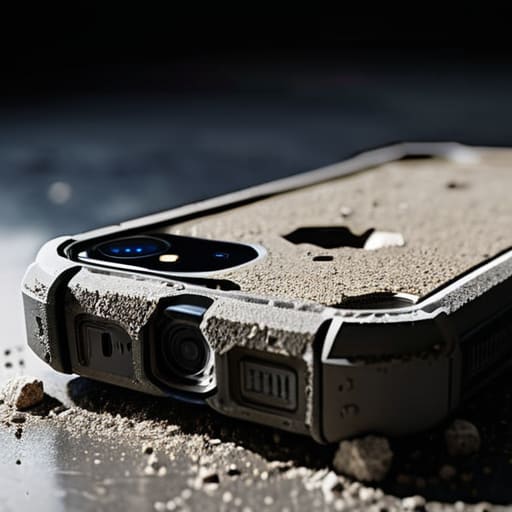
At the end of the day, choosing a case isn’t about following a trend or picking the prettiest pattern on a website. It is about the physics of a mistake. You have to weigh the tensile strength of the TPU against the rigid protection of polycarbonate and decide which one will actually do its job when gravity wins. Whether you opt for a slim silicone skin that feels good in the hand or a ruggedized chassis designed to absorb kinetic energy, remember that the best case is the one that works most effectively when the phone is lying face down on a concrete floor and you aren’t there to catch it.
I spent decades teaching students that every action has an equal and opposite reaction, and a good phone case is simply your way of negotiating with that law of nature. Don’t just buy a piece of plastic; buy a bit of mechanical insurance. Once you understand how the materials distribute force and where the structural weak points lie, you stop being a consumer and start being a prepared owner. After all, a device is only truly useful when you aren’t spending every waking second worrying about its fragility.
Frequently Asked Questions
If the case is thick enough to survive a fall from a ladder, won't it make the phone too bulky to actually fit in my pocket?
That is the classic trade-off, isn’t it? It’s a matter of density versus volume. When I opened up a heavy-duty rugged case last week, I saw why: they use air-filled polymer chambers to dissipate kinetic energy. To get that protection, you inevitably add bulk. If you want something pocket-friendly, look for high-density materials like aramid fiber. They offer high impact resistance without the extra centimeters, though they won’t feel quite as “cushy” in your hand.
Does the material of the case actually affect how much heat the battery generates while I'm charging it?
It certainly does. When I opened up my old tablet last year, I saw how much the thermal paste mattered, and a phone case acts much like a thermal blanket. If you wrap your device in thick, dense silicone or heavy-duty rubber, you’re essentially trapping the heat generated by the chemical reaction inside the battery during a charge. I prefer slim, hard polycarbonate; it lets the heat escape rather than forcing it to sit there and simmer.
Can a case actually protect the camera lens, or is it just a decorative lip that gets in the way of the flash?
I spent an afternoon with a precision screwdriver and a cracked iPhone 13 to see if those raised edges actually do anything. Most cases use a “lip” to create a physical buffer, preventing the lens from making contact with a flat surface. However, if the lip is too high or poorly angled, it catches the light from the flash, creating a hazy glare in your photos. A good case protects the glass without blinding the sensor.