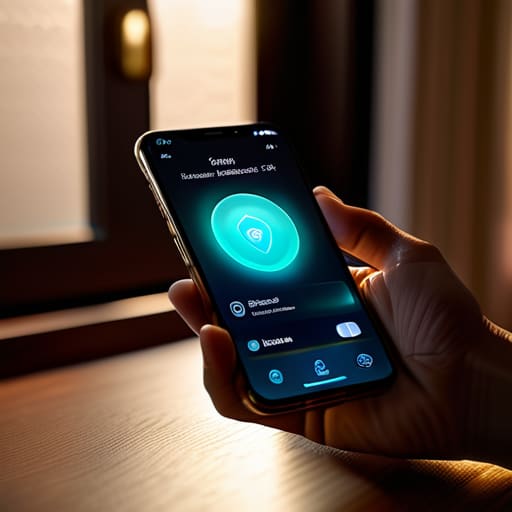

I spent thirty-four years in a classroom trying to explain that electricity isn’t magic; it’s just electrons following a path. Yet, when people talk about how to use a banking app securely, they treat it like some mystical ritual involving incantations and expensive software. They’ll tell you that you need a high-tech security suite or a specialized vault, but that’s just marketing fluff designed to hide the fact that most digital “walls” are actually quite flimsy. If you want to protect your money, you don’t need more gadgets; you need to understand the mechanics of the leak.
I’ve spent my retirement taking apart old grandfather clocks to see why they lose time, and I approach your phone with that same curiosity. I’m not here to give you a list of vague, corporate slogans that sound good in a brochure. Instead, I am going to show you exactly where the data flows and where the cracks appear when you aren’t looking. We are going to strip away the jargon and look at the actual habits that keep your accounts locked tight, focusing on what happens in the background while your phone sits idle in your pocket.
Biometric Authentication Security Benefits Your Body as a Key

I sat at my workbench yesterday, peering through my jeweler’s loupe at the tiny, oscillating escapement of a 19th-century pocket watch. It’s a physical mechanism; you can see the teeth of the gears catching one another. When I first opened up my new smartphone to look at the sensor array, I felt that same itch to see the “teeth” of the security. Biometric authentication—using your fingerprint or a facial scan—isn’t magic; it’s just a way of turning your unique biological geometry into a complex mathematical code. Unlike a password, which is just a string of characters that can be guessed or stolen, your fingerprint is a physical constant.
The real biometric authentication security benefits come down to what happens when you aren’t looking. If a thief manages to intercept your data over a network, they might find a password, but they can’t easily replicate the specific ridges of your skin. By linking your identity to your physical presence, you are essentially protecting mobile devices from financial fraud at the most fundamental level. It turns your body into a physical key that cannot be left lying on a cafe table or written on a sticky note.
Two Factor Authentication for Mobile Banking the Silent Guardian

I spent yesterday afternoon hunched over a vintage pendulum clock, trying to figure out why the escapement was slipping. It’s much like two-factor authentication for mobile banking; you need more than one mechanism working in perfect synchronization to keep the system from spinning out of control. When I opened up my own phone to look at the security settings, I realized that a password is just a single gear. If that gear strips, the whole machine fails. By adding a second layer—like a code sent to your phone or a physical security key—you are essentially installing a secondary braking system that engages even if your primary password is compromised.
This extra step is what keeps the “gears” turning safely in the background. It acts as a silent watchdog, protecting mobile devices from financial fraud by ensuring that a thief can’t just walk away with your life savings using a stolen string of characters. It’s about creating a failsafe. Even if someone manages to mimic your digital identity, they won’t have that second, physical piece of the puzzle, leaving them stuck while your money stays exactly where it belongs.
Keeping the Gears Turning: Five Ways to Keep Your Money Private
- Treat your phone like your wallet. I wouldn’t leave my purse sitting on a cafe table while I go to the restroom, so don’t leave your phone unlocked and unattended in public. If someone grabs the device, they have the physical access needed to try and bypass your software.
- Watch out for “phantom” networks. When I work on a clock, I make sure there’s no dust in the air; similarly, you shouldn’t use your banking app on public Wi-Fi at a coffee shop or airport. Those open signals are like leaky pipes—anyone nearby can potentially intercept the data flowing between your phone and the bank. Use your cellular data instead.
- Keep your software updated, even when it’s a nuisance. Those little update notifications are actually the developers patching up tiny cracks in the digital armor. If you ignore them, you’re essentially leaving a door unlatched because you didn’t want to spend two minutes clicking ‘install.’
- Set up instant transaction alerts. Think of this like a mechanical tripwire. You want your phone to buzz the very second a cent leaves your account. If you get a notification for a purchase you didn’t make, you can catch the thief before they’ve had time to strip the whole machine for parts.
- Use a dedicated password manager. I don’t use the same key for my front door, my workshop, and my safe. If you use the same password for your banking app as you do for your social media, a single leak elsewhere breaks everything. Use a manager to create long, complex strings of characters that act like a heavy-duty deadbolt.
What to Remember When You Close the App
Think of your fingerprint or face ID as a physical deadbolt; it’s much harder for a stranger to mimic your biology than it is for them to guess a simple four-digit code.
Treat that extra text message or notification code like a secondary latch on a gate—it’s the silent check that happens in the background to make sure it’s really you trying to open the door.
Always check your notification settings to ensure the app is actually “watching” for unusual activity, because a security system is only useful if it’s actually turned on when you aren’t looking.
Keeping the Gears Turning Safely

When I sit at my workbench with a disassembled pocket watch, I’m reminded that security isn’t one single, massive spring; it is a collection of small, interlocking parts working in unison. To keep your money safe, you need those layers to mesh perfectly. You have your biometrics acting as the immediate physical lock, your two-factor authentication serving as the secondary tumbler, and your careful habits acting as the steady hand that keeps the whole mechanism from slipping. If you ignore even one of these components—if you leave a window unlatched or a password written on a scrap of paper—the entire system of defense begins to grind and fail. It is about ensuring that when the lights go out and the app is sitting idle in your pocket, the internal logic of your security remains unbroken and unassailable.
I have spent my life teaching students that you cannot truly master a concept until you understand how it behaves when you aren’t actively poking at it. The same applies to your digital life. Don’t view these security steps as annoying chores or extra friction; view them as the essential lubrication that allows your financial life to run smoothly without seizing up under pressure. Once you understand the mechanics of how these protections work, you stop being a passive user and start being the master of your own machinery. Keep your eyes open, keep your settings tight, and trust the mechanisms you have put in place.
Frequently Asked Questions
If I use my fingerprint to unlock the app, does that mean my bank is storing a digital map of my actual finger somewhere?
No, they aren’t keeping a photo of your finger in their files. I had to take a look at how these sensors actually process data to be sure. When you touch that scanner, the device converts your ridges into a mathematical string—a long, complex number. The bank only stores that number, not the image. If a thief stole their data, they’d just have a useless pile of math, not your fingerprint.
What happens to my money if I lose my phone while I'm logged into the banking app?
If you lose your phone while logged in, the danger isn’t just the device; it’s the active session. Think of it like leaving your front door wide open while you go for a walk. Without a timeout or a quick biometric re-check, anyone holding that phone is effectively holding your wallet. This is why I always check the “auto-lock” settings. You want the app to shutter itself the moment the screen goes dark.
I've heard about public Wi-Fi being dangerous; is there a way to tell if the connection is actually "leaking" my login details?
The truth is, you can’t see the leak just by looking at the screen. When I opened up my old router last month, I saw how the data packets physically travel; on public Wi-Fi, those packets are essentially shouting your password into a crowded room. If you don’t see that little padlock icon in your browser—the one that tells me the connection is encrypted—then your data is traveling in plain text for anyone with a cheap antenna to grab.



