
I spent three decades in a physics classroom watching teenagers try to convince me that a broken circuit was “magic,” and quite frankly, the marketing around modern car cameras feels exactly the same. Most manufacturers will try to drown you in a sea of “4K ultra-definition” and “AI-driven sensor arrays” to justify a price tag that could fund a small scholarship. But if you ask me how to choose a dash cam that actually works, I’m not going to talk about marketing buzzwords; I’m going to talk about bitrate and heat dissipation. A camera with a million pixels is utterly useless if the sensor overheats and shuts down the moment you drive through a sunlit intersection in July.
I have no interest in telling you which plastic box looks prettiest on your windshield. Instead, I want to show you what is actually happening inside those casings when the light hits the lens at a sharp angle. I promise to strip away the jargon and focus on the mechanics that matter—the stuff that keeps recording when you aren’t looking. We are going to look at the mechanical reality of these devices, ensuring you buy something that captures the truth rather than just a blurry, expensive lie.
The Truth in the Shadows Testing Night Vision Capabilities
I spent last Tuesday with my workbench lamp angled just right, trying to see why my old digital camera struggled with low light. It reminded me that most people don’t realize a dash cam is essentially just a tiny, overworked sensor trying to make sense of chaos. When the sun goes down, that chaos doubles. Most manufacturers will boast about high megapixels, but megapixels are just a measurement of detail; they don’t tell you how the sensor handles a lack of photons. If the sensor is cheap, you won’t see a car approaching from a side street; you’ll just see a grainy, grey smear.
To truly judge night vision capabilities, you have to look at how the device manages dynamic range. I want to see what happens when a pair of headlights hits the lens directly. Does the image bloom into a white void, or does the sensor compress the light well enough to show the license plate behind the glare? If you are looking at front and rear dash cams, this becomes even more vital. The rear unit is often tucked into a darker corner of the cabin, and if it can’t pull detail out of the shadows, it’s nothing more than an expensive piece of plastic.
The Clarity of Chaos Demanding Superior Dash Cam Video Quality
When I sat at my workbench last Tuesday, I realized that a sensor is only as good as the light it can harvest. Most manufacturers will boast about “4K resolution” as if that’s the end of the story, but resolution is just a fancy way of saying how many tiny dots make up the picture. If those dots are blurry because the sensor is cheap, you’ve just bought a very expensive way to record a smudge. To truly judge dash cam video quality, you have to look past the marketing numbers and ask if the sensor can handle high-speed motion without turning a passing license plate into a watercolor painting.
It isn’t just about the sharpness of the image, either; it’s about how the device manages the sheer volume of data. I’ve seen many units choke when they try to juggle high-bitrate video with a constant loop recording feature. If the processor isn’t robust, the camera will stutter right when things get interesting. You aren’t just buying a lens; you are buying a tiny, high-speed computer that has to make split-second decisions about what to save and what to overwrite.
Beyond the Spec Sheet: What Actually Matters When the Engine is Running
- Don’t let them dazzle you with “4K” if the sensor is tiny. I opened up a few of these mid-range models last week, and the real issue isn’t the resolution; it’s the bit rate. If the camera can’t write data fast enough to keep up with the movement, your high-definition footage will look like a smeared watercolor painting the moment you hit sixty miles per hour. Look for a high bitrate, not just a high pixel count.
- You need to understand the “Parking Mode” loop, and I don’t mean the marketing fluff. A real parking mode requires a dedicated hardwire kit to tap into your car’s fuse box. If the camera is just relying on its internal battery, it’ll be dead before a thief even touches the door handle. I want to see a device that can sip power from the battery without draining it, waiting for a G-sensor to trigger a recording.
- Check the heat tolerance of the internal components. Most of these gadgets use SD cards, which are the Achilles’ heel of the whole system. I’ve seen plenty of cameras fail because they use standard consumer cards that can’t handle the constant heat and write-cycles. You must ensure the camera specifies “High Endurance” compatibility; otherwise, you’re just buying a very expensive paperweight that will corrupt its own memory on the first sunny July afternoon.
- Look for a physical loop recording mechanism that actually works. When I look at the logic board, I want to see a system that intelligently overwrites the oldest, least important files first. If the camera fills up and just stops recording because it can’t decide what to delete, it’s useless. It needs to be a continuous cycle—a digital heartbeat that never skips a beat, no matter how much footage it has already swallowed.
- Capacitors over batteries, every single time. I’ve spent enough time with my soldering iron to know that lithium-ion batteries hate heat. If you put a camera with a built-in battery on a windshield in the summer, that battery is going to swell and eventually leak or fail. A good dash cam uses a supercapacitor instead. It’s a much simpler way to store enough energy to save the last file before the power cuts, and it won’t turn into a tiny bomb under the sun.
What to Look for When the Engine is Off
Don’t trust a “parking mode” claim until you’ve seen how the capacitor handles a temperature drop; if the power storage fails when the car sits overnight, the camera is just an expensive paperweight.
Ignore the megapixel count on the box and look at the sensor size; a tiny sensor can’t catch enough photons to make sense of a dark intersection, no matter how many marketing buzzwords they throw at you.
Check the loop recording mechanism to ensure it actually overwrites the oldest files without a hiccup; if the memory management isn’t seamless, you’ll find yourself with a full card and no footage of the actual incident.
The Final Inspection
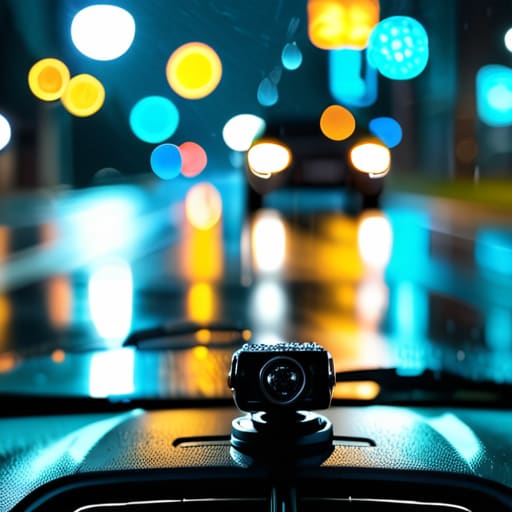
When I finally set my screwdriver down and look at the components spread across my workbench, I don’t look at the glossy packaging; I look at the integrity of the connections. Choosing a dash cam is no different. You shouldn’t be swayed by marketing jargon about “ultra-HD” if the sensor can’t actually resolve a license plate through a rain-streaked windshield at midnight. You need to ensure the loop recording is seamless, the G-sensor is sensitive enough to trigger during a sudden stop, and the storage architecture won’t fail the moment the car hits a bumpy road. It is about finding the mechanical reliability hidden beneath the plastic casing, ensuring the device does its job when the chaos of the road takes over.
At the end of the day, a dash cam is a silent observer, a little piece of clockwork waiting for the one second where everything goes wrong. I like to think of these devices as tiny, unblinking eyes that provide a sense of order to the unpredictable physics of driving. Don’t just buy a gadget; invest in a piece of equipment that you trust implicitly. Once you find a camera that captures the truth without needing you to hold its hand, you’ll realize that true understanding comes from knowing exactly how it will behave when you aren’t even looking.
Frequently Asked Questions
If I leave the camera plugged into the cigarette lighter, will it drain my car battery overnight if it's set to record motion?
I had to crack open my own old dash cam to see how the power draw behaved when the engine died. Here is the reality: if it’s drawing from the cigarette lighter, it’s pulling directly from your battery. Most “motion detection” modes still require the processor to stay awake and “listen” for movement, which is a constant, tiny drain. If your car’s battery is older, you’ll likely wake up to a very expensive paperweight.
How much actual storage space do I need before the loop recording starts overwriting my important footage?
I sat with my old digital camera last night, pulling the SD card out just to see how the controller manages the file structure. Here is the reality: a 64GB card is the bare minimum for most, but I wouldn’t trust anything less. If you’re filming in 4K, that space vanishes like water through a sieve. You need enough “room to breathe” so the loop doesn’t overwrite your crash footage before you’ve even parked the car.
When the heat hits the windshield in mid-July, is the internal capacitor going to survive, or will the whole unit just melt?
That’s the real question, isn’t it? I actually opened up my old unit to see what was inside. Most cheap dash cams use lithium-ion batteries—those little chemical pouches that swell and eventually fail when they bake under a summer sun. I only trust devices with a solid-state internal capacitor. There’s no liquid to leak and no chemistry to go haywire; it just stores the charge and waits. If it doesn’t have a capacitor, don’t put it in your car.