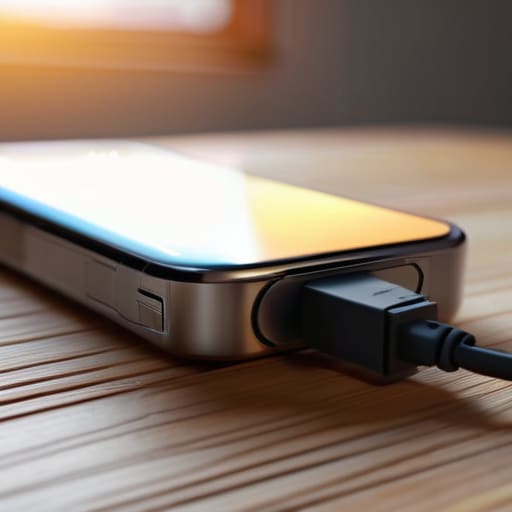

I spent thirty-four years in a classroom watching teenagers nod along to formulas they didn’t actually grasp, and I see that same glazed look whenever people talk about modern electronics. Lately, it’s all about those flashy numbers on the box—the promise that a bigger number equals a better life. But if you’re staring at a pile of cables wondering what charging wattage means in the real world, stop listening to the marketing department. They want you to believe that more is always better, but a high-wattage brick is useless if the handshake between the charger and your battery is clumsy or mismatched.
I don’t care for theoretical abstractions that fall apart the moment you plug something in. My approach is much more tactile: I want to know how the electrons are actually behaving when the screen is dark and the device is tucked away in your pocket. In this post, I’m going to strip away the jargon and explain the physics of power delivery through the lens of what is actually happening inside those tiny circuits. I promise no fluff and no sales pitches—just a clear look at how to match your gear so you aren’t wasting money on power you’ll never use.
Voltage vs Amperage the Unseen Dance of Electrons

To understand wattage, you have to look at the two components that make it up: voltage and amperage. When I opened up my old multimeter last week, I was reminded of how we often treat these as interchangeable, but they are quite distinct. Think of voltage as the electrical pressure pushing the charge through the wire, while amperage is the actual volume of electrons flowing through that same path. It is a bit like a garden hose; the pressure from the tap is your voltage, and the amount of water rushing out is your amperage.
In the world of modern gadgets, especially with USB-C power delivery standards, these two numbers perform a delicate dance to reach your desired wattage. If you increase the pressure (voltage) or the flow (amperage), the total power increases. However, there is a trade-off. I’ve noticed that when people push for maximum speed, the battery charging speed vs heat becomes a real issue. If the dance gets too frantic, the energy doesn’t just stay as electricity; it spills over into thermal energy, which is why your phone feels like a warm stone in your hand.
How to Calculate Charging Power in the Dark

Now, if you want to stop guessing and actually see the math behind the magic, you have to look at how these two forces—voltage and amperage—interact. When I sat at my workbench last week, I realized that calculating power is really just a simple multiplication problem that happens in a fraction of a second. To find out how to calculate charging power, you simply multiply the Volts by the Amps. If your wall adapter is pushing out 5 volts and your cable is allowing 2 amps to flow through, you are looking at 10 watts of total power. It is a predictable, mechanical relationship, much like how the weight of a pendulum dictates the swing of a clock.
However, it isn’t always that straightforward when we talk about modern USB-C power delivery standards. These smart devices don’t just sit there and take whatever we give them; they actually “negotiate” with the charger. The phone tells the brick, “I can handle 9 volts right now,” and the brick adjusts its output accordingly. This constant, invisible conversation is what allows for such high speeds without causing the device to melt in your hand.
A Few Rules of Thumb Before You Plug In
- Don’t let the numbers on the box intimidate you; your device is the boss of the conversation. When I opened up an old handheld radio last month, I saw how the charging circuit acts like a polite gatekeeper—it will only take the amount of power it can handle, no matter how much the wall outlet is trying to shove down its throat.
- Think of your charging cable as a narrow hallway. You can have a massive crowd of people (high amperage) waiting to get through, but if the hallway is too thin, they’ll just stumble and slow down. If you use a cheap, flimsy cord with a high-wattage brick, you’re essentially trying to force a marathon through a doorway.
- Heat is the sound of wasted energy. When I’m working on a clock, if a gear is rubbing too hard, I can feel the friction. In your phone, if the charging brick is getting uncomfortably hot, it means the wattage isn’t being converted into battery life efficiently; it’s being lost to the air as heat instead.
- Fast charging isn’t a constant sprint; it’s a downhill run that levels out. Most modern devices pull a huge amount of wattage when the battery is near empty, but as the chemical “tank” fills up, the device tells the charger to slow down to prevent damage. It’s much like filling a glass of water—you don’t want to blast the tap at full force when it’s almost at the brim.
- Always look for the “handshake.” When you plug in a high-speed charger, there is a tiny, invisible negotiation happening between the chip in your phone and the chip in the brick. They are literally talking to each other to decide on the safest voltage before a single electron moves. If you use a “dumb” charger without that logic, you’re just guessing.
The Essence of the Charge
Wattage isn’t some magical number; it’s simply the result of multiplying the pressure (voltage) by the flow (amperage), telling you exactly how much work is being done.
A higher wattage doesn’t mean “better” in a vacuum; it just means the “pipe” is wider, allowing more energy to flood the battery in a shorter window of time.
To truly understand your charger, don’t just look at the label—look at how the device reacts to the heat and the speed, because that is where the physics actually lives.
Bringing the Current Home
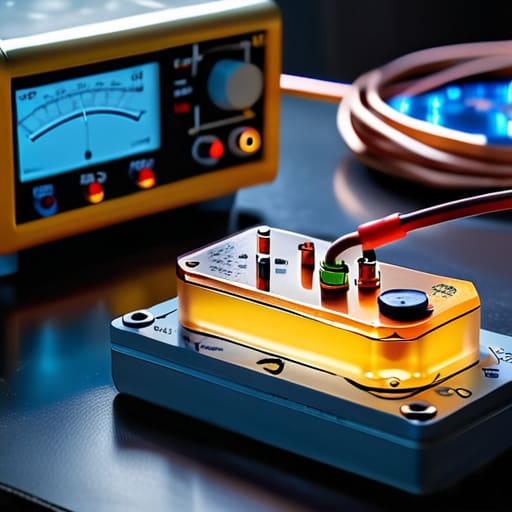
When I finally put the casing back on my multimeter and clear my workbench, I’m always reminded that wattage isn’t some abstract magic number on a box. It is simply the result of that delicate, invisible tug-of-war between voltage and amperage. We’ve seen that while voltage provides the pressure and amperage provides the flow, the wattage is the actual work being performed inside the chemical cells of your battery. If you match the right pressure with the right flow, you get a steady, efficient charge. If you ignore the math, you’re just guessing with your hardware, and in my experience, guessing with electricity is a habit best left unlearned.
I spent most of my career watching students stare at equations as if they were incantations, but I always told them: the math is just a map of what is actually happening under the hood. Whether you are looking at a tiny smartphone brick or a heavy-duty power station, don’t let the labels intimidate you. Once you understand the relationship between the push and the flow, the mystery vanishes. My goal has always been to strip away the polished plastic and the marketing jargon until we are left with the pure physics of the thing. After all, once you know how the electrons dance when no one is watching, you truly own the technology you use.
Frequently Asked Questions
If my phone can handle 45 watts but I use an old 5-watt brick, will I actually damage the battery by trying to force it?
No, you won’t hurt it. Think of it like trying to fill a swimming pool with a tiny garden hose; the pool isn’t going to explode, it’s just going to take a very long time to fill. Your phone is quite clever—it has a little internal gatekeeper that only lets in what it can handle. It won’t “force” the electricity; it will simply take whatever the little 5-watt brick can offer.
Why does my phone get warm to the touch when I'm using a high-wattage charger, and is that heat actually doing something to the internal chemistry?
The heat you feel is just the friction of energy being forced through. When I opened up my old multimeter, I saw how much resistance lives in those tiny pathways. High wattage means more electrons are rushing in, and that movement generates thermal energy—much like how a pipe vibrates when the pressure is too high. That heat isn’t just a side effect; it’s actually accelerating the chemical reactions inside your battery, which can wear them down over time.
Does the charging speed stay the same from the moment I plug it in, or is there something happening inside the battery controller that slows things down as it fills up?
It’s a bit of a sprint followed by a slow, careful stroll. When you first plug in, the battery controller sees a massive “empty” space and opens the floodgates to shove as much current in as possible. But as the voltage climbs, it gets crowded. To prevent overheating or chemical stress, the controller throttles the flow. It’s like filling a glass: you pour fast at first, but you slow down near the brim to avoid a mess.