

I remember sitting at my workbench last Tuesday, surrounded by the tiny, brass guts of a 1950s mantle clock, when my grandson asked why his new phone died so much faster than his old one, despite the box claiming a “massive upgrade.” It’s the same old song and dance: marketing departments throwing huge integers at you to make you feel like you’re buying a powerhouse, while they conveniently gloss over the physics of it all. Most people go through life assuming a higher number equals more time, but if you don’t understand what battery capacity numbers mean in the context of actual energy discharge, you’re essentially just shopping for expensive illusions.
I’m not here to recite a datasheet or feed you the polished jargon they use in tech commercials. My goal is to strip away the fluff and look at the actual mechanics of how these cells hold and release their charge. I promise to explain this by looking at the difference between raw capacity and usable energy, so you can finally stop guessing and start knowing exactly how much runtime you actually have before you’re left staring at a black screen.
The Mah vs Wh Comparison Seeking Truth Beyond the Label

When I opened up that old portable power bank last Tuesday, I wasn’t just looking for the cells; I was looking for the math. You see, manufacturers love to shout about milliampere-hours (mAh) because it makes the number look big and impressive on the box. But mAh is a bit of a trickster. It only tells you how much charge is in the tank, not how much work that charge can actually do. It ignores the pressure—the voltage—pushing that electricity through your device.
To find the real truth, you have to look at Watt-hours (Wh). If mAh is the volume of water in a bucket, Wh is the total energy available based on how hard that water is spraying out of the hose. This voltage and capacity relationship is what actually determines if your phone stays alive through a long flight or dies before you reach the gate. When I’m comparing two different lithium ion battery specifications, I stop looking at the big mAh numbers and start looking at the Wh. That is the only way to get an honest mAh vs Wh comparison that actually tells you how much fuel you’re really carrying.
Lithium Ion Battery Specifications When the Math Fails the Reality
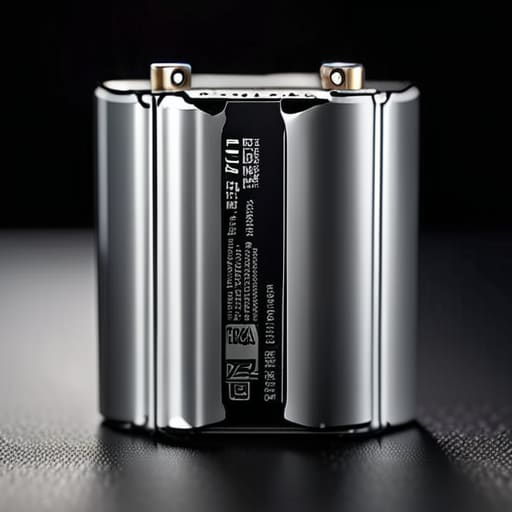
Last Tuesday, I finally got the casing off that old tablet I’d been meaning to inspect. Once I cleared away the adhesive, I wasn’t looking at a magic black box; I was looking at a series of thin, silver pouches. This is where the marketing gets slippery. When you look at lithium ion battery specifications on a box, they treat the numbers like a fixed physical constant, like the speed of light. But inside that casing, the chemistry is a living, breathing thing.
The real trouble starts when you try to reconcile the math with how the device actually behaves in your hand. You can have a massive milliampere-hour rating, but if the internal resistance is high or the cells are poorly arranged, that energy stays trapped. It’s like having a massive water tower with a tiny, rusted straw for a pipe; you have the volume, but you can’t actually use it. This is why understanding battery discharge rates is so much more vital than just reading the capacity label. If the battery can’t push the energy out fast enough to meet the device’s demands, those big numbers on the sticker are nothing more than a polite fiction.
Five Things the Datasheet Won't Tell You
- Stop obsessing over the mAh; it’s a hollow number without the voltage. If I’m comparing a tiny phone battery to a heavy-duty power tool, the mAh might look similar, but the tool’s battery holds far more actual energy because its “pressure”—the voltage—is much higher. Always look for the Watt-hours if you want to know how long you’ll actually be working.
- Temperature is the silent thief of capacity. When I open up my old transistor radios, I see how heat degrades components; the same applies to your lithium cells. If you charge your phone in a hot car, you aren’t just using the energy; you’re chemically scarring the battery so it can never hold that full capacity again.
- Discharge rates matter more than total storage. Think of it like a water tank: a massive reservoir is useless if the tap is only the size of a needle. A battery might have a huge capacity, but if it can’t dump that energy quickly enough to power a motor, that “high capacity” is just dead weight in your pocket.
- The “Full Charge” is a moving target. As a battery ages, its internal resistance grows—kind of like rust building up in a clock’s gears. You might see “100%” on your screen, but the battery is struggling to push the current through that resistance, meaning your actual usable capacity is shrinking even if the software says it’s full.
- Beware the “Marketing Capacity.” Some manufacturers measure capacity under perfect, laboratory conditions with no load and a very specific temperature. In the real world, with your screen brightness up and your signal dropping, you will never see those theoretical numbers. Always assume the label is the “best-case scenario,” not your reality.
The Physics of What Matters
Stop obsessing over mAh; it’s a hollow number that ignores voltage, and if you want to know how much actual work a battery can do, you have to look at the Watt-hours.
A battery’s capacity isn’t a fixed physical constant like the speed of light; it’s a living thing that shrinks as the chemistry inside degrades and the internal resistance climbs.
If a manufacturer only gives you the milliampere-hour rating without the voltage, they aren’t giving you the full story—they’re just giving you a number that looks good on a box.
The Real Measure of Power
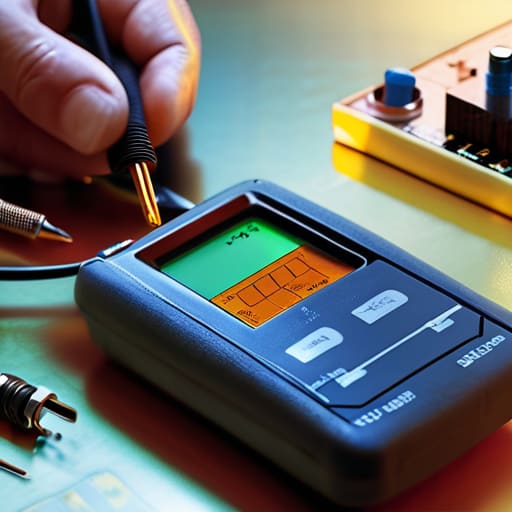
At the end of the day, stop letting those glossy marketing stickers intimidate you. We’ve seen how a high mAh number can be a total illusion if the voltage is low, and how a single Wh figure tells a much more honest story about the actual work being done. When I sit at my workbench with a multimeter, I don’t care about the label on the plastic casing; I care about the actual energy potential stored within the chemistry. Remember that capacity isn’t just a static number on a spreadsheet—it is a dynamic relationship between voltage, current, and how much heat your device generates while it’s trying to do its job. If you want to know if a battery is actually good, look past the milliampere-hours and find the watt-hours.
I spent thirty years teaching students that physics isn’t something that happens in a textbook; it is something that happens in the world around you. Technology often feels like a series of “black boxes” designed to keep us from asking questions, but once you peel back the casing, the mystery evaporates. Don’t be content with just being a consumer of gadgets; strive to be a student of their mechanics. When you understand the invisible forces moving through your pocket, you stop being a passenger to your devices and start becoming their master. Keep taking things apart, even if it’s just in your mind, because that is where true understanding begins.
Frequently Asked Questions
If the Wh number is the real truth, why do manufacturers still insist on printing mAh on every single box?
It’s a bit of a marketing sleight of hand, really. I remember looking at old capacitor labels back in my teaching days—it’s all about what looks most impressive on a sticker. “5,000 mAh” sounds much larger and more substantial to a consumer than “19 Wh.” It’s easier to sell a big number than a precise one. They aren’t lying, technically, but they are choosing the scale that makes their product look more powerful at a glance.
Does the temperature of the room actually change how much energy is physically sitting inside the cell?
The short answer is no; the actual number of electrons waiting to move doesn’t change just because the thermostat did. However, I learned the hard way with my old soldering irons that chemistry is a fickle thing. Think of the electrolyte like honey: in a cold room, it gets thick and sluggish, making it harder for ions to swim. The energy is still there, trapped behind a wall of viscosity, just waiting for a bit of warmth to flow.
Why does my phone battery seem to die much faster once it hits 20% than it does when it's sitting at 90%?
It’s not your imagination; it’s a matter of voltage dropping under load. When I opened my old multimeter to test these cells, I saw the truth: as the chemical “fuel” runs low, the voltage begins to sag. At 90%, the pressure is high and steady. But at 20%, the internal resistance climbs, and the voltage struggles to stay above the threshold required to keep the processor running. It’s like a water pump losing prime.