
I remember sitting in my old classroom, watching a bright-eyed student stare at her camera manual as if it were written in ancient Sumerian. She was frustrated because the textbook kept dancing around the math without explaining the physicality of the device. Most people approach photography like it’s some mystical art form, but if you want to actually master it, you have to stop treating the settings like magic spells and start seeing them as mechanical movements. The biggest headache for beginners is always the same: they can’t wrap their heads around what aperture numbers mean because the numbers seem to run backward. It feels counterintuitive that a “bigger” number actually creates a smaller opening, but once you see the metal blades moving inside that lens, the confusion vanishes.
I’m not here to give you a lecture on optical theory or sell you a thousand-dollar lens you don’t need. Instead, I want to show you the mechanical truth of how light actually enters that glass box. I’ve spent enough time with a screwdriver in my hand to know that if you can’t visualize the physical mechanism, you don’t truly own the skill. We are going to strip away the jargon and look at the actual guts of the process so you can finally control your shots with confidence.
Decoding the F Stop Scale When the Eye Is Closed

When I opened up my old Nikon last month, I wasn’t looking at the sensor; I was looking at the tiny, overlapping metal leaves of the diaphragm. That’s where the magic happens. To get a handle on understanding the f-stop scale, you have to stop thinking about the numbers as “sizes” and start thinking about them as fractions. It’s a bit counterintuitive, I know. When you see a small number like f/1.8, it actually represents a massive physical opening. It’s like saying “one-half” versus “one-sixtieth”—the smaller the denominator, the larger the actual hole.
I like to think of it as the lens’s “breathing” capacity. When you choose a wide aperture, you are letting a flood of light rush in, which is vital when the sun starts to dip. But more importantly, that wide opening creates a very shallow slice of focus. This is the secret behind that creamy aperture and bokeh effect we all love; the more light you let in through a wide gap, the more the background melts into a soft, indistinct blur. Conversely, when you tighten those metal leaves to an f/16, you’re narrowing the path, forcing the light to behave and keeping everything from the foreground to the mountains in sharp relief.
How Aperture Affects Exposure in the Dark
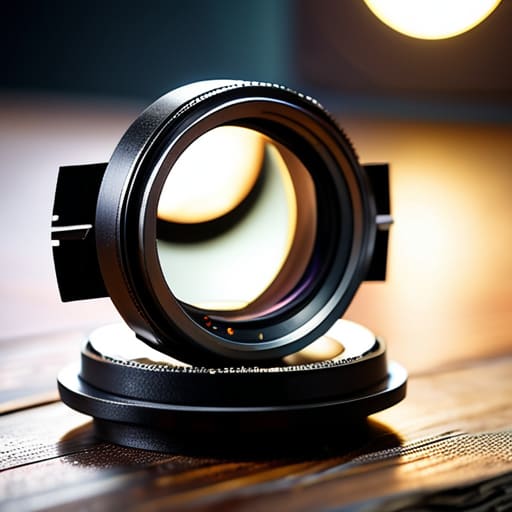
When I sat down with my old Nikon last week, I took the lens assembly apart just to remind myself of the physical reality of those metal blades. When you are in a dim room or out under a starlit sky, you aren’t just playing with numbers; you are physically adjusting how much “fuel” enters the engine. A wide vs narrow aperture choice is essentially a decision about how much light you are willing to let in before the sensor even has a chance to react. If you are working in the dark, you need those blades to retract as far as they can go, creating a massive hole to swallow every available photon.
Think of it like a window in a drafty old house. If you want to heat the room quickly when it’s freezing outside, you throw the shutters wide open. That is exactly how aperture affects exposure when the light is scarce. If you keep the opening small—using a high f-stop number—you are essentially trying to light a room through a keyhole. You’ll end up with a black frame unless you compensate with a much longer shutter speed, which is a gamble I rarely take when I’m trying to capture a moment.
Five Lessons from the Workbench: Making Sense of the Numbers
- Don’t let the math bully you; just remember that the number is a fraction. When I look at an f/2.8, I don’t see a “two,” I see a large opening, because 1/2.8 is a much bigger hole than 1/22.
- Think of the aperture like the pupil of an eye. When the light drops, the hole widens to catch every stray photon it can find, just like my eyes do when I’m squinting at a tiny escapement wheel in a dim workshop.
- If you want that blurry, dreamlike background, you need to go small with your number. A wide opening lets in a messy amount of light from different angles, which is exactly what causes that shallow focus.
- When you’re shooting something that needs to be sharp from front to back—like a landscape or a complex gear assembly—you want a high number. It’s like narrowing a nozzle; it forces the light into a tighter, more controlled path.
- Always test the “sweet spot.” Even though a lens might claim to work at f/1.4, most of them aren’t quite happy there. I’ve found that stopping down just a hair or two usually settles the mechanics into their most precise rhythm.
The Mechanics of Light and Focus
Remember that the f-stop is just a ratio of the lens’s focal length to the diameter of the hole; a smaller number means a much larger physical opening for light to rush through.
Think of aperture as the gatekeeper of depth; a wide opening lets in more light but narrows your focus to a sliver, while a tiny opening keeps everything from the foreground to the horizon in sharp clarity.
When you’re adjusting these settings, you aren’t just changing brightness—you are physically controlling how much of the scene is allowed to exist in focus at any one moment.
The Mechanics of Seeing

When I sit at my workbench with a disassembled timepiece, I’m always reminded that the most complex systems are just a series of controlled movements. Aperture is no different. It isn’t just a confusing list of fractions on a digital screen; it is the physical regulation of energy. We’ve seen how a wide opening acts like a thirsty sponge for light in a dim room, while those tiny f-stop numbers at the high end act as a precise gatekeeper, narrowing the stream to sharpen our focus. Once you stop seeing the numbers and start seeing the mechanical dance of the iris blades, the math stops being a barrier and starts being a tool.
I spent thirty years teaching students that physics isn’t something that happens in a textbook—it is something that happens in the world around them. Photography is the same way. Don’t let the technical jargon intimidate you into staying on the sidelines. Instead, I want you to go out and experiment with the light. Treat your camera like a machine you are meant to master, not a black box you are meant to fear. Once you understand how those blades move when you aren’t even looking, you aren’t just taking a picture anymore; you are controlling the physics of a moment.
Frequently Asked Questions
If I'm using a lens with a very small maximum aperture, like a telephoto lens, how much am I actually losing in terms of light compared to my standard kit lens?
It’s a bit of a heartbreak, isn’t it? When I opened up my old 70-200mm, I saw just how much more glass—and therefore more obstruction—is sitting between the subject and the sensor. If your kit lens is an f/3.5 and your telephoto is an f/5.6, you aren’t just losing a little light; you’ve effectively cut your light intake in half. You’re essentially forcing the camera to work twice as hard to see the same thing.
Does the physical size of the glass elements inside the lens change how much light actually gets through, or is it strictly about the diameter of that opening?
I actually had to unscrew the barrel on my old Nikon prime to settle this one. It’s a bit of a trick question. While the glass elements do affect how light is transmitted—think of it like the clarity of a window—the aperture setting itself is strictly about the diameter of that opening. The f-stop is just the ratio of that hole’s size to the lens’s focal length. The glass carries the light, but the hole controls the volume.
When I'm shooting something moving quickly, like my grandson running in the garden, how much does choosing a wider aperture actually help prevent that motion blur?
Actually, aperture isn’t the hero here; it’s just the sidekick. When I opened up my old Nikon last summer, I saw how the shutter is just a mechanical curtain. To freeze your grandson, you need a faster shutter speed—a quicker “blink.” A wider aperture helps because it lets in more light, which gives your camera the permission it needs to use those lightning-fast shutter speeds without the picture turning pitch black.