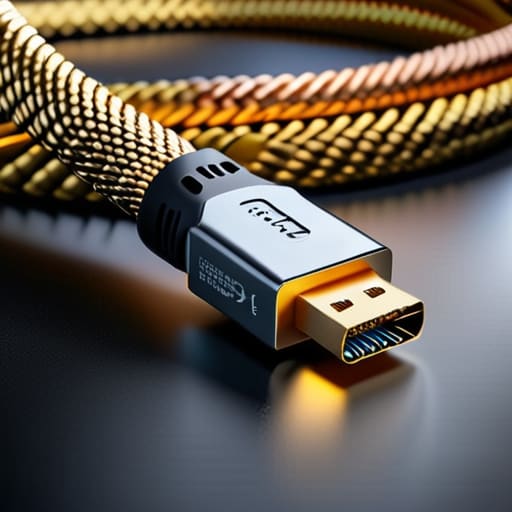

I spent thirty-four years watching teenagers stare blankly at a chalkboard, waiting for me to strip away the jargon and show them the actual physics underneath. It’s the same frustration I feel when I walk into an electronics store and see people being sold “premium” cables at a hundred-dollar markup just because the box looks shiny. Most people are being sold a fairy tale when they try to figure out what HDMI versions mean; they think a higher number automatically equals a better picture, as if the cable itself has a brain. In reality, it’s just about the bandwidth capacity—the width of the digital highway—and if your source and your screen aren’t talking the same language, that expensive cord is nothing more than a very pricey piece of copper.
I’m not here to recite a manufacturer’s spec sheet or feed you marketing fluff. My goal is to show you exactly how these signals move through the copper when the lights are off and the screen is black. I promise to break this down into mechanical realities you can actually use, so you stop wasting money on hardware that your devices can’t even utilize.
Deciphering Hdmi 21 vs 20 Differences in the Shadows

When I sat my students down in front of a circuit board, I always told them to look for the bottlenecks. That is exactly what you are doing when you weigh the HDMI 2.1 vs 2.0 differences. Think of the version number as the width of a highway. Version 2.0 is a sturdy two-lane road; it gets you where you need to go for standard 4K, but it feels the strain when things get heavy. Version 2.1, however, is a massive ten-lane superhighway. It provides the massive bandwidth necessary to move data so quickly that the screen doesn’t even have time to blink between frames.
The real magic happens in the invisible handshakes between your devices. If you are looking at an HDMI cable compatibility guide, you’ll see mentions of eARC. When you aren’t even looking at the screen, your soundbar and TV are having a quiet, constant conversation through that cable. While 2.0 can handle basic audio return, 2.1 uses eARC to pass much richer, uncompressed data packets. It’s the difference between hearing a muffled recording of a symphony and sitting in the front row of the concert hall.
Hdmi Bandwidth Requirements for 4k the Unseen Data Flow
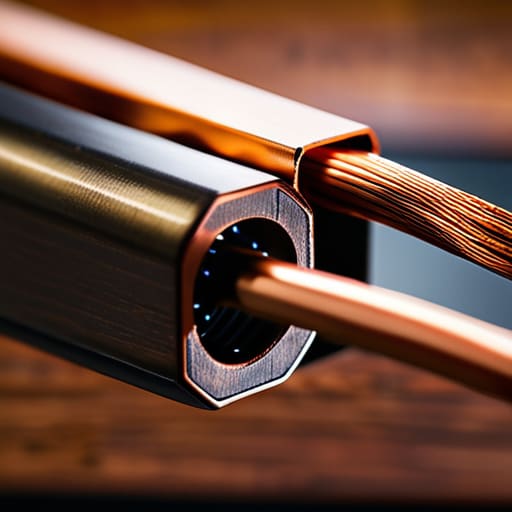
When I sat at my workbench last Tuesday, I had a standard HDMI cable spread out next to a newer, thicker cord. To the naked eye, they look nearly identical, but once you look at the copper shielding and the way the internal wiring is packed, you see the truth. Think of the HDMI bandwidth requirements for 4K as the width of a river. If you’re trying to push a massive flood of data—like a high-frame-rate 4K movie—through a narrow, old stream, the water is going to overflow and spill. In technical terms, that’s your screen stuttering or losing signal entirely.
The real distinction lies in the distinction between high speed vs ultra high speed HDMI cables. An older “High Speed” cable is like a two-lane country road; it can handle basic 4K, but it’s going to struggle if everyone tries to drive through at once. An “Ultra High Speed” cable, however, is a massive, multi-lane superhighway. It provides the massive throughput necessary so that when you aren’t even looking at the settings, the data is flowing smoothly and silently in the background without hitting a bottleneck.
Five Ways to Stop Guessing and Start Connecting
- Stop looking at the label on the box and start looking at the pins. When I opened up a cheap, unbranded HDMI cable last week, I saw the shielding was practically non-existent. If you want high-speed data without the flickering, you need a cable with proper internal shielding to keep that electromagnetic noise from scrambling your signal.
- Treat your ports like a physical bottleneck. You can buy the most expensive HDMI 2.1 cable in the shop, but if you plug it into a TV that only has 2.0 ports, that extra bandwidth is just sitting there, doing absolutely nothing. It’s like putting a fire hose attachment on a garden tap; the water isn’t going to flow any faster.
- Watch out for the “ghost” in the machine—handshake errors. When you switch versions, the two devices have to “talk” to agree on a protocol. If you get a black screen, don’t assume the hardware is broken; often, the devices are just failing to shake hands because one is trying to speak a language the other hasn’t learned yet.
- Don’t trust the “High Speed” sticker blindly. I’ve seen plenty of cables that claim to be high-speed but lack the copper thickness to actually carry a stable 4K signal over a long distance. If you’re running a cable longer than five meters, you’re asking for signal degradation; at that point, you should be looking for an active cable that actually boosts the signal along the way.
- Remember that the cable is just the messenger. A version 2.1 cable won’t magically make an old Blu-ray player play in 8K. The cable is merely the pipe; the source device is the pump and the screen is the bucket. Everything in the chain has to be rated for the same capacity, or the whole system stutters.
The Nuts and Bolts: What to Remember
Don’t get seduced by the shiny box; check the actual version number on the cable itself, because a cable that looks identical to a 2.1 can still have the internal “piping” of an old 1.4, which will choke your signal the moment you try to push high-resolution data through it.
Think of bandwidth as the physical width of a highway; if you upgrade your television to a high-speed model but keep using an old, narrow cable, you’re essentially trying to run a fleet of heavy trucks down a single-lane dirt road.
Compatibility is a downward ladder, not an upward one, meaning your newest, most expensive HDMI 2.1 device will still work with your old cables, but it will be forced to operate at the much slower, limited speeds of those older components.
The Final Check of the Gears
At the end of the day, choosing an HDMI cable shouldn’t feel like you’re trying to solve a differential equation, but it helps to remember that you are essentially just choosing the right diameter of the pipe. We’ve looked at how the jump from 2.0 to 2.1 isn’t just a minor tweak, but a massive expansion of the bandwidth—the actual physical room available for data to rush through. If you try to push a high-frame-rate 4K signal through a narrow, older cable, you’re going to see the digital equivalent of a clogged artery: stuttering, black screens, or lost color depth. It is all about matching the capacity of the wire to the demands of your hardware so the signal doesn’t choke before it ever reaches your eyes.
I often find myself sitting at my workbench, peering through a jeweler’s loupe at the tiny, intricate teeth of a clock escapement, marveling at how much work happens in the dark. Technology is much the same. We tend to focus on the bright, glowing screen, but the true magic is happening in that silent, invisible flow of electrons inside the copper. Once you stop seeing these cables as mere plastic sticks and start seeing them as the conduits of information, the mystery vanishes. Don’t just buy what’s cheapest; buy what ensures the mechanism can actually do its job when you aren’t even looking.
Frequently Asked Questions
If I buy a high-end 4K TV but keep using my old cables from ten years ago, will the picture actually look worse, or is it just a waste of money?
It’s a bit of both, really. Think of your old cable as a narrow garden hose. Your new 4K TV is like a high-pressure fire hydrant; it’s trying to push a massive volume of data through that tiny, old copper vein. If the cable can’t keep up, you won’t see “bad” colors, but you’ll see the stuttering, the flickering, and the dropped signals. You aren’t just wasting money; you’re strangling your TV’s potential.
Does it really matter if the cable itself says "High Speed" or "Ultra High Speed" on the jacket, or is that just marketing fluff to get us to spend more?
I used to think it was just clever marketing until I sat with my multimeter and a stripped cable. It isn’t fluff; it’s the gauge of the wire. When I peeled back the jacket on an old “High Speed” cable, the shielding was thin, almost flimsy. If you try to push an Ultra High Speed signal through that, the interference acts like friction in a gear train. You’ll get stuttering, not because the signal is “bad,” but because the pipe is too narrow to handle the pressure.
If I have a newer gaming console but an older monitor, will the HDMI version act like a bottleneck and physically prevent the hardware from working?
It won’t break anything, I promise. I’ve seen enough blown fuses to know the difference between a mismatch and a disaster. Think of it like trying to pour a gallon of water through a tiny funnel; the water still flows, it just can’t go as fast as you’d like. Your console will still send a signal, but the older HDMI version acts like a narrow pipe, throttling your high-speed data and forcing your fancy 4K gaming into a lower, slower resolution.



