

I spent thirty-four years in a physics classroom, and if there is one thing I learned, it is that people love to hide simple mechanics behind a curtain of unnecessary complexity. I see it all the time with these new gadgets; developers wrap a basic function in ten layers of “smart” interface nonsense just to make it feel revolutionary. You don’t need a degree in computer science to figure out how to use a podcast app, yet most of them are designed like a labyrinth rather than a tool. They want you to get lost in their menus and “discover” things, but I’ve always preferred a device that stays out of my way so I can actually get on with my life.
I’m not going to give you a manual filled with marketing fluff or “revolutionary” features that don’t actually do anything. Instead, I want to show you what is actually happening under the hood of these interfaces—the bits that stay running while you’re busy scrubbing the kitchen tiles or tinkering with a pendulum clock. I promise to strip away the digital noise and show you the essential habits that make these apps work for you, rather than the other way around.
Mastering the Podcast Player Interface Tutorial
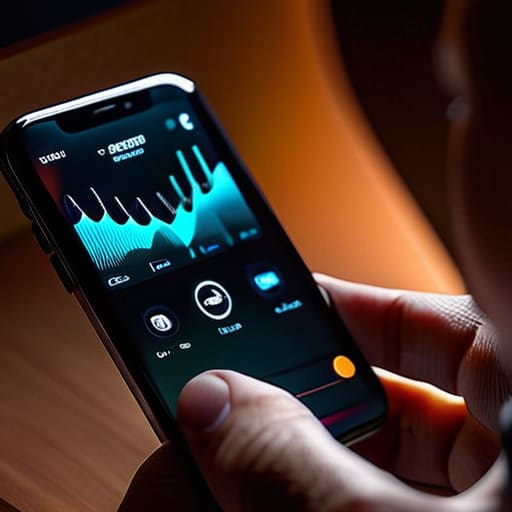
Once I finally got my hands on my phone, I spent an hour poking at the screen to see what was actually happening behind the glass. Most people just see a play button, but I wanted to see the gears. When you look at the audio playback controls, don’t just think of them as “on” or “off.” There is a delicate logic to the scrub bar; it’s essentially a digital slider that tells the processor exactly which millisecond of data to fetch from the server. I found that if I tap the center of the screen, the interface reveals the hidden layer—the timer, the skip buttons, and the speed toggle.
The real magic, however, happens when you dive into the library. I spent my afternoon managing podcast subscriptions to ensure my feed wasn’t just a cluttered junk drawer of noise. It’s much like organizing a workbench; you want your heavy hitters right at the front. I also made sure to test the offline listening features by downloading a few episodes while on my home Wi-Fi. This ensures that when I’m out in the garden and the signal drops, the device isn’t searching for a connection that isn’t there—it just pulls the data straight from the local storage.
Navigating Audio Playback Controls in the Dark
When I sat down with my old transistor radio, I could feel the mechanical resistance of the tuning knob; I knew exactly where the signal lived by the tension in my thumb. Modern software lacks that tactile feedback, which is why mastering the audio playback controls by touch is so vital. When you’re trying to dim the lights for bed or walking through a pitch-black hallway, you shouldn’t have to squint at a glowing rectangle just to skip a commercial. I’ve learned that the play/pause button is almost always the largest target, acting as the central pivot for the entire experience.
Once you stop hunting for the screen, you can start focusing on the utility. I find myself relying heavily on offline listening features when I’m out in the garden or in areas where the signal drops like a stone. It’s much more efficient to download a series when you’re sitting at your kitchen table than to fight with a buffering wheel later. If you can train your muscle memory to find the “skip fifteen seconds” icon—usually a small arrow circling a number—you’ll find the whole process becomes an effortless habit rather than a chore.
Five Ways to Make the Machine Work for You
- Don’t let the app decide your schedule; use the ‘Download’ function while you’re still on your home Wi-Fi. It’s like winding a clock the night before—you want the energy stored up and ready so you aren’t relying on a weak signal when you’re out walking.
- Find the ‘Sleep Timer’ hidden in the settings menu. I use it every night. It’s a simple mechanical instruction to the software: stop the flow of electrons and silence the speakers after twenty minutes so the device doesn’t run all night long.
- Treat your ‘Subscriptions’ like a well-organized toolbox. If you follow a hundred different shows, you’ll never find the one you actually want to hear. Prune the list regularly; if you haven’t clicked it in a month, it’s just digital clutter.
- Use the playback speed toggle to adjust the tempo. If a host speaks with the lethargy of a dying battery, bump it up to 1.2x. It doesn’t change the data being transmitted, just how quickly your ears process the vibrations.
- Master the ‘Skip Silence’ or ‘Skip Intro’ feature if your app has it. It’s the digital equivalent of skipping a scratch on a vinyl record; it cuts straight to the meat of the mechanism so you aren’t wasting time on repetitive flourishes.
The Mechanics of Listening
Treat the playback controls like a well-oiled gear system; once you know where the skip button sits in relation to the play icon, you can navigate the whole interface by touch alone.
Don’t let the vast library overwhelm you—the app is just a digital filing cabinet, and your “Subscriptions” list is the only drawer you really need to keep organized.
Use the sleep timer as your mechanical shut-off valve; it ensures the device stops drawing your attention long after you’ve closed your eyes.
The Rhythm of the Machine
At the end of the day, a podcast app is just a digital delivery system for sound waves, no different from the old shortwave radios I used to tinker with in my classroom. Once you’ve mastered the art of navigating the playback controls without staring at the screen, and you’ve learned how to queue up your shows so they transition seamlessly, the interface essentially disappears. You aren’t interacting with a complex software architecture anymore; you are simply managing a stream of information that fits into the gaps of your daily routine. Whether you are scrubbing through a lecture or setting a sleep timer, you are simply tuning the mechanism to suit your life.
I spent years teaching students that physics isn’t something that happens in a textbook, but something that happens when you actually touch the equipment. Technology is exactly the same. Don’t let the sleek glass and the hidden menus intimidate you. The more you use these tools, the more they become an extension of your own habits, working quietly in the background while you focus on the world around you. Once you understand the logic of the loop, you stop being a user and start being a conductor. Now, go ahead—find a good series, press play, and let the gears turn.
Frequently Asked Questions
If I download an episode while I'm on my home Wi-Fi, will it automatically use up my data if I'm out walking later?
No, it won’t. Think of a download like a physical cassette tape; once you’ve recorded it onto your phone’s internal memory while sitting on your sofa, the data is “trapped” there. When you step out for your walk, the app isn’t reaching out to the internet to fetch the file again; it’s just reading what’s already stored locally. You can leave your data connection completely off and the music will still play.
Is there a way to make the app stop playing automatically once a chapter ends, or will it just keep running through the silence?
I spent yesterday afternoon digging through the settings menu of my favorite player, looking for the “off switch” for that awkward silence. Most apps don’t have a physical lever for this, but look for a feature called “Skip Silence” or “Smart Playback.” If your app doesn’t have it, it’ll likely just keep running, spinning its digital gears in the dark. It’s a bit like a clock that won’t stop ticking even when the hands aren’t moving.
How do I stop the app from cluttering up my phone's storage with every single episode I've ever clicked on?
I learned this the hard way when my phone started wheezing like an old bellows. When you tap an episode, the app often “pre-fetches” the data—it’s essentially downloading the whole mechanism into your storage just in case you want to listen offline. To stop the clutter, go into your app’s settings and look for “Download Settings” or “Storage Management.” Turn off “Automatic Downloads” and set a limit on how many episodes it keeps cached.



