
I spent thirty-four years in a classroom watching teenagers stare blankly at equations, waiting for some magical moment of clarity that usually only came when I stopped talking and started showing them the gears. People treat digital privacy like it’s some high-concept sorcery, using words like “end-to-end” as if they’re casting a spell to keep the world out. But honestly, the way most tech journalists explain how encrypted messaging works is just a pile of expensive-sounding jargon designed to make you feel small. If you can’t visualize the mechanism, you’re just being asked to trust a black box, and I have never had much use for those.
I’m not here to sell you on a brand or recite a white paper. My goal is to pull the casing off this concept and show you the mathematical tumblers and levers moving inside. I want to explain how encrypted messaging works by treating it like one of my old brass clocks—by looking at the individual teeth of the gears. By the time we’re done, you won’t just be clicking “send” and hoping for the best; you’ll actually understand what happens to your words the moment they leave your hand.
Public Key Cryptography Explained the Dance of Invisible Hands
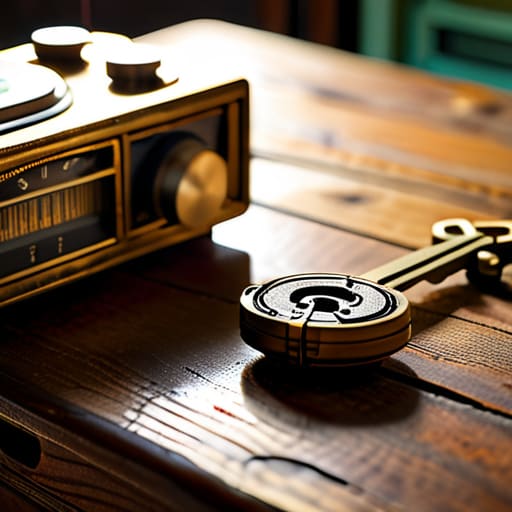
To understand this, I had to sit with my old transistor radio for a while, thinking about how signals travel through the air without being “seen.” In the old days, if you wanted to share a secret, you both needed the exact same physical key to a box. That is symmetric encryption, and it’s a nightmare for the internet because you’d have to find a way to hand that key to your friend without a thief grabbing it first.
Instead, modern apps use what we call asymmetric encryption. Think of it like this: I’ve sent you an open padlock, but I’m the only person in the world who holds the physical key. You can snap that lock shut on any message you want to send me, but once it clicks, even you can’t open it again. You’ve used my “public key” to seal the box, and only my “private key” can trigger the decryption process mechanics required to see what’s inside. It is a clever bit of mathematical trickery that ensures even if someone intercepts the package, they are just staring at a heavy, unmovable steel box.
Asymmetric Encryption vs Symmetric Encryption Finding the Hidden Balance
Think of symmetric encryption like a sturdy old kitchen safe. You have one physical key, and that same key both locks the door and unlocks it. It is incredibly fast and efficient for securing large amounts of information, but it has a glaring flaw: how do you get that key to your friend without someone snatching it out of your hand? If you hand over the key to unlock the message, you’ve essentially handed over the entire safe. This is where the tension in asymmetric encryption vs symmetric encryption really shows its teeth.
In a modern messaging app, we don’t actually use those heavy, slow asymmetric “locks” for the whole conversation. Instead, we use that complex public key dance I mentioned earlier just to safely pass a single, tiny “secret key” to the other person. Once both sides have that shared secret, they switch over to symmetric encryption for the actual heavy lifting. It’s a clever bit of engineering; we use the complex method to solve the delivery problem, then switch to the fast method to keep the decryption process mechanics smooth and seamless. It’s all about finding that perfect, hidden equilibrium.
My Rules of Thumb for Keeping Your Digital Secrets Under Lock and Key
- Always look for the “End-to-End” label. If a service says they can recover your password to help you get back into your account, they can also recover your messages for someone else. If they can’t see it, neither can a subpoena or a hacker.
- Treat your device like a physical house. You can have the most sophisticated deadbolt in the world on your front door, but if you leave the window wide open—meaning your phone is unlocked and sitting on a cafe table—the encryption won’t do a lick of good.
- Don’t trust the “cloud” blindly. When you back up your encrypted chats to a server, you’re essentially taking the contents of your safe and leaving a copy in a locker at the train station. Check if those backups are encrypted with your own key or the provider’s.
- Watch out for the “Man-in-the-Middle.” In my workshop, I know a connection is bad if the parts don’t fit perfectly. In messaging, if you get a notification that a contact’s “security code has changed,” don’t just click ‘OK.’ Verify it with them; someone might be trying to slip a listening device into the circuit.
- Remember that encryption only protects the message, not the metadata. Even if I can’t read the letter inside the envelope, I can still see who sent it, who received it, and what time it was posted. Be mindful of who you are talking to, even if the conversation itself is a ghost.
The Bits and Bolts of Your Privacy
Think of encryption not as a magic shield, but as a complex mechanical lock; it’s a mathematical process that scrambles your words into a mess of noise that only the right “key” can unscramble.
The real beauty is in the hand-off: asymmetric encryption lets us share the “locks” openly while keeping the “keys” tucked away in our pockets, so we never have to meet in person to stay secure.
True security means the message is protected even when it’s just sitting there in the dark; if the math is solid, your data remains gibberish to anyone—including the service provider—who tries to peek at it while you aren’t looking.
The Clockwork of Privacy

When I look at these digital conversations, I don’t see magic; I see a complex series of interlocking gears, much like the escapements in one of my vintage mantel clocks. We have moved from the simple, shared key of symmetric encryption to the more sophisticated, dual-layered dance of public and private keys. It is a system designed so that even if the “casing” of the message is intercepted mid-transit, the internal mechanism remains locked tight. By separating the ability to lock a message from the ability to open it, we have created a way for strangers to communicate with absolute certainty that their words remain their own. It is about ensuring that the integrity of the mechanism holds up even when the environment around it is unpredictable.
Ultimately, understanding these protocols shouldn’t make the technology feel more distant or intimidating. Instead, I hope it makes you feel a bit more in control. We often treat our smartphones like black boxes—sealed units that we trust blindly—but once you see the mathematical logic humming underneath the glass, the mystery fades and a sense of purposeful design takes its place. Technology is only frightening when it is opaque. Once you realize that encryption is just a very clever way of protecting a private moment, you can stop worrying about the ghosts in the machine and start appreciating the incredible precision of the tools we carry in our pockets every single day.
Frequently Asked Questions
If the keys are being passed around like digital handshakes, how do I know a stranger hasn't swapped their key for mine mid-conversation?
That’s the million-dollar question, isn’t it? In my classroom, we called that a “Man-in-the-Middle” attack. To stop a stranger from swapping keys, we use Digital Certificates. Think of it like a wax seal on an envelope, but instead of wax, it’s a mathematical fingerprint verified by a trusted third party—a Certificate Authority. They vouch that the key actually belongs to your friend. If the seal is broken or doesn’t match, the handshake fails.
Does all this scrambling and unscrambling actually slow down my phone, or is the processor fast enough that I won't notice the heavy lifting?
I used to worry about that when I first saw the math behind it. It looks like a lot of heavy lifting, but think of it like a well-oiled Swiss movement. Once the gears are set, the energy required to move them is negligible. Your phone’s processor has dedicated little “engines” just for these calculations. It’s doing the work in the background so fast that you’ll never feel the friction.
If the company providing the app can't see my messages, how do they manage to deliver them to the right person in the first place?
Think of it like a post office that handles sealed, indestructible safes. The company doesn’t need to see the letter inside to read your secrets; they only need to see the address on the outside. When you hit send, the app wraps your scrambled data in a digital envelope labeled with the recipient’s unique routing information. They move the package from point A to point B based on that label, but the contents remain a mystery to them.