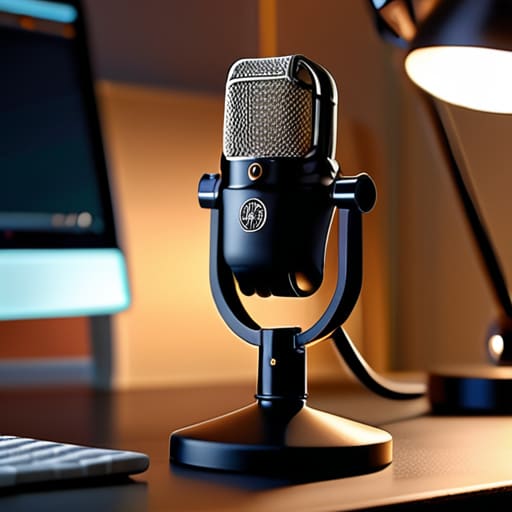

I spent three decades watching teenagers stare blankly at physics equations, and if there is one thing I learned, it is that people love to hide a lack of substance behind a mountain of jargon. You’ll see marketing websites throwing around terms like “ultra-low self-noise” and “frequency response curves” as if those numbers alone will make your podcast sound professional. But let me tell you, a spec sheet is just a list of promises, not a guarantee. When you are trying to figure out how to choose a microphone, don’t let them bully you with expensive acronyms that don’t actually tell you what the diaphragm is doing when you stop talking.
I’m not interested in what a manufacturer claims a device can do in a vacuum; I care about what it does when it’s sitting on your desk in a room with a humming refrigerator. In this guide, I am going to strip away the sales pitch and look at the actual mechanics of sound capture. I’ll help you understand the physical reality of these tools so you can pick something that captures your voice, rather than just adding a layer of digital grit to your life.
Condenser vs Dynamic Microphones Finding Your Sonic Integrity
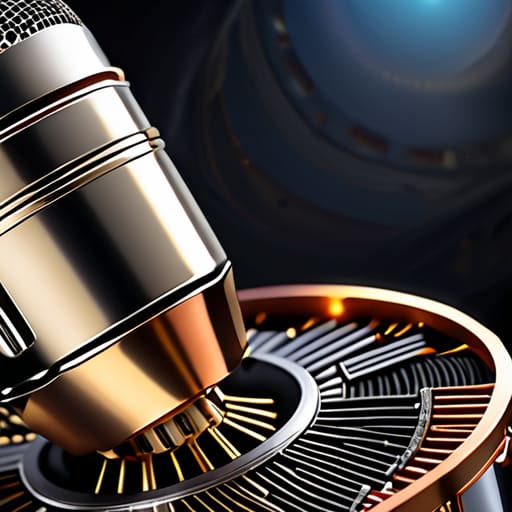
I finally cracked the casing on that old studio condenser last Tuesday. Inside, it’s a delicate dance of a thin, gold-sputtered diaphragm and a voltage-hungry circuit. When I look at it, I see a device that is essentially a high-speed pressure sensor; it’s designed to catch the tiniest tremors in the air, the subtle breathiness of a voice, or the shimmer of a cymbal. But that sensitivity is a double-edged sword. If you’re sitting in a room that isn’t perfectly quiet, a condenser will happily record your neighbor’s lawnmower right alongside your monologue. This is why the debate of condenser vs dynamic microphones usually comes down to your environment rather than just “quality.”
Dynamic mics, on the other hand, are much more stubborn—in a good way. I opened one up recently and found nothing more than a coil of wire wrapped around a magnet, sitting behind a sturdy diaphragm. It’s a mechanical workhorse. It doesn’t need external power, and it doesn’t care if your room has a bit of an echo. For anyone looking into the best microphones for podcasting in a standard home office, these are often the more honest choice. They ignore the room noise and focus strictly on what’s right in front of them, providing a much more forgiving experience.
Microphone Polar Patterns Explained Capturing What Isnt Seen
I spent yesterday afternoon with my screwdriver and a dismantled cardioid mic from a thrift store bin, just to see how the internal diaphragm reacts to pressure changes from different angles. Most people treat a microphone like a vacuum cleaner—they assume it just sucks in everything in front of it. But once you look at the actual physics of how sound waves hit the capsule, you realize it’s more like a directional sensor. Understanding microphone polar patterns explained simply means knowing where the “ears” of your device are actually looking.
If you’re setting up your first home studio, you need to decide if you want a device that ignores the hum of your refrigerator or one that captures the entire room’s character. An omnidirectional pattern is like an open window; it hears everything, which is lovely for a choir but a nightmare if you’re just trying to record a single voice. For most people searching for the best microphones for podcasting, a cardioid pattern is the sweet spot. It focuses on what’s directly in front of it and rejects the noise from the sides and rear, much like how I focus on the tiny escapement of a clock while ignoring the television in the next room.
Five Rules of Thumb Before You Open Your Wallet
- Forget the frequency response charts for a moment. I spent years looking at sine waves on an oscilloscope, and let me tell you, a graph won’t tell you if a microphone feels “right” in a room. Take the mic into your space, record your own voice, and listen to the playback. If it sounds like you’re talking through a wool blanket, no amount of technical specs will fix that mismatch.
- Check the “off” state. When I’m tinkering with a grandfather clock, I need to know exactly what happens when the pendulum stops swinging. Do the same with your gear: how does the microphone handle silence? Does it have a built-in noise floor that sounds like a rushing river even when you aren’t speaking? A good mic should be quiet when it’s being quiet.
- Look at the connection, not just the plug. It’s easy to get seduced by a shiny XLR connector, but you need to understand the power requirements. If you’re eyeing a condenser, make sure your interface can actually provide the phantom power it needs to breathe. If the power supply is finicky, the microphone is just a very expensive paperweight.
- Test the physical build, not the marketing. I’ve seen plenty of “professional” equipment that feels like a child’s toy once you hold it. Pick it up. Is the casing heavy-duty metal, or is it thin plastic that will crack the first time it tips over on a stand? If the housing feels flimsy, the internal components likely won’t survive a real recording session either.
- Consider the “unseen” utility. Ask yourself: where will this mic actually live? If you plan to record in a bedroom with echoing walls, a hyper-cardioid pattern is your best friend because it ignores the mess around it. Don’t buy a tool designed for a soundproof studio if you’re actually going to be using it in a kitchen. Match the tool to the environment, not the dream.
The Physics of the Final Choice
Don’t let a fancy spec sheet bully you into a purchase; if the diaphragm can’t handle the specific air pressure of your voice without distorting, all those extra decibels won’t save you.
Match the mechanism to the room, not the dream—a sensitive condenser is a marvel of engineering, but in a room with bad acoustics, it’s just a high-fidelity way to record your neighbor’s lawnmower.
Test the physical connection, not just the sound—if the housing feels flimsy or the connector wiggles in the socket, the internal components are likely cheap enough that you’ll be fighting the hardware more than playing the music.
The Final Component
At the end of the day, choosing a microphone isn’t about finding the one with the most impressive frequency response on a laminated spec sheet. It’s about understanding the physics of your specific room and the mechanics of your voice. You need to know if you’re looking for the sensitive, detailed diaphragm of a condenser to catch every nuance, or the rugged, predictable coil of a dynamic mic that can shrug off a noisy air conditioner. Once you match the polar pattern to your environment and the transducer type to your source, the gear stops being a mystery and starts being a tool. You aren’t just buying a piece of metal and plastic; you are selecting the mechanical bridge between a vibration in the air and a signal in your computer.
I spent years looking at circuit diagrams, but I learned that the most elegant machines are the ones that do exactly what they are meant to do without any unnecessary friction. Don’t get paralyzed by the fear of making the “wrong” choice or missing out on a piece of gear that’s currently trending. Pick something that makes sense for your space, get it in your hands, and start listening. The real magic doesn’t happen in the shop or in the manual; it happens when you finally hear your own truth captured without any distortion of the soul. Now, go make some noise.
Frequently Asked Questions
I've got a decent interface, but do I really need to go out and buy a dedicated preamp to make these mics actually sing?
I took the guts out of my old interface last Tuesday, and honestly? Most of those little preamps are just efficient little workers doing their jobs. If your interface isn’t adding a layer of hiss or making your signal sound thin and starved, you don’t need a dedicated unit. A preamp isn’t a magic wand; it’s just a way to reshape the voltage. Unless you’re chasing a specific warmth or “color,” save your money for more mics.
If I'm planning to record in a room that isn't soundproofed, am I just setting myself up for a headache with a sensitive condenser?
If you haven’t lined your walls with acoustic foam or heavy moving blankets, a condenser is essentially a high-precision vacuum cleaner for sound. I opened up an old studio condenser last Tuesday; the diaphragm is so light it reacts to a heavy sigh. In an untreated room, it won’t just catch your voice; it’ll catch the refrigerator hum, the neighbor’s lawnmower, and the structural creaks of your house. Stick to a dynamic mic until you can control the air.
How much of this "professional sound" is actually the microphone, and how much is just the cables and the computer software?
I took my old condenser mic apart last Tuesday, and it reminded me: the microphone is the heart, but the rest is the nervous system. The mic handles the physical conversion—turning air pressure into electricity—which is where the “soul” lives. But if your cables have frayed shielding or your software is eating your headroom, that soul gets lost in translation. It’s a chain; the mic provides the character, but the electronics provide the clarity.