

I spent thirty-four years in a physics classroom watching students stare blankly at spec sheets, and if there is one thing I’ve learned, it’s that marketing departments are extraordinarily good at lying to you. They want you to believe that a high-end processor and a shiny chassis are the only things that matter, but they never tell you what happens when that machine is sitting idle on your kitchen table. When people ask me how to choose a laptop for everyday use, they are usually looking for the most expensive box on the shelf, completely ignoring the actual mechanisms of their own habits. You don’t need a supercomputer to check your email or manage a budget; you need a tool that understands the rhythm of your actual life.
I’m not going to give you a list of industry buzzwords to memorize. Instead, I’m going to look at these machines the way I look at a broken grandfather clock: by understanding what is actually happening under the hood when you aren’t looking. I will help you strip away the hype so you can find a device that works reliably in the background of your life, without demanding constant attention or a second mortgage.
Decoding the Laptop Processor Comparison for Quiet Reliability
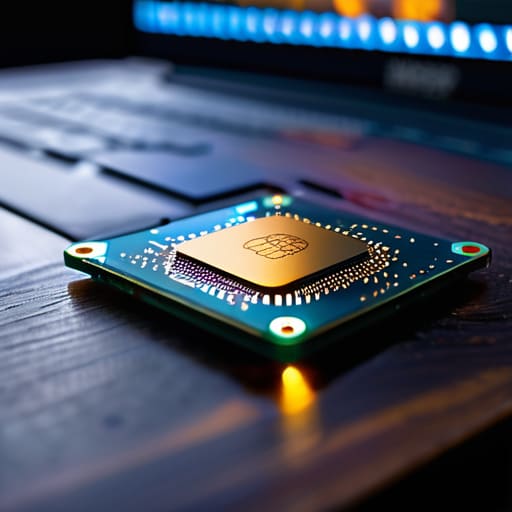
When I sat at my workbench last Tuesday, I had a mid-range laptop spread open before me, trying to figure out why it was stuttering during a simple video call. It wasn’t a mechanical failure; it was a matter of the brain being too small for the task. In a laptop processor comparison, people tend to get lost in the marketing jargon of “cores” and “gigahertz,” but I look at it differently. I think about the rhythm of the cycles. A processor is just a series of tiny, incredibly fast switches. If you choose a chip that’s too weak, those switches can’t flip fast enough to keep up with your habits, and you’ll feel that frustrating lag every time you open a new tab.
You don’t need a supercomputer that screams every time you open a spreadsheet, but you do need enough “muscle” to handle your background processes. If you are looking at the best budget laptops for students, you’ll often see stripped-down processors that look great on a price tag but fail the moment you try to multitask. I want a chip that can handle the invisible work—the updates, the syncing, the little background chores—without breaking a sweat while I’m just trying to read a news article.
Ssd vs Hdd for Everyday Use the Integrity of Speed
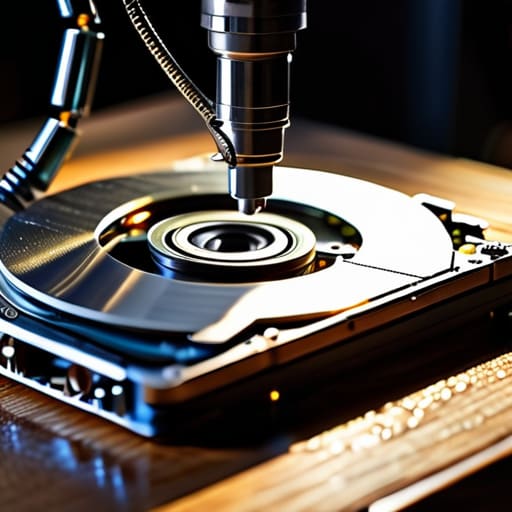
I spent a Tuesday afternoon with a precision screwdriver and a disassembled Dell, and it reminded me why I can’t stand the old spinning platters. When I opened the casing, I saw the hard disk drive (HDD) for what it truly is: a tiny, fragile record player. It relies on a physical arm sweeping across a spinning magnetic disk. It’s mechanical, it’s loud, and if you bump your desk while it’s working, you’re inviting a catastrophe. In my experience, an HDD is just a slow, moving target for failure.
When we talk about SSD vs HDD for everyday use, the difference isn’t just about speed; it’s about the absence of moving parts. An SSD is essentially a silent grid of flash memory cells. There is no arm to move, no disk to spin. This is why an SSD makes a machine feel “snappy”—it’s not just calculating faster; it’s simply not waiting on physics to catch up. If you are looking at the best budget laptops for students, do not let a salesperson convince you that a massive, slow hard drive is better than a smaller, lightning-fast SSD. I’d rather have a small, reliable engine than a giant, clunky one that stalls every time I open a browser tab.
The Five Things I Look For After I’ve unscrewed the casing
- Don’t get blinded by the “Core Count” marketing; I want to know how many transistors are actually working to keep that fan from sounding like a jet engine while you’re just trying to read a news article in bed.
- Check the RAM capacity, but more importantly, check if it’s soldered to the board; if I can’t reach in there with a screwdriver to add more when your browser inevitably starts choking, you’re buying a paperweight.
- Look at the hinge mechanism and the keyboard’s travel distance; a laptop is a mechanical object, and if the physical connection between your finger and the sensor feels flimsy, the software won’t matter because the hardware will fail you first.
- Inspect the thermal dissipation paths; I always want to see how the heat actually leaves the system, because a laptop that traps its own warmth is just a very expensive way to cook your breakfast.
- Test the battery’s discharge curve, not just the “hours” promised on the box; I want to know if that power cell holds a steady voltage when you’re halfway through a video call, or if it panics and drops to zero the moment you unplug it.
The Physics of a Reliable Machine
Don’t get distracted by flashy marketing numbers; look for the components that maintain steady performance when the machine is just idling in your lap.
Prioritize the solid-state drive over a traditional hard drive, because a device with no moving parts is a device that won’t fail you when you bump the table.
A processor shouldn’t just be fast when you’re working; it needs to be efficient enough to handle your background tasks without turning your lap into a heating element.
The Final Inspection
At the end of the day, choosing a laptop isn’t about chasing the highest number on a spec sheet or buying the machine with the most flashing lights. It’s about ensuring that the components—the processor that handles your background tasks and the SSD that holds your digital life—work in a silent, seamless harmony. You want a machine where you aren’t constantly fighting the hardware just to open a browser tab or save a document. When you find that balance between a reliable brain and a fast, sturdy memory, you aren’t just buying a gadget; you are investing in a tool that actually performs its job without demanding your constant attention or troubleshooting.
I spent my career teaching students that if you don’t understand the physics behind the movement, you’re just watching a magic trick. The same applies here. Don’t let the marketing jargon intimidate you into buying something you don’t need, or worse, something that will fail you when you’re halfway through a late-night project. Look for the mechanical integrity of the build and the logic of the specifications. Once you understand what is happening under that plastic casing, you can stop worrying about the “magic” and start enjoying the utility. After all, a truly great piece of technology is one that simply works when you aren’t even thinking about it.
Frequently Asked Questions
How much RAM do I actually need if I'm only running a few browser tabs and a word processor at once?
I spent yesterday afternoon with a precision screwdriver, peering into the guts of an old ultrabook just to see how the memory modules sit on the board. It’s a tiny, frantic dance of electrons. If you’re just toggling between a few tabs and a document, 8GB is your baseline. Anything less and you’ll feel the system stuttering as it struggles to keep those open processes “alive” in the background. Don’t settle for 4GB; it’s a recipe for frustration.
Does a higher-resolution screen actually matter for reading emails, or is it just a way to charge more?
I sat with my old MacBook yesterday, squinting at a thread of emails, and realized the difference isn’t about “vibrancy”—it’s about the geometry of the letters. When I opened up my tablet to inspect the pixel density, it became clear: high resolution isn’t for movies; it’s for preventing eye strain. A low-res screen forces your eyes to work harder to “smooth out” jagged edges on text. If the pixels are too large, reading feels like looking through a screen door.
What happens to the battery's physical health after a year of being plugged in all day?
I opened up my old workstation last week to see why the cells were swelling. When you leave a laptop tethered to the wall for a year, you aren’t just “charging” it; you are holding the lithium-ion chemistry in a state of constant high tension. It’s like keeping a spring compressed indefinitely. That constant voltage stress causes microscopic degradation in the anode, eventually leading to capacity loss or, worse, that physical bulging I saw.



