
I spent thirty-four years in a classroom watching students try to force physics to behave, and I see that same misplaced confidence every time I see someone fumbling with their tech. There is this ridiculous myth that if you just spend more money on the “premium” model, the connection will magically stabilize itself. But let me tell you, a higher price tag doesn’t change the fundamental mechanics of how to set up wireless earbuds properly. I once spent an entire afternoon trying to fix a pair of high-end buds that kept dropping their signal, only to realize the issue wasn’t the Bluetooth chip or the software—it was the physical seal in my ear canal. If the acoustic seal is broken, the driver is just shouting into a void.
I am not going to give you a manual filled with marketing jargon or “optimized connectivity” nonsense. Instead, I want to talk about what is actually happening inside that tiny plastic shell when you push it into your ear. I will show you how to find the right fit and the right settings so that your music stays with you even when you are distracted by life.
Mastering Correct Ear Tip Sizing for a Natural Seal
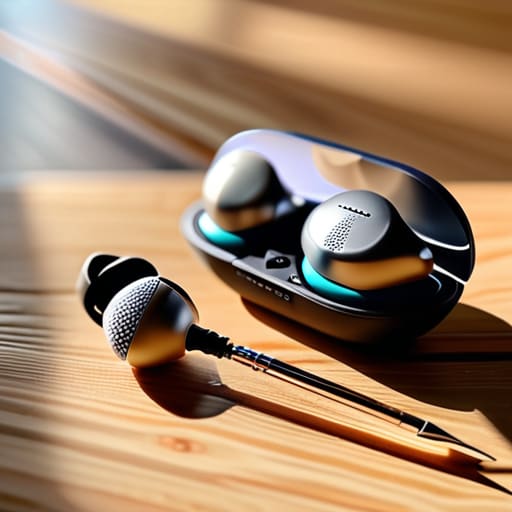
I spent yesterday afternoon with my jeweler’s loupe and a pair of tweezers, examining the silicone sleeves that come in your charging case. Most people treat these little tips like an afterthought, but they are the only thing standing between you and a constant, frustrating battle with physics. When I opened my latest pair, I found three different sizes tucked into the lid. If you choose a tip that is too small, the air pressure escapes, and you’ll find yourself constantly fiddling with them just to get a decent bass response. You aren’t just adjusting for comfort; you are creating an airtight chamber.
To get it right, you need to find the correct ear tip sizing through trial and error. I like to test them by humming; if you can hear your own voice vibrating inside your skull like you’re in a tunnel, you’ve likely achieved a decent seal. If the sound feels thin or “leaky,” the seal is broken. Getting this right is the most effective way of improving earbud sound quality without touching a single software setting. If they don’t stay put while you’re busy doing something else, they simply aren’t the right size.
Ergonomic Earbud Placement That Holds Without Effort
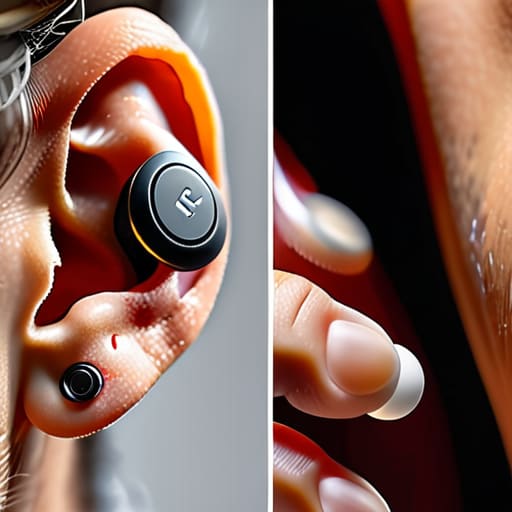
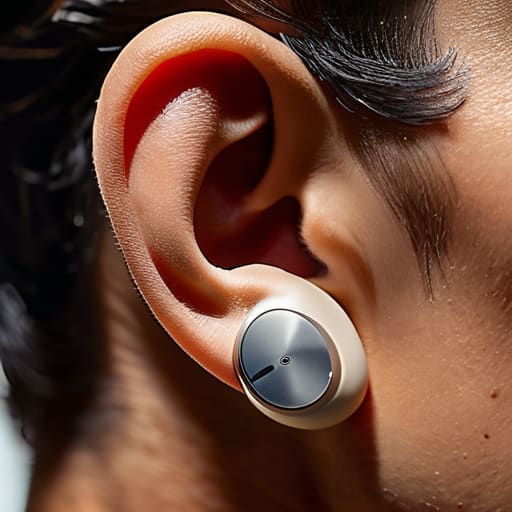
Once I finally got the silicone tips matched to the shape of my canal, I realized that even the right size won’t save you if you treat the earbuds like you’re just dropping them into a jar. I spent a good afternoon with my old jeweler’s loupe examining the housing of my current pair, and it’s clear they are designed for a specific rotational physics. You shouldn’t just push them straight in; you have to insert them at a slight angle and then give them a gentle twist, almost like you’re threading a screw into a soft wood. This motion locks the chassis against the concha of your ear, ensuring ergonomic earbud placement that doesn’t rely on sheer force to stay put.
If you find yourself constantly reaching up to nudge them back into place while you’re reading or washing dishes, you haven’t found that sweet spot yet. A proper fit should feel like a passive tension—it’s there, holding you steady, but you shouldn’t be aware of the pressure. When they are seated correctly, you’ll notice an immediate shift in the frequency response; often, what people mistake for poor hardware is actually just a lack of seal, and getting this angle right is the simplest way of improving earbud sound quality without touching a single software setting.
The Hidden Mechanics of a Good Listen
- Check the seal by playing a low-frequency bass track; if you don’t feel the vibration against your eardrum, the air is escaping through a gap in the silicone, and you’re just wasting battery.
- Clean the mesh drivers with a dry brush every few days, because once those tiny holes clog with wax, the acoustic impedance changes and the sound loses its clarity.
- Test the connection while walking through a doorway or near a microwave to see how the Bluetooth signal handles interference; if it stutters, your earbud’s antenna isn’t positioned optimally against your skin.
- Calibrate the touch controls when your hands are dry, not when you’re mid-workout, because sweat creates a conductive bridge that makes the sensors think you’re tapping them constantly.
- Use the companion app to run an “Ear Canal Test” if it has one, but don’t trust it blindly—trust the physical sensation of pressure that tells you the driver is actually moving air into your canal.
The Physics of a Proper Fit
If you can’t walk into the next room to check the kettle without feeling that dreaded tug or a sudden drop in bass, your seal isn’t airtight; you likely need to swap to a larger silicone tip to actually displace the air in your canal.
Don’t just shove them in and hope for the best; you have to find that sweet spot where the weight is distributed against your concha, otherwise, gravity will win the moment you start moving.
A truly successful setup is invisible—if you find yourself constantly reaching up to adjust them while you’re busy with something else, the mechanics of the fit are fundamentally broken.
The Rhythm of the Fit
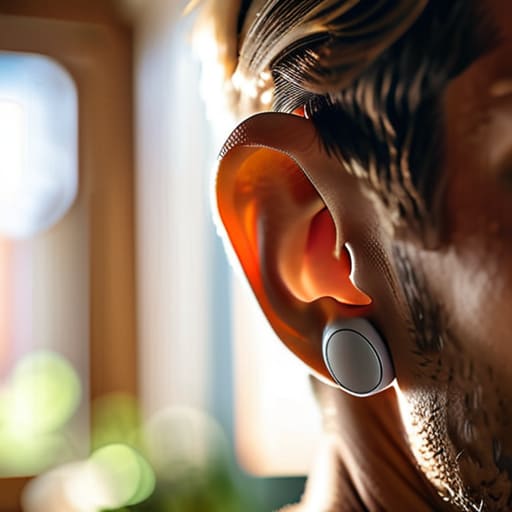
At the end of the day, getting these little gadgets right isn’t about following a manual; it’s about finding that specific mechanical harmony between the silicone and your own anatomy. You have to respect the physics of the seal—if you don’t have the right tip size or you’re fighting against the natural curve of your ear, you’re essentially fighting a losing battle against acoustic leakage. Once you’ve sorted the sizing and mastered that gentle, ergonomic placement, the technology stops being a nuisance you have to constantly adjust and starts being what it was meant to be: a seamless extension of your environment. When you can finally walk through your house without a single tug or adjustment, you’ll know you’ve actually mastered the setup.
I spent decades teaching my students that understanding a system means knowing how it behaves when you aren’t actively tinkering with it. Your earbuds should be exactly the same. There is a quiet, almost invisible magic in a piece of technology that works so well you completely forget it is there. Don’t settle for a constant struggle with wires or slipping plastic; take the time to calibrate them to your body. Once the friction is gone, all that is left is the music, the podcast, or the silence, and that is where the real beauty of the engineering finally reveals itself.
Frequently Asked Questions
If I feel a bit of pressure in my ear canal after wearing them for twenty minutes, is that a sign of a bad seal or just my ears adjusting to the shape?
That pressure is your body’s way of telling you the physics are slightly off. If it were just your ears adjusting, you’d feel a sensation of fullness, but actual discomfort usually means you’ve created a vacuum seal that’s too aggressive. I took a pair of these apart last week; the silicone tips are designed to deform, but they shouldn’t act like a piston in a cylinder. If it hurts, the tip is likely too large or seated too deep.
How can I tell if the noise cancellation is actually working to block out the world, or if it’s just making everything sound muffled and strange?
The “muffled” feeling is usually just the microphones fighting a losing battle against a bad seal. I unscrewed my old pair to see the tiny MEMS microphones, and it clicked: they need a vacuum to work. If you feel pressure in your ears like you’re diving underwater, the ANC is trying, but it’s compensating for air leaks. True cancellation should feel like a sudden, heavy stillness—not a strange, pressurized weight.
When I’m moving around the house, how do I know if the connection is actually stable or if I’m just getting lucky with the placement?
The real test isn’t when you’re sitting still; it’s the “kitchen sink” trial. I take mine into the next room, perhaps to rinse a dish or grab a tea towel. If the audio stutters or the signal drops when your body is between you and your phone, you haven’t achieved a stable link. A good connection shouldn’t depend on you being a statue; it should survive your domestic orbit.