

I was sitting at my workbench last Tuesday, squinting through a jeweler’s loupe at the escapement of a 19th-century French carriage clock, when my granddaughter asked me if my phone was “thinking” about her. It’s that specific brand of modern marketing nonsense that makes my teeth ache—the idea that these gadgets have some mystical, cloud-dwelling spirit. Everyone is throwing around buzzwords like they’re handfuls of glitter, but if you strip away the marketing gloss, what on device AI means is actually much more mechanical and far less magical than they want you to believe. It isn’t about a ghost in the machine; it’s about where the actual work is being done.
I have no interest in the polished sales pitches or the fear-mongering about sentient silicon. My goal here is to pull back the casing and show you the gears. I promise to explain this by looking at the architecture, not the advertisement, so you can understand exactly how your data moves—or doesn’t move—when the connection drops. I won’t tell you what a device is supposed to do; I will tell you what it actually does when you aren’t looking.
Local Machine Learning Processing Intelligence Without a Tether
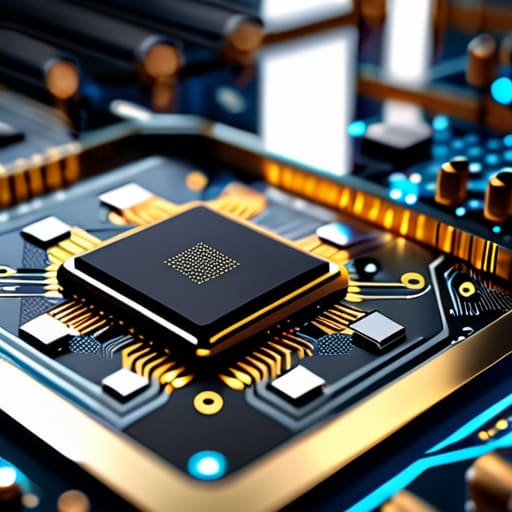
To understand this, I had to look at the silicon itself. When I opened up my tablet to see why it was lagging, I didn’t find a “brain”; I found a specialized arrangement of transistors designed for hardware acceleration for AI. In the old way of doing things—the cloud way—your device is just a hollow shell, a messenger sending a letter to a massive, distant warehouse to ask for an answer. But with local machine learning processing, the “thinking” happens right there in the circuitry, tucked between the battery and the screen.
This shift changes everything about how a device behaves when it’s alone. When you aren’t tethered to a high-speed connection, you aren’t just waiting for a signal to travel to a server and back; you are eliminating the latency in artificial intelligence that makes digital assistants feel so sluggish. It’s the difference between asking a librarian in another city a question via mail, and simply knowing the answer yourself. By keeping the computation on the chip, the device gains a certain autonomy—a way to process your habits and patterns without needing permission from a satellite.
Latency in Artificial Intelligence the Death of the Waiting Game

When I was teaching high school physics, we talked endlessly about the speed of light—the ultimate speed limit. In the world of computing, we don’t deal with photons traveling across the vacuum, but we do deal with the agonizing delay of data traveling to a server farm three states away and back again. That delay is what engineers call latency in artificial intelligence. I recently opened up an older tablet to see how it handled a basic voice command, and it was painfully slow because it was waiting for a “permission slip” from the cloud. When the processing happens right there in your hand, that round-trip trip to the data center is eliminated.
It’s the difference between a mechanical clock that ticks the moment the gear engages and a digital one that waits for a signal from a satellite. By utilizing hardware acceleration for AI—specialized little circuits designed to do one thing very fast—the device doesn’t have to “think” about the request; it just reacts. This isn’t just about convenience; it’s about the fluid, almost tactile feeling of technology that responds to your intent before you’ve even finished your thought.
How to Tell if Your Gadget is Actually Thinking or Just Sending a Letter to the Cloud
- Watch your data meter when you use a “smart” feature. If you’re using an AI tool to translate a sentence or edit a photo and your data usage doesn’t budge, you’ve found a device that’s doing the heavy lifting right there in its own circuits.
- Check for the “Offline Test.” The next time you’re in a basement or a dead zone, try using your device’s most advanced feature. If it goes dumb the moment the signal drops, that intelligence isn’t living in your hand; it’s living in a server farm three states away.
- Listen to the heat. When I’m working on a clock, I can feel the friction. Similarly, if your phone gets warm while performing a task like voice recognition, it’s likely because the local processor is sweating through the math, rather than just offloading the work to the cloud.
- Look for the “Privacy Seal” in the fine print. Real on-device AI doesn’t need to “upload your experience” to improve. If the manufacturer insists that your data must be sent to their servers to “train the model,” then the brain isn’t actually inside your device.
- Prioritize battery life over “infinite” capability. On-device AI is a trade-off; it uses your local battery to run those complex algorithms. If you want a device that truly works when the internet dies, you have to be willing to accept a battery that drains a little faster while it’s “thinking.”
The Bottom Line: Why Keeping the Brain Inside the Box Matters
On-device AI means the “thinking” happens in your pocket rather than in a massive, humming data center miles away, which keeps your private habits from ever leaving your sight.
By cutting out the middleman of the internet, you get instant responses that don’t stutter or stall just because your Wi-Fi decided to take a nap.
True intelligence is only useful if it works when the lights go out or the signal dies; local processing ensures your tools remain tools, even in total isolation.
The Heartbeat Under the Hood
When I look at a smartphone through the lens of on-device AI, I don’t see magic; I see a much more efficient distribution of labor. By moving the heavy lifting from a distant, humming server farm directly onto the silicon chips in your pocket, we solve the two greatest frictions of modern life: the constant need for a digital umbilical cord and the agonizing lag of a spinning loading icon. We have essentially moved the brain of the operation from a central warehouse to the actual tool in your hand. This means your data stays behind your own closed doors, and your device responds with the instantaneous precision of a well-oiled escapement in a Swiss watch.
Ultimately, the goal of all this complexity isn’t to make our gadgets smarter for the sake of vanity, but to make them more reliable when the world gets messy. I’ve spent my retirement fixing clocks that only work when the conditions are perfect, but I’ve always preferred the ones that keep time even when the room gets cold or the hands get dusty. On-device AI is moving us toward that same standard of mechanical integrity. We are building a future where technology doesn’t just work when the lights are on and the signal is strong, but becomes a truly autonomous companion that understands its job even when the rest of the world goes silent.
Frequently Asked Questions
If the processing is happening right here in my pocket, isn't that going to drain my battery much faster?
It’s a fair question—and a logical one. If I’m running a heavy-duty motor inside a tiny clock, I expect the spring to unwind much faster. But on-device AI isn’t a constant, heavy drag. Instead of sending every little bit of data to a massive, thirsty data center miles away, your phone uses specialized, low-power “cores” designed to do one specific job very efficiently. It’s like using a precise scalpel instead of a sledgehammer.
Does my phone actually get "smarter" the more I use it, or is the intelligence just sitting there waiting for a command?
It’s a bit of both, but mostly it’s about the patterns. Think of it like a mechanical clock that adjusts its own timing based on the friction of the gears. The “intelligence” is a set of mathematical models sitting in your storage, but as you use the device, the local processor is constantly refining how those models interact with your specific habits. It isn’t growing new brain cells, but it is learning exactly where to apply its weight.
If I'm not sending my data to a big server in the clouds, how does my device learn from the things everyone else is doing?
The Collective Brain: Learning Without Leaking



